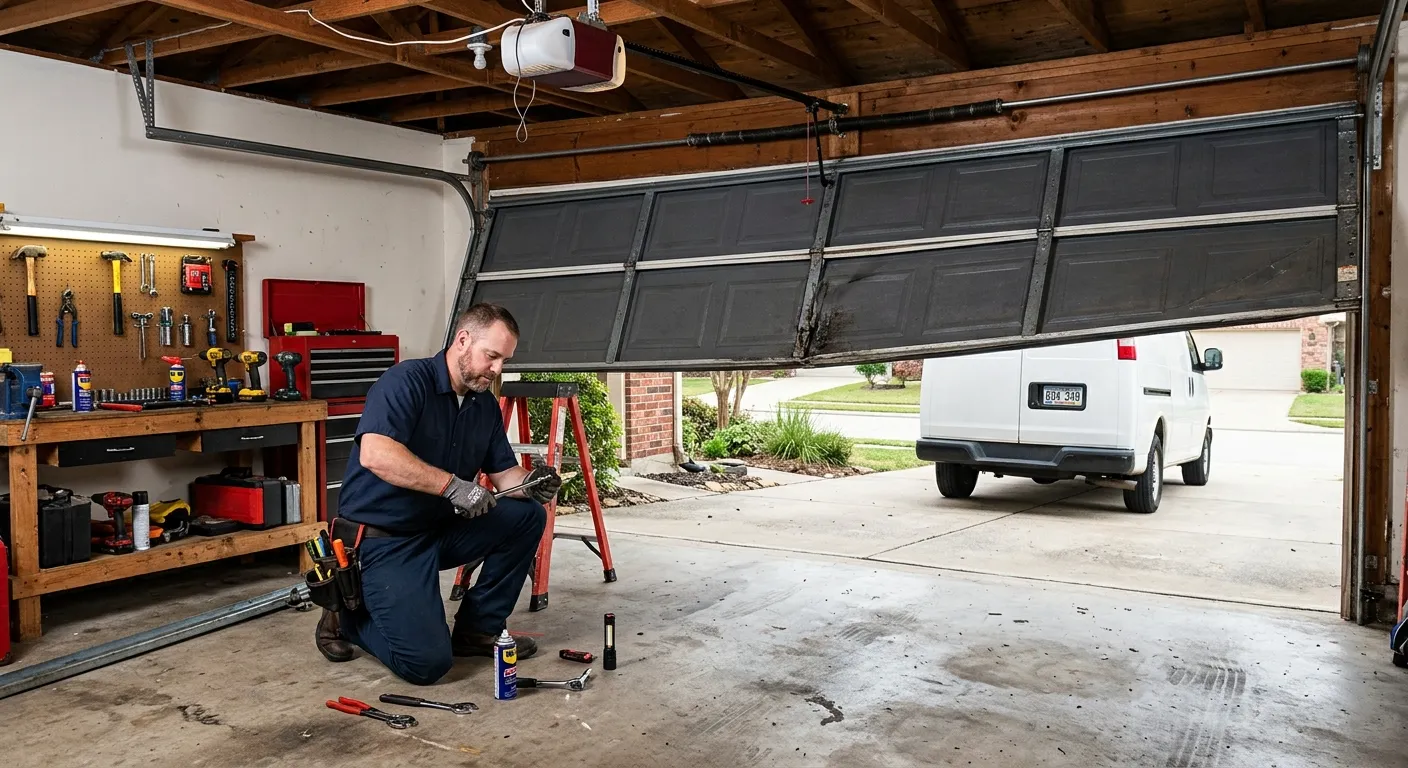
Avoiding garage door closing issues comes down to consistent maintenance, since most causes of a garage door not closing start small and build up when checks get skipped. A dirty sensor, a loose bolt, or a worn seal can quietly turn a garage door into a malfunction, often without any clear warning beforehand.
Cleaning sensors, checking hardware, and watching for early warning signs are simple solutions that prevent most closing problems before they start. These steps keep a garage door closing properly, reduce strain on the opener and springs, and lower the chances of needing garage door repair down the line.
Why Is Garage Door Maintenance Important in Preventing Closing Issues?
A garage door won’t close for many reasons, and most of them trace back to maintenance that was skipped long enough for small parts to quietly deteriorate into a damaged garage door that affects the whole system.
Common reasons skipped maintenance leads to closing issues include:
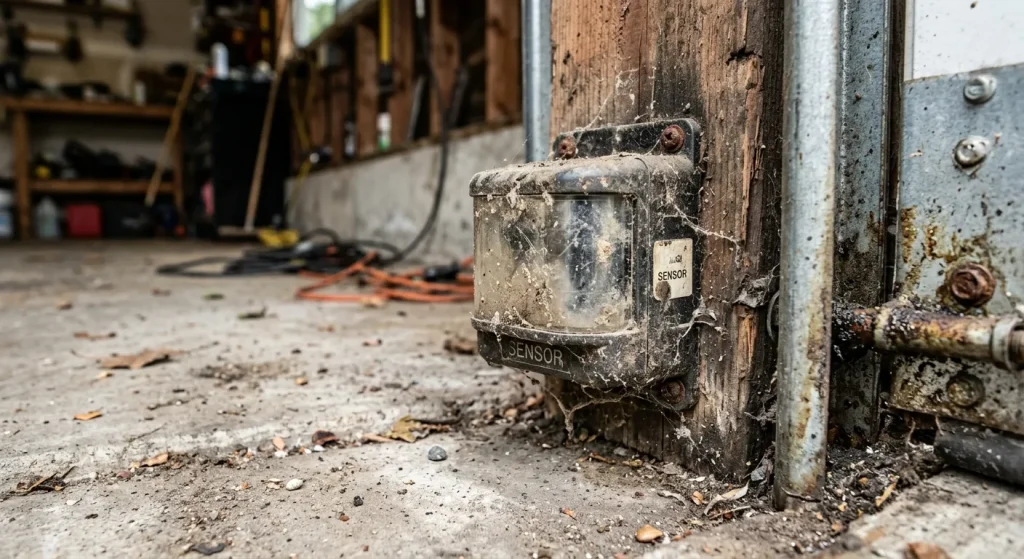
- Dust or debris builds up on sensor lenses and blocks proper sensor alignment
- Loose hardware shifts out of place from daily vibration and use
- Extension springs lose tension faster without regular lubrication
- Rubber seals harden or crack sooner in outdoor elements like heat and humidity
- Minor track misalignment goes unnoticed until it affects the door’s path
To understand what typically causes a garage door to stop closing, read our guide on Why Garage Door Won’t Close: Common Causes, which breaks down the most common reason for the problem.
How Maintenance Stops a Garage Door From Closing All The Way
A garage door that won’t close all the way is usually caused by something simple that regular maintenance can catch before it turns into a safety hazard.
Maintenance stops this from happening by addressing:
- Dirty or misaligned sensor lenses that trigger a false stop
- Obstructions along the door’s path that block a full close
- Incorrect travel limits that stop the door short of the ground
- Worn weatherstripping that creates uneven resistance on one side of your garage door
- Loose hardware that causes uneven travel along the tracks
To confirm which of these issues can be resolved with routine upkeep, read our guide on Quick Checks for a Garage Door That Won’t Close, which walks through the early signs worth confirming first.
Maintenance Steps That Prevent Garage Door Closing Problems
Clean and Align Safety Sensors
Two safety sensors near the bottom of the door send a beam across the doorway, and dirt or a slight bump can throw off their aim, compromising this safety feature.
Routine care for these sensitive sensors includes:
- Wiping both lenses with a soft, dry cloth to prevent false stops
- Clearing spiderwebs or debris that blocks the beam and triggers a reversal
- Adjusting brackets until both indicator lights hold steady instead of blinking
- Realigning each unit so the beam runs level and reads as unbroken
- Running a few test cycles to confirm the door closes without reversing early
Wiping the lenses and checking the indicator lights gives the clearest first step in knowing whether the sensors need attention.
Lubricate Moving Parts
Hinges, rollers, and garage door springs all rely on smooth contact points, and friction builds up fast without a proper coat of lubricant.
Regular lubrication covers:
- Applying silicone spray to hinges and roller bearings to cut down on friction
- Reaching torsion or extension springs lightly, since oversaturating attracts more dirt than it prevents
- Skipping the tracks entirely, since the lubricant there attracts grime and causes binding
- Wiping off excess spray so it doesn’t drip and collect dust on the floor
- Repeating the process every three to six months before parts start to grind
Silicone-based spray works better than grease-based options because it resists accumulating dust and dirt over time, helping keep the system functioning optimally.
Inspect and Tighten Hardware
Vibration from daily use loosens bolts, brackets, and fasteners a little more with each opening and closing cycle.
Hardware checks typically involve:
- Tightening loose bolts along the track brackets before they work fully loose
- Checking hinges for wobble that can throw off how panels line up
- Confirming fasteners near the garage door opener’s mounting plate sit flush, not stripped
- Looking for bent or shifted brackets that pull rusty garage door parts off track
- Leaving the bottom fixture hardware for a trained technician, since it connects to the door’s weight
Track bolts and hinges are easiest to check without tools, though neglected hardware can eventually need emergency garage door repair.
Test the Door Balance
A door that’s out of balance puts more strain on the garage door opener than most people realize, and the sign often shows up during a manual operation test.
Different types of springs carry different tension levels, so a balance check usually looks like:
- Releasing the door manually at the halfway point to test resistance
- A balanced door stays in place instead of sliding on its own
- The door drops fast or climbs upward, signaling uneven spring tension
- Cable tension looks noticeably looser on one side than the other
- The opener is straining audibly, a sign it’s compensating for the imbalance
Cable tension and how the door holds at halfway are the clearest signs, and uneven tension often indicates the need for garage door cable repair.
Check the Weatherstripping
The seal along the bottom of the door keeps out moisture, pests, and drafts, and it wears down faster from outdoor elements than in most other regions.
A weatherstripping check includes:
- Cracks or splits along the rubber edge are a sign it’s failing
- A stiff, brittle feel instead of flexible rubber when pressed
- Daylight is visible under the closed door, meaning the seal no longer sits flush
- Uneven contact across the width, often caused by a warped panel
- Water or debris collecting near the base is a sign that moisture is getting through
Pressing the seal and checking for daylight underneath are the fastest ways to spot a seal that needs replacing.
How Often to Check a Garage Door to Avoid Closing Issues
A general garage door maintenance schedule helps prevent most closing problems, and the frequency depends on the part being checked.
| Maintenance Task | Recommended Frequency | Why |
| Sensor cleaning and visual inspection | Once a month | Catches dirt or misalignment before it causes a false stop |
| Lubricating hinges, rollers, and springs | Every 3 to 6 months | Reduces friction that leads to grinding or binding |
| Tightening hardware and brackets | Every 6 months | Prevents loose parts from throwing off the door’s alignment |
| Checking weatherstripping | Twice a year, before the hottest months | Keeps the seal from cracking in heat and letting in moisture |
| Full door balance test | Once a year, or sooner if the door feels off | Flags spring tension issues before they strain the opener |
Following this schedule catches most technical issues early, and local weather conditions may call for slightly more frequent checks.
When Closing Issues Mean a Professional Is Needed
A closing issue calls for a garage door professional once the signs go beyond what cleaning or basic upkeep can resolve.
Signs it’s time to call a professional include:
- The door keeps reversing even after safety sensors have been cleaned and aligned
- Grinding or popping sounds come from the tracks or motor unit
- The door looks uneven or lopsided while opening or closing, a possible safety precaution to note
- The opener stops responding, even after ruling out dead batteries in the transmitter
- The door hasn’t worked properly since recent power outages
These signs usually mean the root cause sits deeper in the system than routine maintenance can reach.
What Pros Do When Maintenance Isn’t Enough to Solve Closing Issues
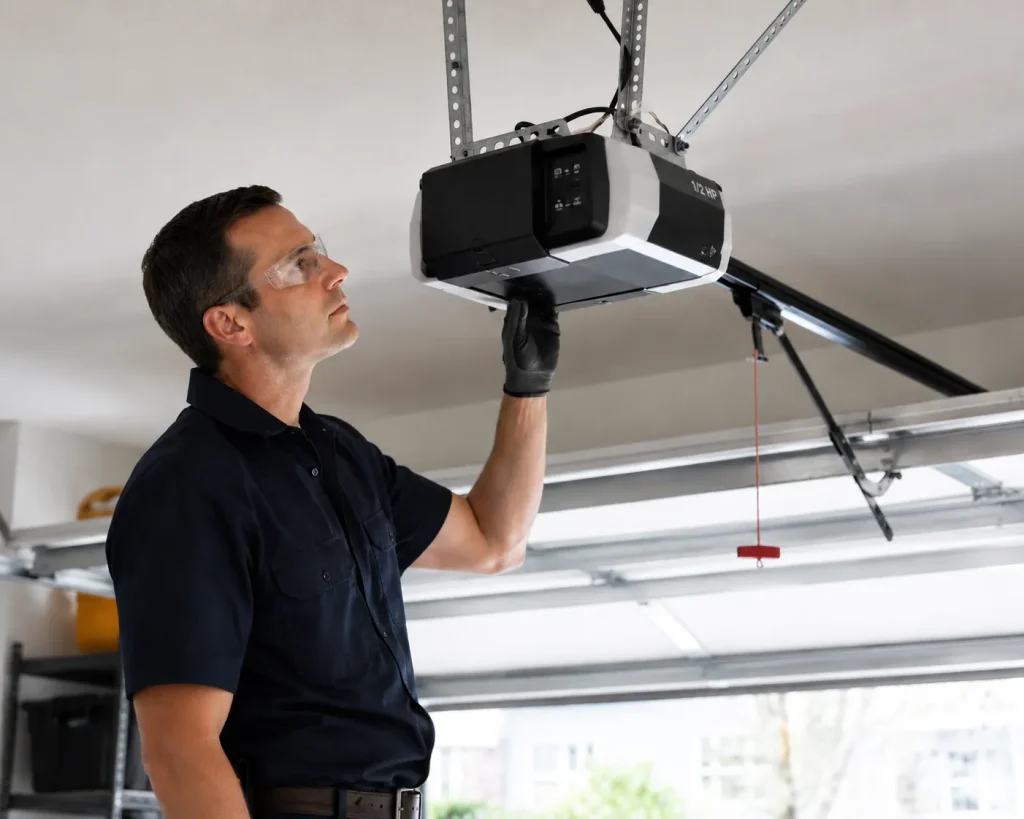
Once routine care no longer resolves the issue, a garage door service brings tools and diagnostics that go beyond what maintenance alone can offer.
A professional visit typically covers:
- A full inspection of garage door sensors, tracks, and the opener’s travel limits
- Precise recalibration of settings for a proper close
- Spring or cable service handled with the right tools given the potential hazards involved
- Correction of bent tracks or worn rollers affecting the door’s movement, which can prevent further damage
- A check for faulty components, including the chain mechanism or set of pulleys on the opener
To learn what a full repair visit involves once maintenance has reached its limit, read our guide on How Pros Fix a Garage Door That Won’t Close, which breaks down the process from diagnosis to resolution.
Maintain a Garage Door the Right Way to Avoid Closing Issues
A garage door won’t close properly without consistent, ongoing upkeep, and most closing issues trace back to a step that got skipped somewhere along the way. Cleaning sensors, checking hardware, and watching for early warning signs keep the garage door system running smoothly and give homeowners peace of mind for years to come.
Florida Garage Door Pros, a trusted service and best garage door company, has worked with homeowners across Port Richey, Florida, handling maintenance and repair for every part of the garage door, from sensors and openers to springs and tracks. Contact us or give us a call today, and let the team assess what the door needs to keep closing smoothly.
Frequently Asked Questions
Can a garage door make different noises depending on which part needs maintenance?
Yes. A grinding sound often indicates rollers, while a popping sound usually indicates hardware. Identifying the sound helps narrow down which part of the system needs attention during a maintenance check.
Is it necessary to maintain a garage door opener separately from the door itself?
Yes. Modern garage doors have openers with their own motor, gears, and settings that operate independently of the door's tracks and springs during normal operation. Garage door opener troubleshooting often starts with the unit itself rather than the door panel.
Does dust accumulation affect more than just the sensors?
Yes. Dust can build up on rollers, garage door tracks, and hinges as well, not only on the sensor lenses. This buildup adds friction and can eventually affect garage door sensor alignment and the door’s movement.
Can a garage door maintenance visit include more than the standard checklist?
Yes. A technician may check components a homeowner wouldn't normally inspect, such as cable tension or motor settings. This can sometimes reveal why a garage door reverses when closing, even after basic cleaning.
Should garage door maintenance be done before or after a home renovation?
It depends on the renovation. Construction dust and debris can settle on garage door safety sensors and tracks, so a maintenance check afterward is often useful. This helps rule out why won’t my garage door close questions caused by leftover debris.
Can maintenance frequency change based on how often a garage door is used?
Yes. A door used several times a day wears down faster than one used occasionally. Households with heavy use may need to check hardware and lubrication in small increments more often than the general schedule suggests.
Is adjusting garage door springs something a homeowner should attempt?
No. Torsion springs carry enough tension to make this process dangerous, and mishandling them can lead to injury or further damage on either side of the door. A trained technician has the tools to service springs correctly.
What is the proper course of action when maintenance doesn't resolve a closing issue?
Getting a service to perform a full inspection is the proper course of action at that point, since a technician can check the opener, tracks, and springs all at once. This gives a clearer picture than testing each part separately at home.
Can dead transmitter batteries be mistaken for a bigger opener problem?
Yes. A remote that stops working is often just low on power rather than a sign of a failing opener, and this is usually the most likely cause before anything more involved. Replacing the batteries first rules out the simplest explanation before assuming anything more serious.