Quick checks can often solve a garage door won’t close problem without a repair visit, since safety sensors, roller tracks, remote batteries, and travel limit settings account for most cases. These parts work together as part of the same garage door system, so a problem in one area can affect the door’s movement overall.
Working through these checks in this order narrows down the root cause and provides clear direction on the proper course of action. The sections below walk through each step of the check, starting with the sensors and ending with the signs that call for a trained garage door repair technician.
Why Won’t My Garage Door Close All the Way?
A garage door won’t close all the way when its sensors, roller tracks, or opener settings detect something that prevents the cycle from finishing normally, and the exact pattern it follows often points to the nature of the issue.
Here is what usually happens when this occurs:
- The door touches the floor briefly, then reverses on its own
- Movement slows or stutters near the bottom instead of closing evenly
- The door stops at the same point every time it tries to close
- A grinding or straining sound comes from the opener during the attempt
- The door closes partway, then reopens without anyone pressing a button
To understand what triggers each of these patterns and how they connect to a specific mechanical cause, read our guide on Why Garage Door Won’t Close: Common Causes, which breaks down the root of the problem behind every reason listed above.
What to Prepare Before Inspecting a Garage Door That Won’t Close
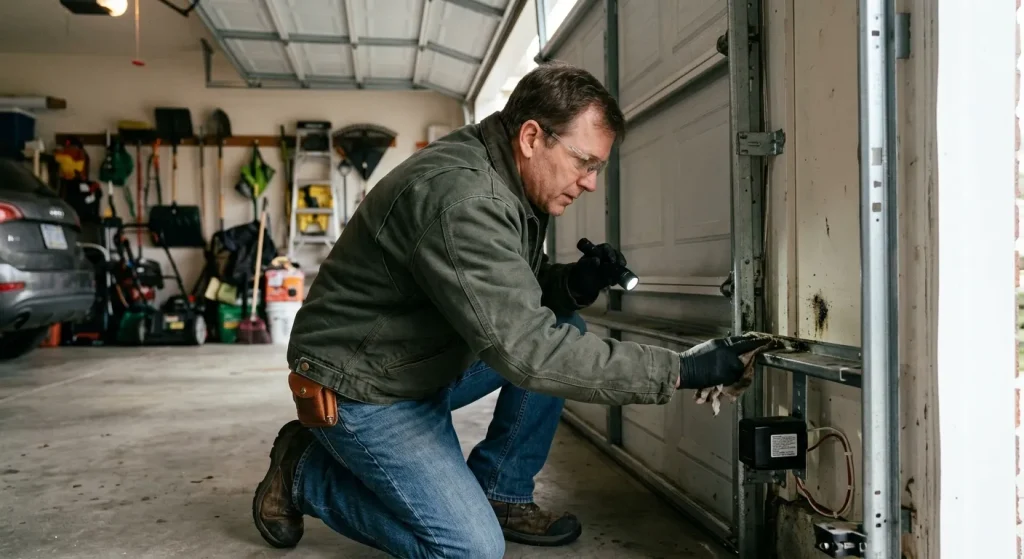
A few tools and a clear path near the door make it easier to spot the exact cause of a garage door won’t close problem during further inspection.
Here is what to gather before starting:
- A flashlight to check dark spots near the tracks and sensors
- A soft cloth to wipe down sensitive sensors before testing again
- Clear space around the door’s path to remove any obstructions
- A step stool to reach sensor brackets mounted higher off the ground
- A phone or a notepad to jot down anything unusual during the check
Gathering these basics first keeps the inspection organized and makes it easier to catch the exact issue on the first attempt.
Safety Photo-Eye Sensors
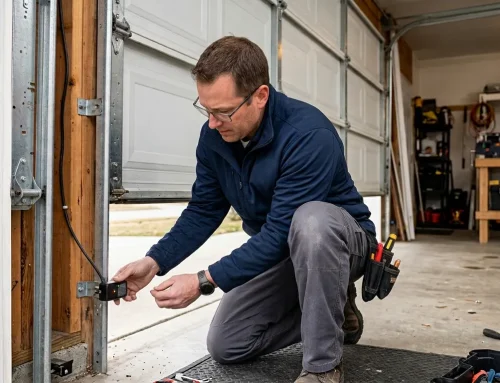
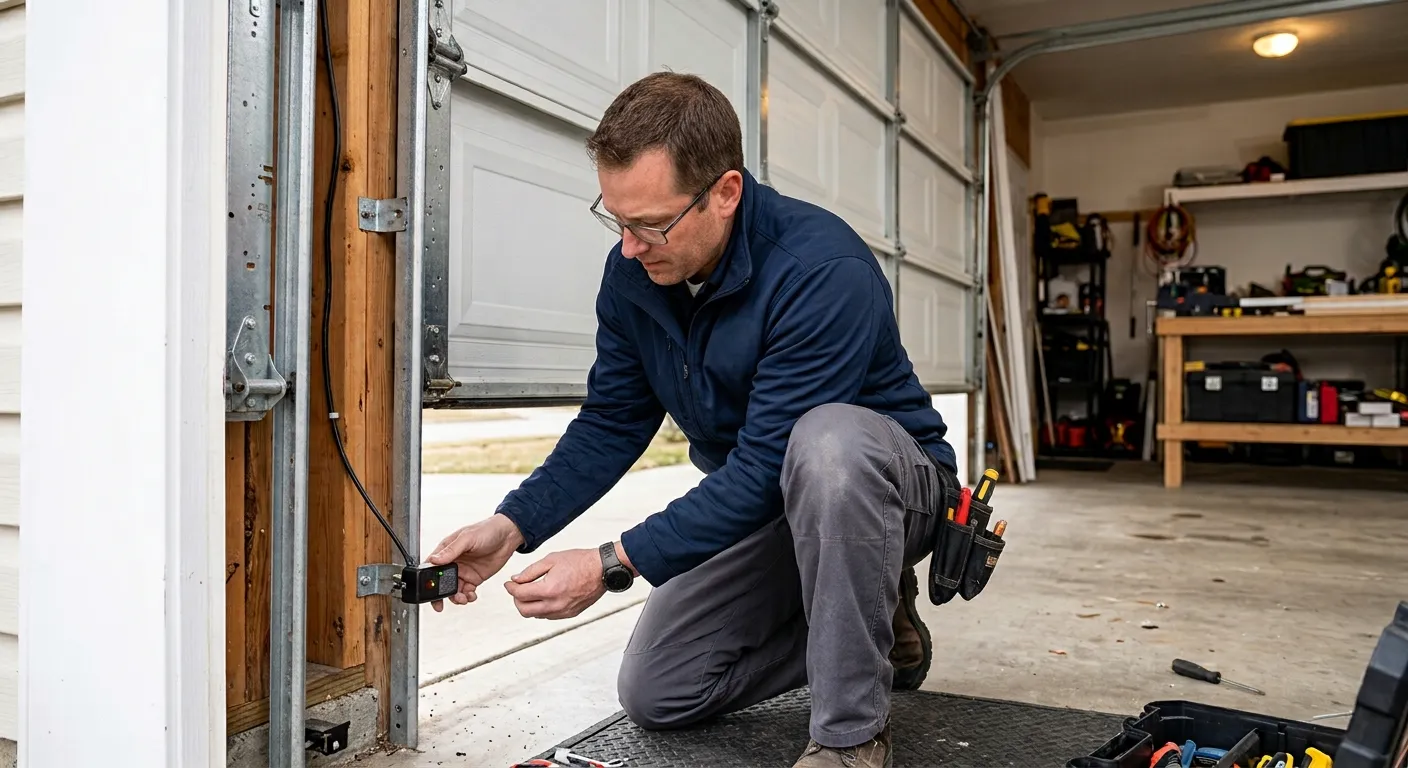
Two small safety sensors near the bottom of each track send a beam across the doorway, and anything blocking it prevents the door from closing.
Sensor issues often trace back to:
- Spiderwebs, dust, or leaves sitting directly in the beam’s path between the two units
- Indicator lights flickering instead of holding a steady glow
- A lens fogged over with moisture or coated in dust
- Brackets tilted out of alignment from a bump or accidental nudge
- Closing attempts failing while the door still opens without any issue
A quick wipe and a glance at the indicator lights usually show whether the fix is a simple cleaning or a garage door sensor repair.
Door Tracks and Floor Path
The metal roller tracks guide the door’s movement from top to bottom, and any blockage or damage along the way throws off that motion.
Track problems usually show up as:
- Rocks, tools, or debris sitting inside either track channel
- Dents or bends along the metal that catch the rollers mid-cycle
- Rusty garage door parts adding friction as the door travels down
- A bottom seal that looks worn, torn, or flattened
- Uneven spacing between the door panel and one side of the door
Debris and minor dents can often be cleared by hand, but bent rails or damaged rollers call for garage door track repair to restore even movement.
Wall Control Panel and Remotes
Testing the wall switch and the remote transmitter separately reveals whether the equipment sending the signal is the actual source of the problem.
Signal issues often point to:
- A garage door button held down without the cycle ever finishing
- Dead batteries too weak to send a full signal to the receiver
- The vacation or manual lock option left on by accident
- A remote that no longer syncs properly with the opener
- Different results when testing the wall switch versus the remote
Swapping batteries and testing both devices separately usually narrows this down within a couple of minutes.
Close Limit Settings
Limit screws control how far the door travels before the motor stops, and incorrect travel limits cause the door to reverse or stop short.
Limit-setting issues tend to look like:
- The door reverses the moment it touches the floor
- The door stops several inches short of the ground every time
- A grinding sound right before the motor reverses direction
- Stopping points that shift from one attempt to the next
- Full closing only when the wall button is held down by hand
A door that behaves differently depending on how it’s triggered often points straight back to the limit-setting dial near the motor unit.
Signs of Spring Wear
Extension or torsion springs carry most of the door’s weight, and visible wear in either type of spring often appears before a full failure occurs.
Spring wear typically shows up as:
- Gaps or visible stretching along the coil of the spring
- Rust spreading across the spring’s surface over time
- A door that feels noticeably heavier when moved by hand
- Jerky or uneven movement during the final feet of travel
- A loud snapping or popping sound from either side of the garage door
A trained technician should handle broken garage door spring repair, given how much tension these coils carry.
How to Go Through Each Check the Right Way
Going through these checks in small increments helps isolate the root cause behind a garage door won’t close problem without wasting time on the wrong part first.
Here is the order that works best:
- Start with the safety sensors since they cause the most common stoppage
- Move to the roller tracks to rule out physical blockage or damage
- Test the wall switch and remote separately to isolate signal issues
- Check the travel limit settings if the door reverses or stops short consistently
- Look for spring wear last, since this usually points to professional help
To learn how regular upkeep can prevent these issues from recurring, read our guide on Maintenance Tips to Avoid Garage Door Closing Issues, which covers simple solutions to keep every part of the system working smoothly.
What the Findings Mean for a Garage Door That Won’t Close
Findings from the inspection point to a specific part of the garage door system, making it much easier to decide on the necessary adjustments.
Here is what common findings usually mean:
- A flickering sensor light points to alignment or a blocked beam
- Debris or rust in the tracks signals a need for cleaning or track repair
- A door that only closes from the wall switch points to a remote issue
- Reversing right at the floor usually means the limit settings are off
- A heavier or jerky-moving door often signals worn torsion springs
Matching these findings to the most likely cause helps determine whether the average cost involves a quick adjustment or a full repair visit.
When to Call a Professional for Garage Door Repair
A few warning signs found during the inspection call for professional help rather than attempting a manual fix at home.
Here is when a technician should step in:
- The door feels unusually heavy or drops quickly when tested by hand
- The motor unit grinds or strains during the closing cycle
- Limit adjustments fail to fix the issue after multiple attempts
- Sensors show proper alignment, yet the door still refuses to close
- Any spring that shows visible wear, rust, or stretching along the coil
Reaching out to a garage door specialist at this stage avoids further damage to the opener and keeps the repair straightforward.
How Professionals Fix a Garage Door That Won’t Close
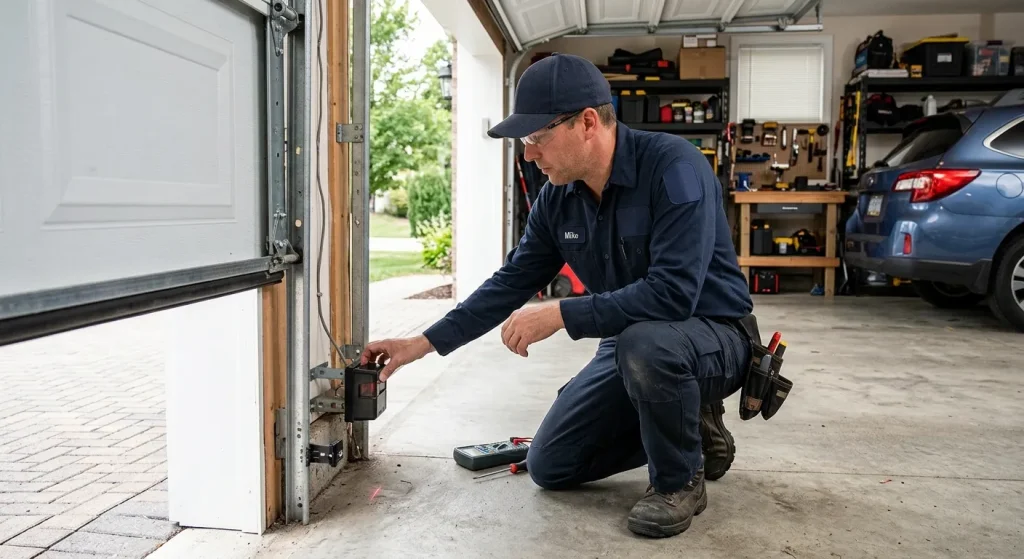
A garage door professional visit usually follows a clear process that identifies the root cause before any repair work begins.
Here is what that process typically includes:
- A full inspection of sensors, tracks, springs, and the opener itself
- Testing the motor unit’s flow of electricity to rule out power outages or faulty components
- Measuring spring tension to confirm whether replacement is needed
- Adjusting or replacing the limit switch if the settings are the cause
- Confirming optimal function through several test cycles before finishing
To break down exactly how each of these repairs comes together step by step, read our guide on How Pros Fix a Garage Door That Won’t Close, which covers the full process from diagnosis to final testing.
Take Quick Checks Seriously When a Garage Door Won’t Close
Small checks on safety sensors, roller tracks, limit settings, and springs often reveal the root cause behind a garage door won’t close problem within minutes as a helpful first step. Noticing these signs early keeps a minor adjustment from turning into a dangerous process or further damage once the system has more time to wear down from outdoor elements.
Florida Garage Door Pros works with homeowners across Dade City, Florida, to match each symptom to its actual cause before any on-site repair work begins, offering trusted service homeowners can count on. Contact us or give us a call today, and let our team get the door closing smoothly again for lasting peace of mind.
Frequently Asked Questions
Can a garage door sensor alignment issue affect only one side of the door?
Yes, a garage door sensor alignment issue can affect just one sensor while the other stays properly positioned. Even one sensor slightly misaligned on either side of your garage door can prevent the beam from connecting and the door from closing.
Is it normal for a garage door to close differently after a recent bump or impact?
No, a sudden change in closing behavior after a bump is not normal and usually indicates a misaligned track or sensor on a faulty garage door. A quick visual check right after the impact often reveals the exact spot that moved during the garage door opening.
Why won't my garage door close if the remote works fine indoors but not outdoors?
Signal range and interference often explain why a remote works indoors but not from a distance outside. Nearby electronic devices or a weak battery can shorten the remote's effective range over time.
Can a garage door sound different when it won't close all the way compared to when it's operating normally?
Yes, a door that won't close all the way often makes a distinct straining or clicking sound compared to a normal cycle. That sound usually signals technical issues somewhere in the track, opener, or garage door cable.
Does troubleshooting a garage door opener always require professional tools?
No, basic garage door opener troubleshooting, like testing the wall switch or swapping batteries, requires no special tools at all. More advanced steps involving the circuit board or transformer call for a licensed electrician from a trusted garage door service instead.
Can a garage door issue where it won't close completely come and go without a clear pattern?
Yes, a garage door won't close completely issue can appear inconsistent when the cause is something like a malfunctioning garage door sensor or a loose wire. An inconsistent pattern still points to a specific trigger, even if it is not obvious right away.
Why does a garage door safety sensor's light stay on even when nothing blocks the path?
A steady light on garage door safety sensors usually means proper alignment and power, not necessarily a clear path. The system still checks the beam itself as a safety precaution against potential hazards, so a light staying on does not always confirm the beam is uninterrupted.
Can dust buildup alone cause a garage door to stop closing without any other symptoms?
Yes, a thin layer of dust on a sensor lens can be enough to interrupt the beam and stop the door from closing, even when everything else looks normal. Wiping the lens with a soft cloth often clears the issue right away and restores the door's usual closing pattern.
Is a garage door that won't close all the way always a sign of a track problem?
No, a garage door that won't close all the way doesn't always point to the tracks as the source of the problem, even with the best garage door company handling the inspection. Extension springs and other types of springs, along with limit settings and remote signals, cause this same symptom just as often, so the tracks are only one part of the picture.