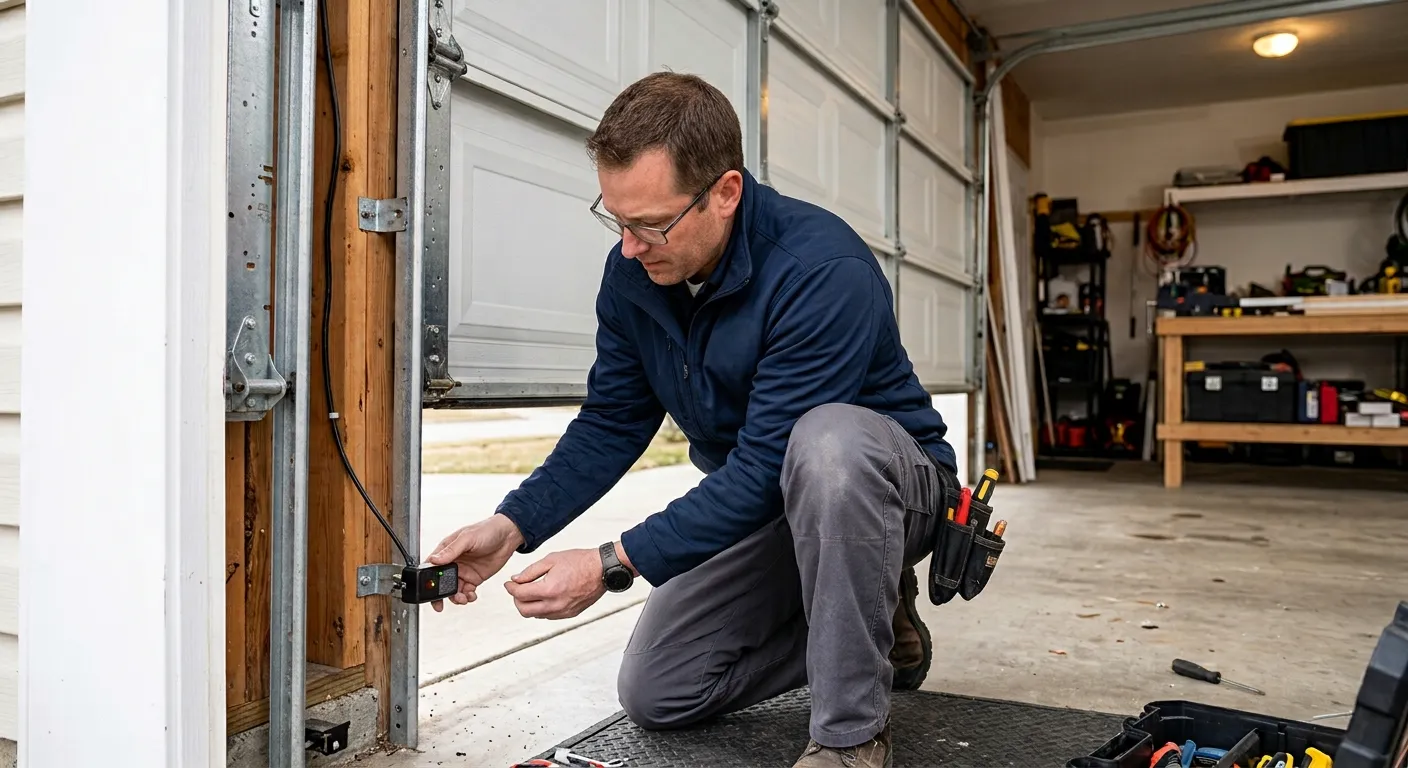
Pros fix a garage door that won’t close by performing a full diagnostic of the sensors, tracks, springs, and the opener motor before making any adjustments. This structured approach identifies the root cause rather than checking one part at a time, so a professional service can uncover problems that would otherwise remain hidden without a full inspection.
Garage door repair at this level covers everything from alignment issues to limit setting corrections, giving the door a complete return to normal operation rather than a temporary patch. This guide breaks down each step technicians follow, so the full repair process is clear from diagnosis through the final quick test.
Is Garage Door Repair for a Door That Won’t Close a Task for Homeowners?
A garage door won’t close for many reasons, and figuring out which ones call for a professional versus a few diy fixes can save time, money, and unnecessary strain on the system.
Common reasons this task calls for professional attention include:
- Alignment issues need precise adjustment for a steady beam
- Limit settings require exact calibration on the opener motor
- Garage door springs carry high tension that can cause severe injury
- Electrical components need diagnostic tools, which most households lack
- Roller tracks and damaged parts need specialized equipment to correct
To understand which of these issues can be checked safely at home before calling for service, read our guide on Quick Checks for a Garage Door That Won’t Close, which walks through the early signs worth confirming first.
What Causes a Garage Door to Stop Closing Properly
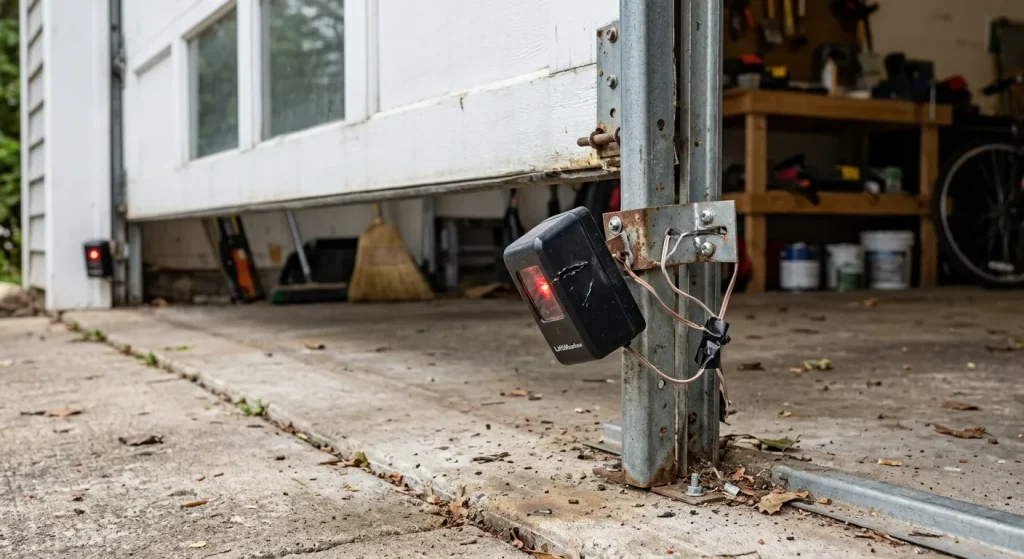
A garage door stops closing properly when a part of the system shifts, wears out, or loses calibration, and finding that part is the first step toward a lasting fix.
Common causes include:
- Dirty or misaligned safety sensors that block the beam between both units
- Worn roller tracks or bent rails that throw off smooth, even movement along the door’s path
- Dead transmitter batteries that cut off the signal to the garage door opener
- Power outages that reset limit settings and confuse the opener motor’s normal cycle
- Weakened extension springs that change the door’s movement from open to close
To learn why these mechanical issues develop in the first place and how each one plays a role, read our guide on Why Garage Door Won’t Close: Common Causes, which breaks down the root cause behind each one.
Signs a Garage Door Won’t Close All the Way
A garage door won’t close all the way for a few noticeable reasons, and the pattern it follows often points to which part of the garage door system needs attention.
Common signs include:
- The door touches the bottom of the door frame, then reverses on its own
- Movement slows or stutters near the sides of the door during the cycle
- A blinking light appears on the opener while the door tries to close
- The door stops at the same point during every attempt
- The door closes partway, then reopens without anyone pressing a button
Recognizing which pattern is happening makes it much easier to explain the issue clearly once a technician arrives to inspect the system.
Why Calling a Professional Is the Better Option
Calling a professional is the better option when a garage door won’t close due to spring, wiring, or calibration problems that need proper training to fix.
Common reasons include:
- Garage door cable and spring tension can cause severe injury without proper training
- Diagnostic tools are needed to test the opener motor accurately
- Sensor and limit screw adjustments require precise, repeatable calibration
- Wiring issues inside the opener can create shock hazards without proper handling
- Improper fixes can lead to further damage down the line
Choosing a professional early often saves time, money, and an extra service call, while giving the system a proper inspection that a basic check would miss.
How Pros Fix a Garage Door That Won’t Close Completely
Safety Sensor Adjustment and Cleaning
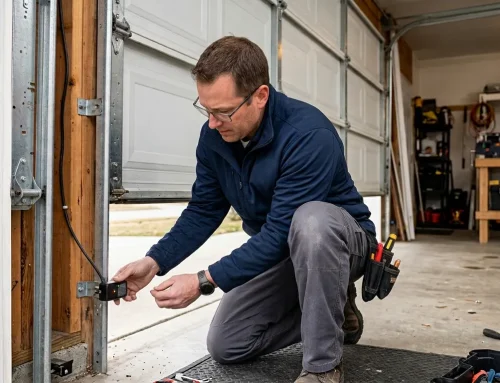
Two safety sensors near the bottom of the door send a beam across the doorway, and anything blocking it prevents the door from closing completely.
Technicians typically fix this by:
- Wiping both sensor lenses clean with a soft cloth or damp cloth
- Removing dust, spiderwebs, or debris sitting in the door’s path
- Adjusting the brackets until both indicator lights hold steady
- Realigning each unit so the beam runs level across the opening
- Running a quick test to confirm the connection holds
Wiping both lenses and checking the indicator lights gives the clearest first read on whether the beam needs a full garage door sensor repair.
Overriding the Wall Control Temporarily
A stuck door caused by a sensor fault sometimes requires a quick workaround while the technician identifies the cause of the garage door malfunction.
Technicians handle this step by:
- Pressing the wall control and holding it firmly
- Maintaining steady pressure until the door reaches the ground
- Releasing the button only once the cycle finishes completely
- Watching closely for a reversal if released even slightly early
- Using this method only long enough to complete a full diagnosis
Technicians rely on this step only as a temporary measure, since the sensor problem still needs a lasting fix afterward.
Adjusting Travel Limits and Force
A door that bounces back up near the ground is often a sign that incorrect travel limits need a small correction.
Technicians correct this by:
- Locating the limit screws or digital controls on the opener motor
- Adding slightly more pressure to reach full closure
- Setting the travel limit so the door stops right at ground level
- Fine-tuning each adjustment in small, controlled increments
- Testing the new settings across several complete cycles
Getting these settings right as part of a proper garage door opener repair restores a smooth, complete cycle without any unexpected reversal near the floor.
Clearing Tracks and Lubricating Hardware
Friction in the roller tracks or hinges can cause the opener to sense resistance, which can mimic a bigger issue.
Technicians resolve this by:
- Clearing dents, debris, or blockages from the roller tracks
- Applying silicone lubricant to moving parts, hinges, and springs
- Wiping down each component before reapplying fresh lubricant
- Checking movement on both sides of the garage door after treating every section
- Retesting the full cycle once the tracks are clear
Routine lubrication like this keeps hardware moving freely and lowers the odds of a false resistance reading.
Diagnosing Broken Springs or Cables
A door that feels unusually heavy during manual operation often indicates a spring or snapped cable rather than a sensor issue.
Technicians approach this by:
- Inspecting each spring and broken cable for visible wear or damage
- Measuring the door’s weight to confirm a tension-related cause
- Marking the affected side before ordering a replacement part
- Scheduling the replacement using proper tensioning equipment
- Testing the door’s full range of motion after the broken garage door spring repair
Spotting these signs early gives a technician a clear starting point before any high-tension component gets touched.
Checking Weather Stripping and Remote Signal Issues
Small, overlooked parts like weatherstripping and dead batteries can cause the same closing failure as a major mechanical issue.
Technicians rule this out by:
- Replacing a cracked or damaged bottom seal as needed
- Adjusting the seal so it no longer blocks the safety sensors
- Swapping batteries in the transmitter to eliminate a signal-related cause
- Reprogramming the remote or keypad if signal issues continue
- Testing the door’s response from multiple points in the driveway
Ruling out these smaller parts first often saves time that would otherwise go toward chasing a problem that was never really there.
Post-Repair Checks Pros Perform Before Leaving
A repair visit isn’t complete until the technician confirms that the entire garage door system completes a full cycle without any issues.
Common checks include:
- Running the door through several complete open and close cycles
- Testing the safety sensors again to confirm the indicator lights stay steady
- Rechecking limit settings to verify the door stops at the right point
- Inspecting the roller tracks and hardware one last time for smooth movement
- Confirming that the transmitter and wall control both trigger a normal cycle
Completing this final round of testing gives confidence that the repair holds before the technician leaves the property.
What to Do if Problems Return After a Repair
A garage door reverses when closing on rare occasions, even after a repair, which usually indicates a limit setting that needs a small adjustment rather than a failed fix.
Steps worth taking include:
- Noting the exact moment the problem happens during the cycle
- Checking whether the safety sensors or indicator lights show anything unusual
- Reaching out to the original technician before testing further changes
- Asking whether the visit falls under a reliable service guarantee or warranty
- Avoiding extra pressure on the emergency release cord or opener
Reaching out quickly after noticing the issue helps resolve it more quickly and prevents a bigger issue from developing on top of the original one.
How to Care for a Garage Door After a Professional Fix
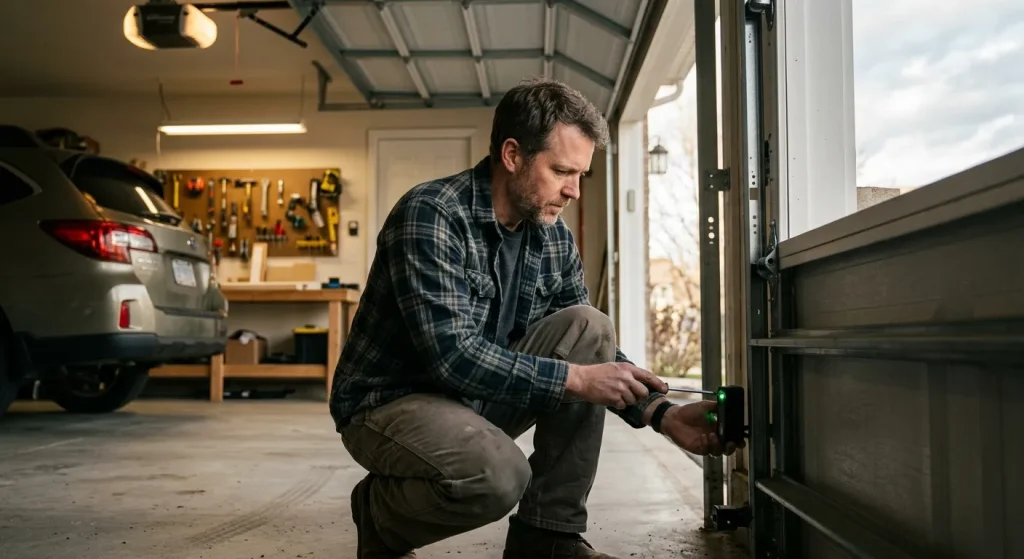
Small habits after a repair visit can help the garage door system continue to run as the technician intended, giving peace of mind in the long run.
Helpful habits include:
- Checking the safety sensors monthly for dust or buildup
- Keeping the area near both sensors clear of stored items
- Listening for new sounds during the door’s regular operation
- Scheduling a yearly inspection to catch minor wear early
- Applying fresh lubricant to moving parts as needed
To explore the full range of upkeep steps that help prevent future closing issues, read our guide on Maintenance Tips to Avoid Garage Door Closing Issues, which covers the habits worth building into a regular routine.
Fix a Garage Door Won’t Close With Trusted Repair Support
A garage door won’t close for reasons that range from a simple sensor issue to a worn spring, and knowing the difference helps determine the first step toward the right fix. Working with a trained technician gives every part of the system a thorough inspection, resulting in reliable service that holds up over time.
Florida Garage Door Pros has spent years helping homeowners throughout New Port Richey, Florida, get a malfunctioning garage door to close properly and safely. Contact us or give us a call today, and let our team handle the diagnosis and repair from start to finish so the door closes properly again.
Frequently Asked Questions
Can a garage door be repaired the same day it stops working?
Yes, most closing issues can be repaired the same day once the technician identifies the cause and confirms which parts need attention. Repairs involving custom parts or a full garage door replacement may need a short wait for the correct part to arrive.
Is a noisy repair visit a sign of a bigger problem?
No, some noise during testing and adjustment is a normal part of the repair process and does not always point to a bigger issue. Technicians often run several complete cycles to confirm garage door sensor alignment and hardware function before ending the visit.
Will a technician explain what caused the door to stop closing?
Yes, most technicians walk through the exact cause of the issue once the repair wraps up, so nothing is left unclear. This clears up why the door won't close completely and what specific correction fixed it.
Can a repair visit uncover a second, unrelated issue?
Yes, a full inspection sometimes reveals a second issue that wasn't part of the original complaint but was quietly affecting the system. Addressing both at once often prevents a return visit for something that could have been caught early.
Does every repair involve replacing a part?
No, some repairs only involve cleaning, adjusting, or realigning existing components rather than replacing anything at all. Garage door opener troubleshooting often resolves issues with simple adjustments, without requiring new hardware.
Is it common for a garage door to need more than one adjustment?
Yes, some doors need a few small adjustments across different components before the full cycle runs smoothly every time. This holds especially true when a garage door reverses when closing due to a limit setting that needs careful fine-tuning.
Can a technician tell if a previous repair was done incorrectly?
Yes, an experienced technician can often spot clear signs of a past repair that wasn't completed the first time correctly. This is one reason why won’t my garage door close becomes a repeated question for homeowners who have tried a fix before.
Should a homeowner be present during the repair?
Yes, being present lets a homeowner ask questions directly and see the issue explained in real time. It also gives the technician a chance to point out any garage door safety sensors or components that may need attention later.
Does a repair visit include a written summary of what was fixed?
Yes, many professional services provide a written summary once the visit wraps up, detailing exactly what was inspected and repaired. This record helps track what was done in case a similar issue comes up again later.