Reporting a garage door company scam starts with collecting evidence, contacting the company directly, and filing a formal complaint with the right consumer agency. Taking these steps in order protects both the money already spent and any other garage door repair customer who might be targeted next.
Agencies typically act only after a documented complaint is already on file with the appropriate department, which makes the reporting process itself matter as much as the evidence behind it. Following through on each step gives a frustrating loss a genuine chance at ending in a refund, a formal penalty, or real accountability.
Key Takeaways
- Collecting evidence first strengthens every report filed afterward
- Contacting the company directly often resolves the issue faster than escalating
- The Better Business Bureau and state licensing board handle most complaints
- Disputing the charge with a bank or card issuer can recover lost money
- Public reviews warn other homeowners before they fall for the same scam
Steps to Take When Reporting a Garage Door Company Scam
Reporting a scam works best when the steps happen in order, starting with evidence and ending with a public warning to others.
| Step | What to Do | Why It Matters |
| Collect evidence | Save texts, invoices, and photos | Builds a case any agency can act on |
| Contact the company | Demand a fix or refund directly | Often resolves the issue without escalation |
| File a complaint | Report to the BBB or licensing board | Creates an official record of the incident |
| Dispute the charge | Contact the bank or card issuer | Offers a real path to recovering the money |
| Warn others | Post a factual public review | Protects other homeowners in the area |
Following these steps in the correct order gives a homeowner the best overall chance at both a refund and real accountability.
Collect the Evidence First
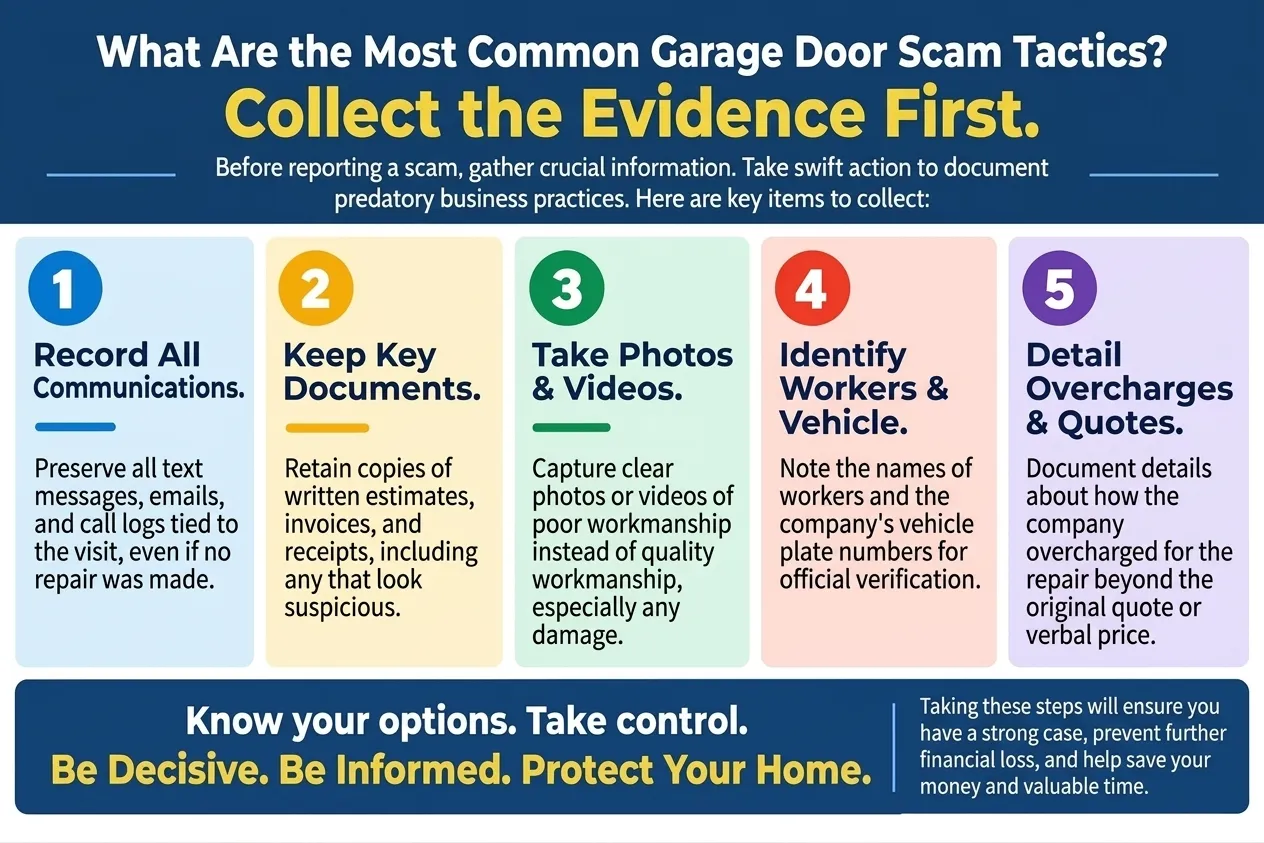
Saving every piece of documentation tied to the visit from the very start builds the foundation for any report filed later.
Evidence worth collecting includes:
- All text messages, emails, and call logs tied to the visit
- Copies of written estimates, invoices, and receipts
- Clear photos or videos of poor workmanship instead of quality workmanship
- The names of workers and the company’s vehicle plate numbers
- Details about how the company overcharged for the repair beyond the original quote
A well-documented case involving further damage lends considerable weight and credibility to every later step in the process.
Contact the Company Directly
Reaching out to the company first often resolves the issue faster than escalating straight to an outside agency.
A direct outreach attempt should include:
- Calling or emailing the company’s customer service line to demand a fix or refund
- Keeping a written record of their response or refusal to help
- Giving the company a short deadline to reply before escalating further
- Noting the exact date, time, and name of anyone who responded
- Saving screenshots of any text or chat conversation related to the issue
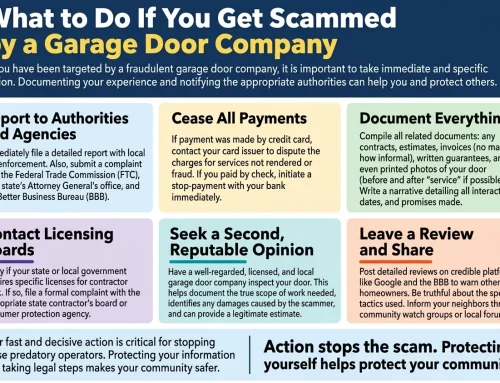
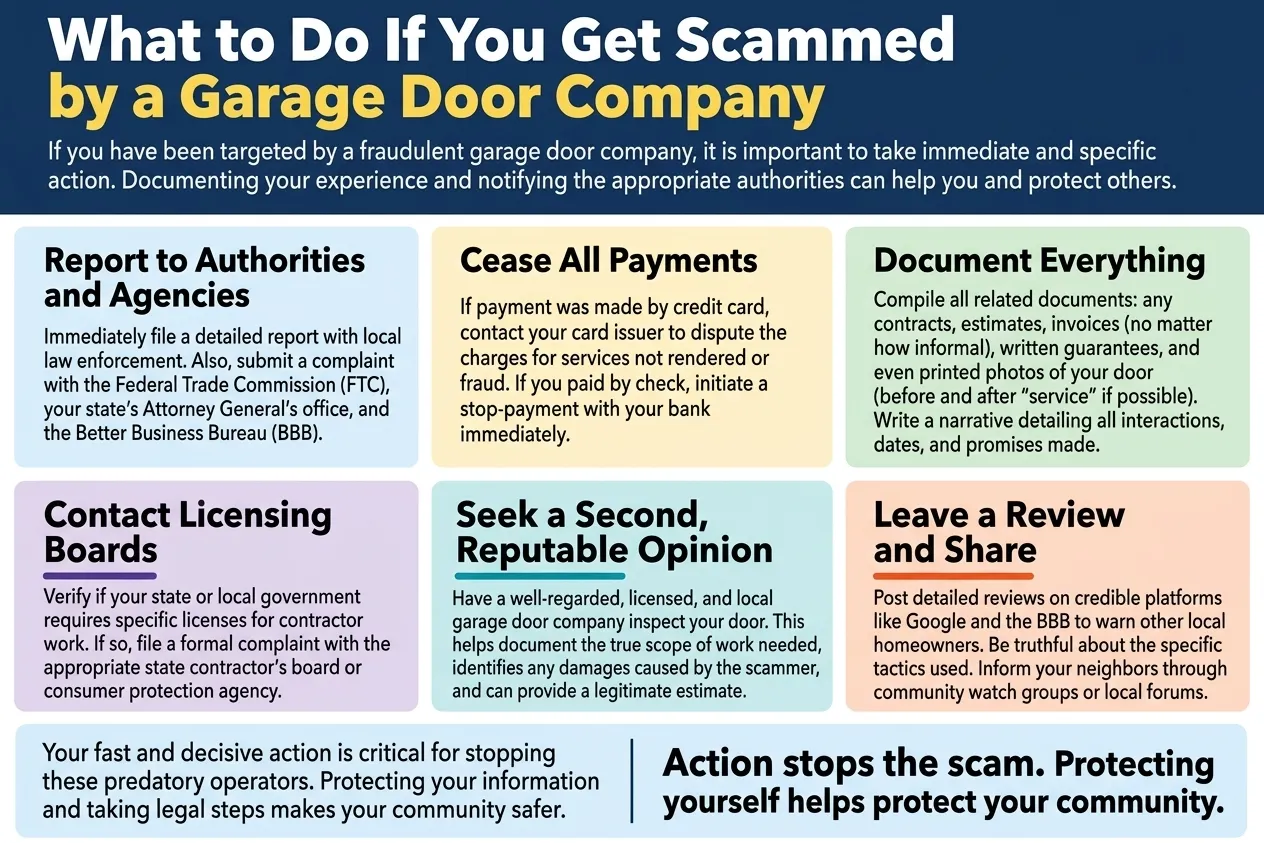
To understand the full sequence to follow if this direct attempt fails, read our guide on What to Do If You Get Scammed by a Garage Door Company?, which walks through every remaining step in order.
File a Complaint With the Right Agency
Filing a formal complaint creates an official record that can trigger a real investigation into one of many garage door companies operating in the area.
The right agencies to contact usually include:
- The Better Business Bureau, using the evidence gathered earlier
- The state licensing board that oversees garage door service providers
- Local police, especially if a fake business profile was involved
- Cybercrime divisions if the scam involved deceptive online advertising
- The Federal Trade Commission, which also helps track licensed contractor complaints nationwide
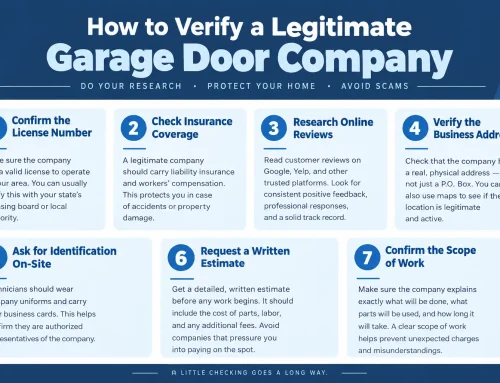
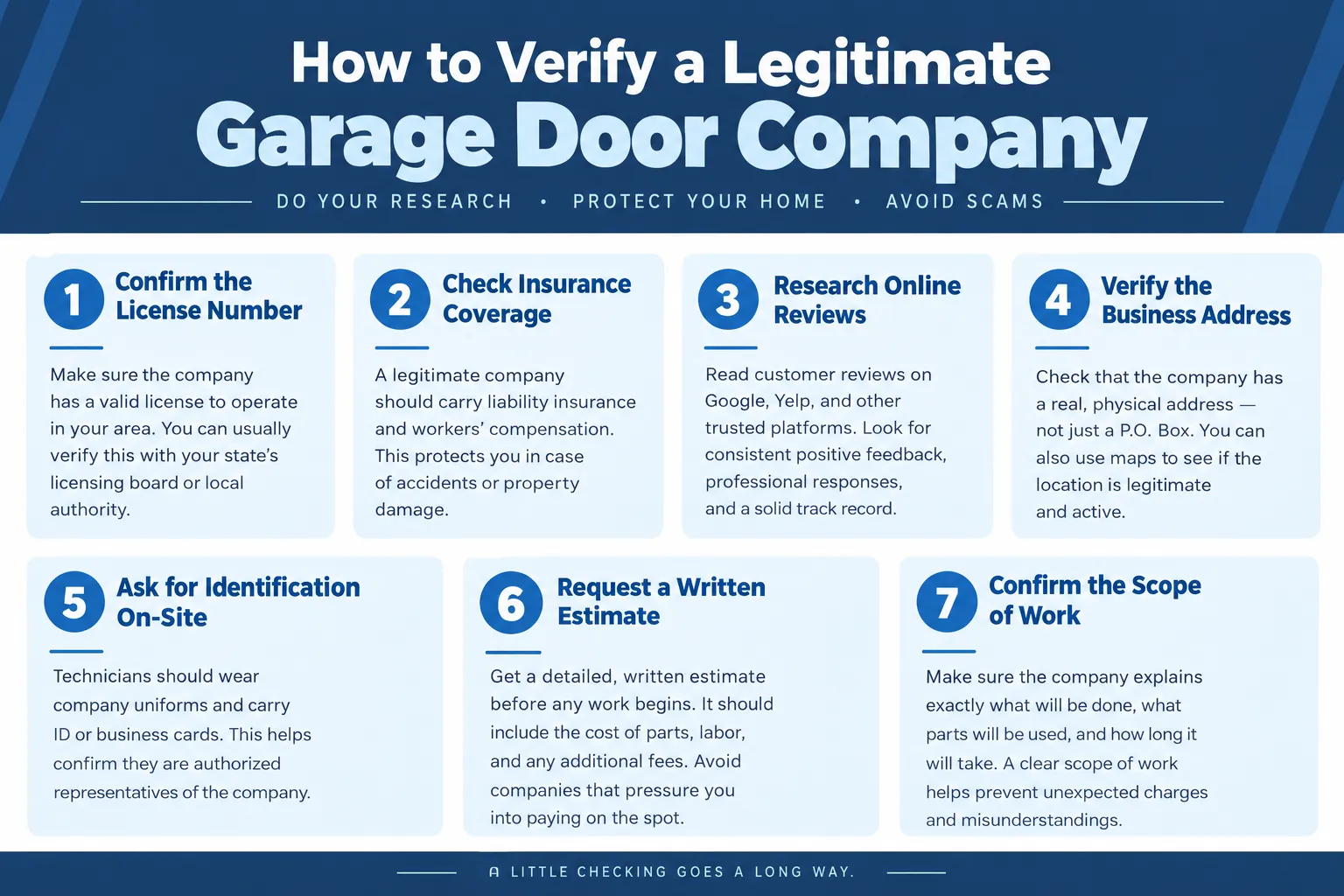
To confirm a company’s full standing and history before it ever reaches this point, read our guide on How to Verify a Legitimate Garage Door Company, which walks through every necessary check in complete detail.
Dispute the Charge With Your Bank or Card Issuer
Disputing the charge directly with a bank or card issuer is one of the fastest, most reliable ways to recover lost money.
Steps that support a successful dispute usually include:
- Calling the credit card company or bank as soon as possible
- Requesting a chargeback for services never received or authorized
- Providing copies of the evidence gathered during the earlier step
- Confirming the exact date and amount of the disputed charge, especially for a significant investment
- Following up regularly until the dispute reaches a final decision
A garage door replacement or repair charge disputed quickly stands a far better chance of a full refund in the long run.
Warn Others Through Public Reviews
Posting a factual account of the experience helps other homeowners recognize the same red flags before they lose money too.
An effective public review should include:
- An honest review posted on the company’s social media pages
- The same details shared on local review sites and community groups
- A factual, non-exaggerated account of exactly what happened
- Enough detail that others can recognize the same common garage door service issues
- No personal information that could create liability for the reviewer
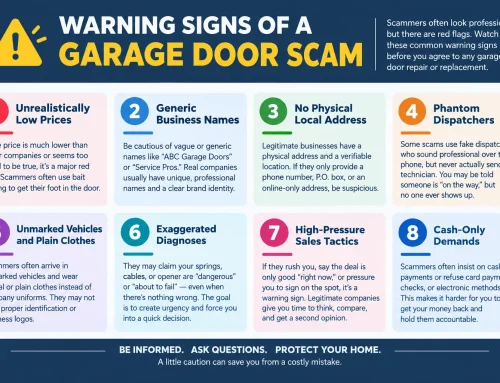
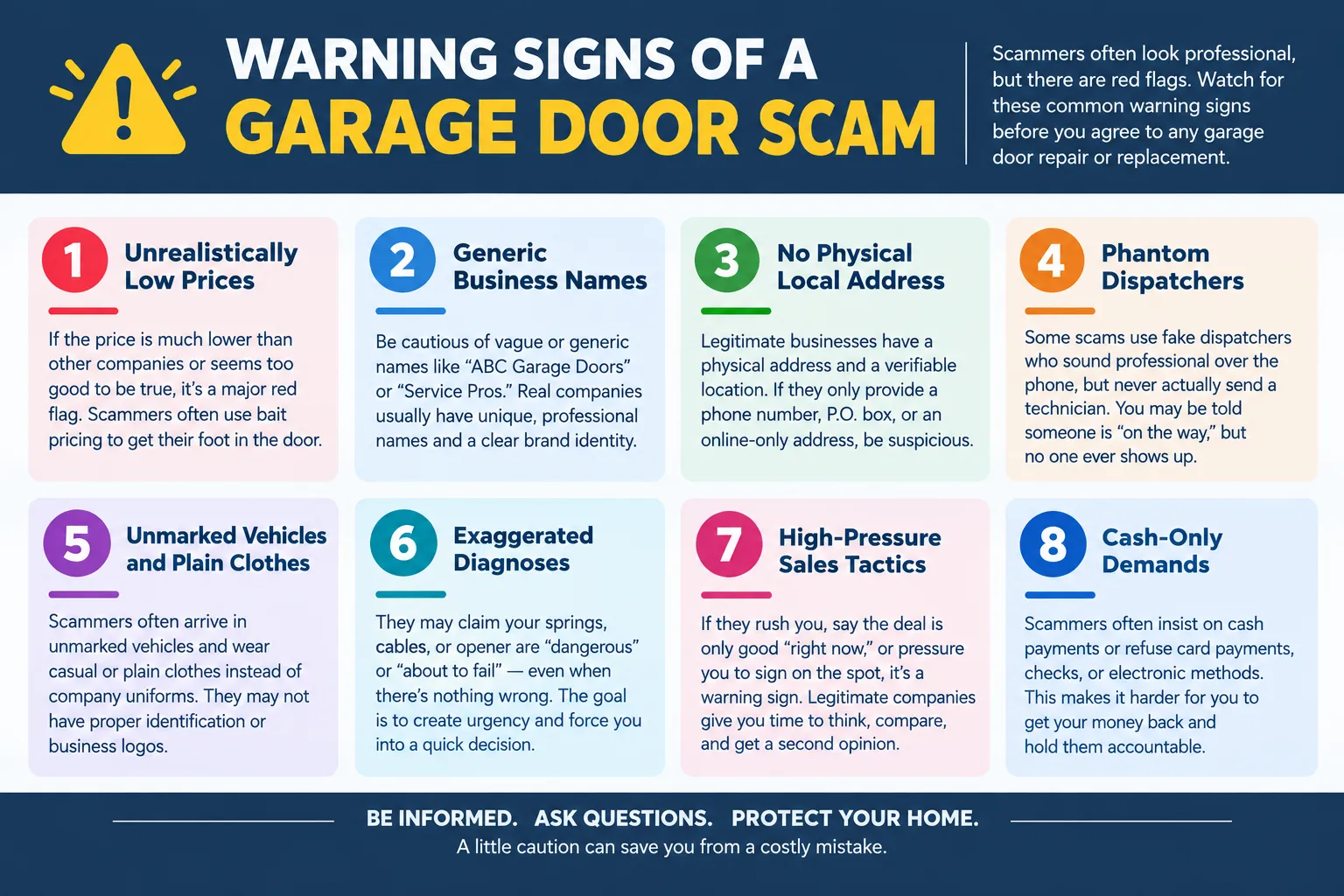
To recognize those same red flags well before ever booking another repair or signing any estimate, read our guide on Warning Signs of a Garage Door Scam, which breaks down each specific pattern in complete detail.
What Happens After a Scam Report Is Filed
Knowing what comes next helps a homeowner understand exactly what to expect once a report has been formally submitted.
After filing, a homeowner can typically expect:
- An acknowledgment from the agency within a few business days
- An investigation period that can take several weeks depending on the case
- A request for additional documentation if the initial report involves an emergency garage door repair service call
- Possible mediation between the homeowner and the company involved
- A final outcome ranging from a partial refund to formal license action
Responding quickly and clearly to any follow-up request from the agency keeps the case moving steadily toward a fair, timely resolution.
Filing the Right Report Holds a Scam Accountable
Reporting a garage door company scam provides private loss with real documentation that agencies, banks, and future customers can act on right away. A homeowner who follows each step in order stands a far better chance at recovering money and holding a reputable company fully accountable.
Florida Garage Door Pros stands ready across Hudson, FL to step in once a scam report has been filed, handling the repair the original company never finished correctly. Contact us or give us a call today, and let our team go the extra mile to deliver a great job and great service with the transparency every customer deserves.
Frequently Asked Questions
Can I report a garage door company if I already paid in cash?
Reporting is still possible even after a cash payment, though recovering the money becomes more difficult without a card or bank dispute option. Documentation like receipts, photos, and witness names still strengthens the case with the Better Business Bureau or local police.
What should I include in a complaint to the state licensing board?
A complete complaint should include the company's name, license number if known, a timeline of events, and copies of any evidence collected. Photos of poor workmanship or of damaged garage door parts often carry significant weight in the review.
Will filing a complaint guarantee I get my money back?
Filing a complaint does not guarantee a refund, but it does create an official record that can support a later dispute or legal action. Combining a formal complaint with a bank dispute usually offers the strongest overall chance at recovery.
Is it worth contacting the company before filing a formal complaint?
Contacting a garage door service provider directly first often resolves the issue faster and avoids the extra time a formal complaint process requires. Keeping a written record of that conversation still helps if the company later refuses to cooperate.
How specific should a public review be when warning others?
A public review should stay factual and specific, mentioning the exact service performed and the problem that resulted from it. Avoiding exaggeration keeps the review credible and reduces the risk of any legal pushback from the company.
What happens if the garage door company denies any wrongdoing?
A company's denial does not stop an agency from investigating the complaint, especially when solid documentation supports the homeowner’s account. The investigation process weighs the evidence from both sides before reaching any final outcome.
Can I report a garage door company scam anonymously?
Some agencies allow an anonymous complaint, though providing contact information usually helps investigators follow up with additional questions. A named complaint also tends to carry more weight than one filed without any way to verify the details.
How do I choose a reputable garage door company after a bad experience with a scam?
Checking for proper licensing, insurance, and consistent Google reviews under the same business name helps confirm that the garage door company is the right fit for the job. A quality garage door company reflects that reputation through a written estimate that covers the best value and the full range of services.
Does reporting a scam help other homeowners in the area?
Reporting a scam alerts local garage door businesses, agencies, and future customers to a pattern that might otherwise go unnoticed until more damage is done. A documented complaint on file can also warn other homeowners searching for reviews before hiring the same garage door repair company.