Garage door springs typically need replacing every 7 to 12 years for torsion springs or 3 to 7 years for extension springs, depending on daily use and cycle count. The door’s weight puts constant tension on the spring with every cycle, and once it reaches the end of its rated life, sudden failure becomes a real safety hazard.
Cycle count matters more than calendar age when predicting spring failure, since a household that runs the door often burns through cycles far faster than one that uses it less. This guide breaks down the two spring types, how often each one needs replacing, the warning signs of a spring nearing failure, and what to do when a spring breaks.
Key Takeaways
- A standard garage door spring lasts between 1.5 and 12 years depending on type and daily use.
- Torsion springs and extension springs differ in mounting location, tension behavior, and typical lifespan.
- Cycle count, not calendar age, determines when a spring actually needs replacing.
- Cold temperatures, high humidity, and heavy daily use all shorten spring life.
- A broken spring should never be handled as a do-it-yourself repair given the extreme tension involved.
What Are Garage Door Springs?
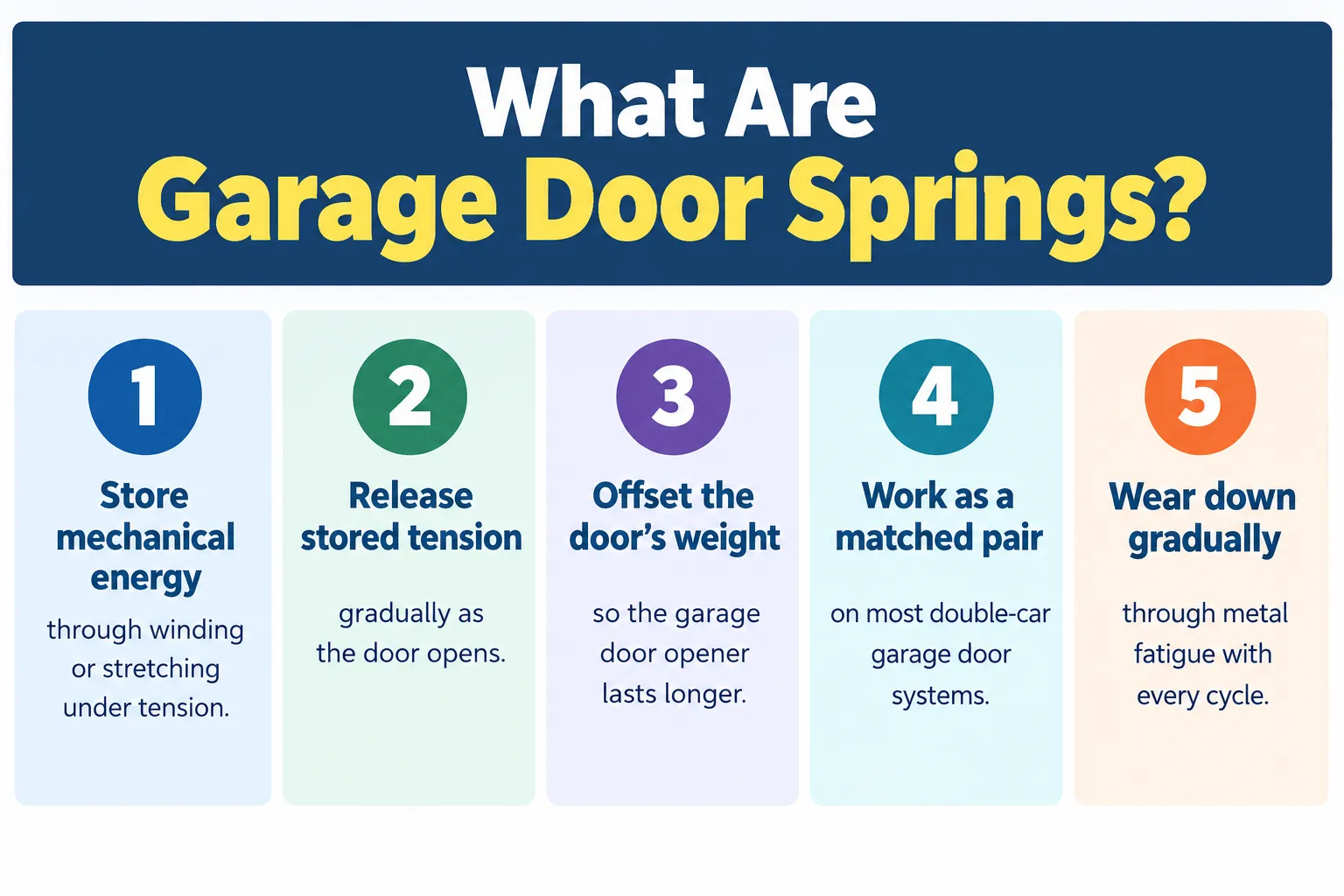
Garage door springs counterbalance the door’s weight, letting the opener lift and lower it with far less strain than the door weight alone would demand.
Here is what these springs actually do during daily operation:
- Store mechanical energy through winding or stretching under tension.
- Release stored tension gradually as the door opens.
- Offset the door’s weight so the garage door opener lasts longer.
- Work as a matched pair on most double-car garage door systems.
- Wear down gradually through metal fatigue with every cycle.
A garage door system without functioning springs forces the opener to strain against the door’s full weight, wearing down the motor faster than expected.
Torsion Springs vs Extension Springs
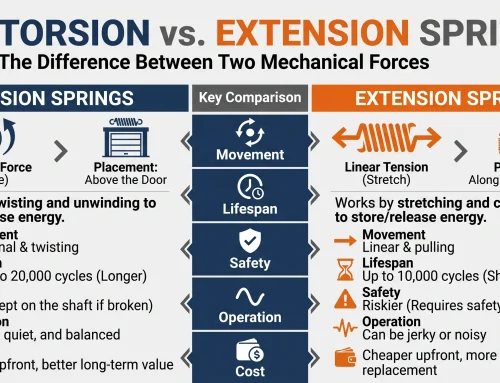
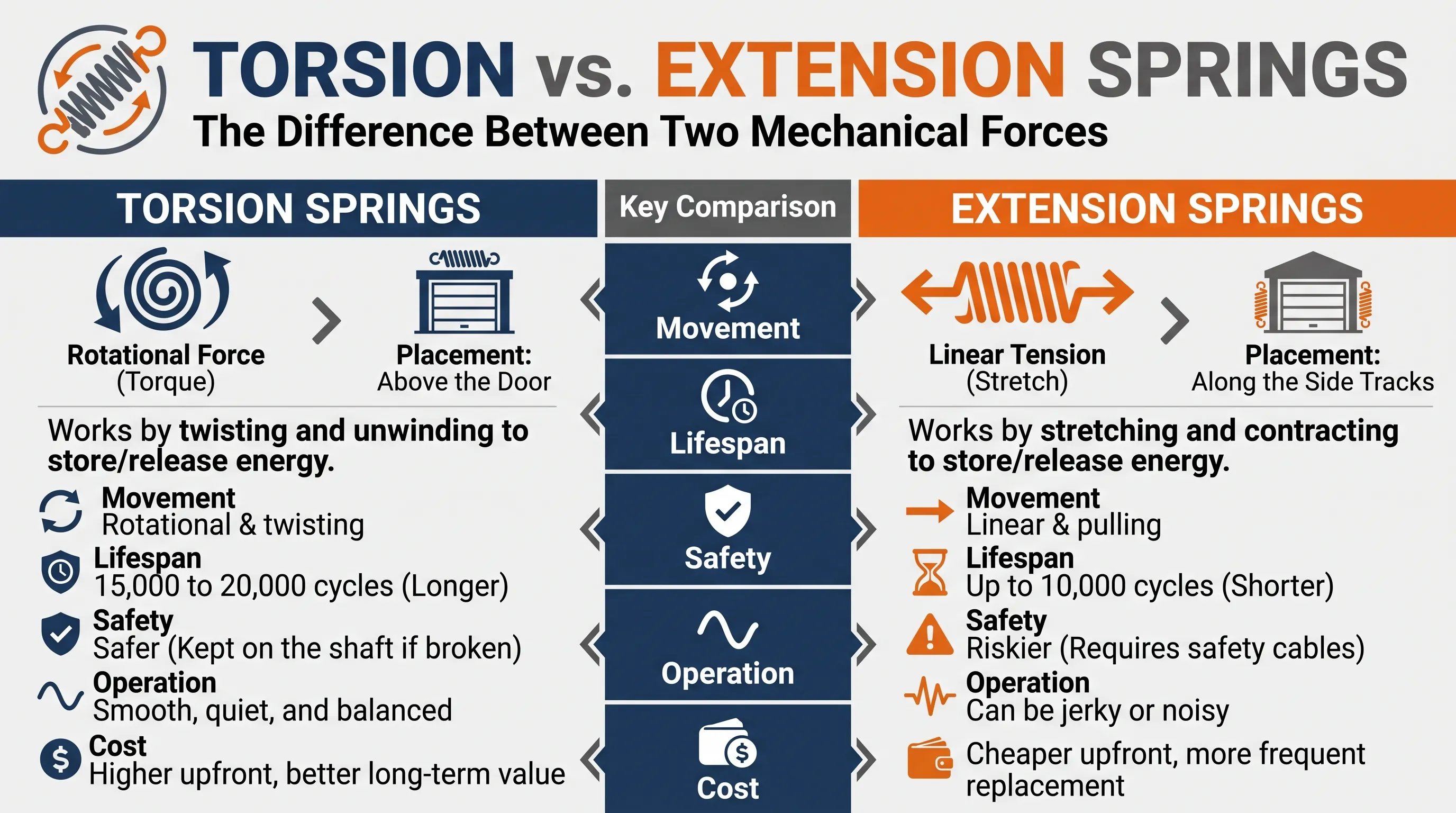
Torsion springs mount above the door on a metal shaft, while extension springs run along the horizontal tracks on the side of the door, and each behaves differently.
| Feature | Torsion Springs | Extension Springs |
| Mounting Location | Above the door opening on a metal shaft | Along the horizontal tracks on the side of the door |
| How Tension Works | Twists to store tension as the door closes | Stretches to store tension as the door closes |
| Typical Cycle Rating | 10,000 to 20,000 cycles | Around 10,000 cycles |
| Typical Lifespan | 7 to 12 years | 3 to 7 years |
| Safety Profile | High tension, requires a safety cable | Extreme tension when stretched, also requires a safety cable |
To compare how these two spring types affect long-term cost and safe operation, read our guide on Comparison Between Torsion and Extension Springs, which breaks down mounting differences and typical replacement timelines side by side.
How Often Do Garage Door Springs Need Replacing?
Standard or Builder-Grade Springs
Builder-grade springs come standard on most new-construction doors and have the shortest cycle rating of any spring type sold today.
These specific traits define a standard or builder-grade spring:
- Rated for 5,000 to 10,000 open-and-close cycles.
- Lasts roughly 1.5 to 7 years depending on daily use.
- Installed as the default option by most builders and installers.
- Priced lower than higher-cycle alternatives at initial installation.
- Best suited to households with light to moderate daily use.
Running the door multiple times daily throughout the week tends to push a builder-grade spring toward the shorter end of that expected lifespan.
Extension Springs
Stretching along the horizontal tracks on either side, extension springs carry a fixed cycle rating regardless of door size or weight.
Look for these details when identifying an extension spring setup:
- Rated for around 10,000 open-and-close cycles.
- Lasts roughly 3 to 7 years depending on daily use.
- Mounted along the tracks rather than above the door opening.
- Common on older or lighter residential garage doors.
- Requires a safety cable because it releases tension if one snaps.
A door heavier than the rated capacity tends to wear out this spring type well before it reaches its full rated cycle count.
Standard Torsion Springs
Standard torsion springs mount on a metal shaft above the door and offer a noticeably longer service life than extension springs.
A standard torsion spring typically carries these specific characteristics:
- Rated for 10,000 to 20,000 open-and-close cycles.
- Lasts roughly 7 to 12 years depending on daily use.
- Mounted above the door opening rather than along the tracks.
- Common on most modern residential garage doors today.
- Offers smoother operation than an equivalent extension spring.
Consistent lubrication and a properly balanced door both help a standard torsion spring reach the higher end of that lifespan range.
High-Cycle or Premium Springs
High-cycle springs use denser coil construction to withstand far more open-and-close cycles than a standard torsion spring.
Denser coil construction gives this spring type several distinct advantages:
- Rated for 25,000 to 50,000 or more open-and-close cycles.
- Lasts roughly 10 to 20 years or more, depending on daily use.
- Priced higher than standard torsion springs at initial installation.
- Suited for households that open the door multiple times per day.
- Reduces how often a replacement visit becomes necessary overall.
Frequent daily use often justifies the added upfront cost through fewer replacement visits and less downtime over the years that follow.
Ultra High-Cycle Springs
Ultra high-cycle springs represent the longest-lasting option available, built for households or facilities with very frequent daily use.
Extremely heavy daily use calls for a spring built with these specific qualities:
- Rated for up to 80,000 open-and-close cycles.
- Lasts roughly 22 to 40 years or more, depending on daily use.
- Carries the highest upfront cost of any spring type listed.
- Built for exceptionally heavy or frequent daily operation.
- Rarely needed outside high-use residential or light commercial settings.
Garage door spring installation for an ultra high-cycle spring often pays off fastest in households that open the door many times a day.
Factors That Affect Garage Door Spring Lifespan
Outside conditions speed up or slow down how quickly a spring reaches the end of its rated life, well beyond cycle count alone.
Consider how these specific factors shape the real lifespan of a garage door spring:
- Daily open-and-close frequency multiplies wear over time.
- High temperatures and cold temperatures both accelerate metal fatigue in the coil.
- High humidity promotes rust, which weakens the spring structure.
- Specific door weight determines how much tension the spring carries per cycle.
- Garage door maintenance, including lubrication, slows down friction-related wear.
A spring exposed to more than one of these conditions at once throughout the year often needs replacing well ahead of its original schedule.
Signs a Garage Door Spring Needs Replacing
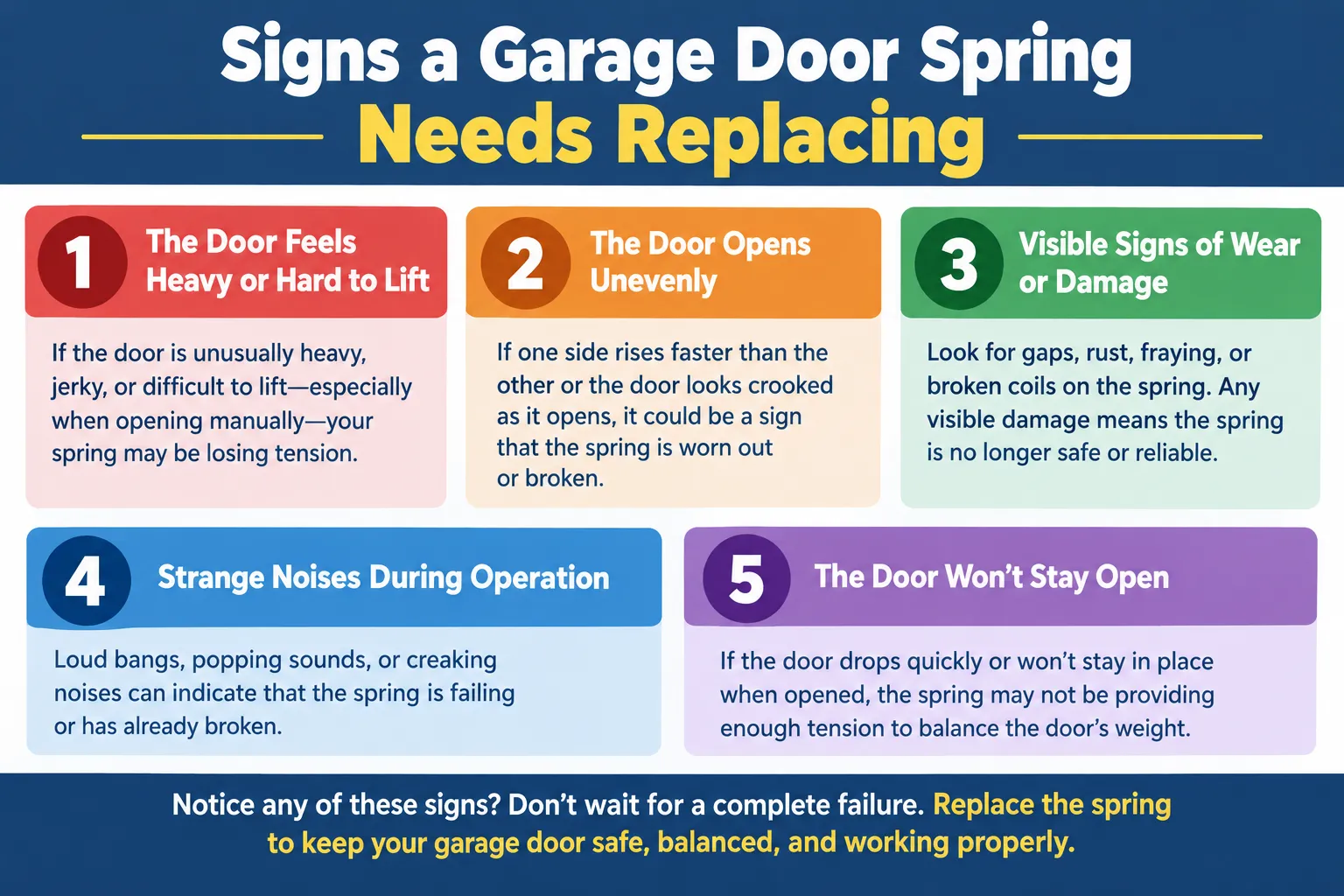
Warning signs of wear typically appear well before a spring breaks, giving a household time to schedule a replacement.
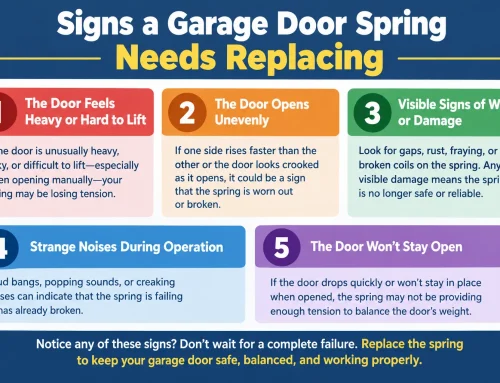
Watch for these specific warning signs before a full failure occurs:
- A visible gap forming in a torsion spring’s coil.
- A loud noise or bang coming from above the door.
- Uneven movement or the door tilting to one side when you open it.
- Rust or visible damage along the spring’s length.
- The door feeling unusually heavy to lift by hand.
To understand exactly which warning signs point to a spring nearing failure, read our guide on Signs a Garage Door Spring Needs Replacing, which walks through each symptom and explains what typically happens next.
What to Do When a Garage Door Spring Breaks?
Losing spring tension turns a garage door into a genuine safety hazard within seconds, since the door no longer has anything controlling its weight.
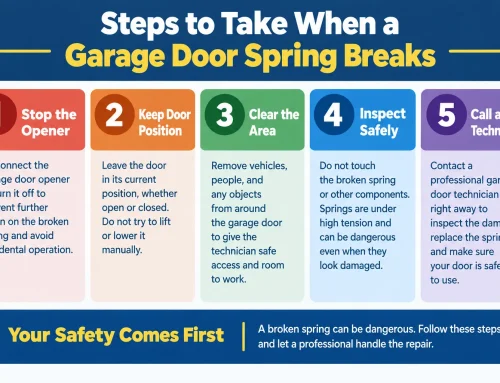
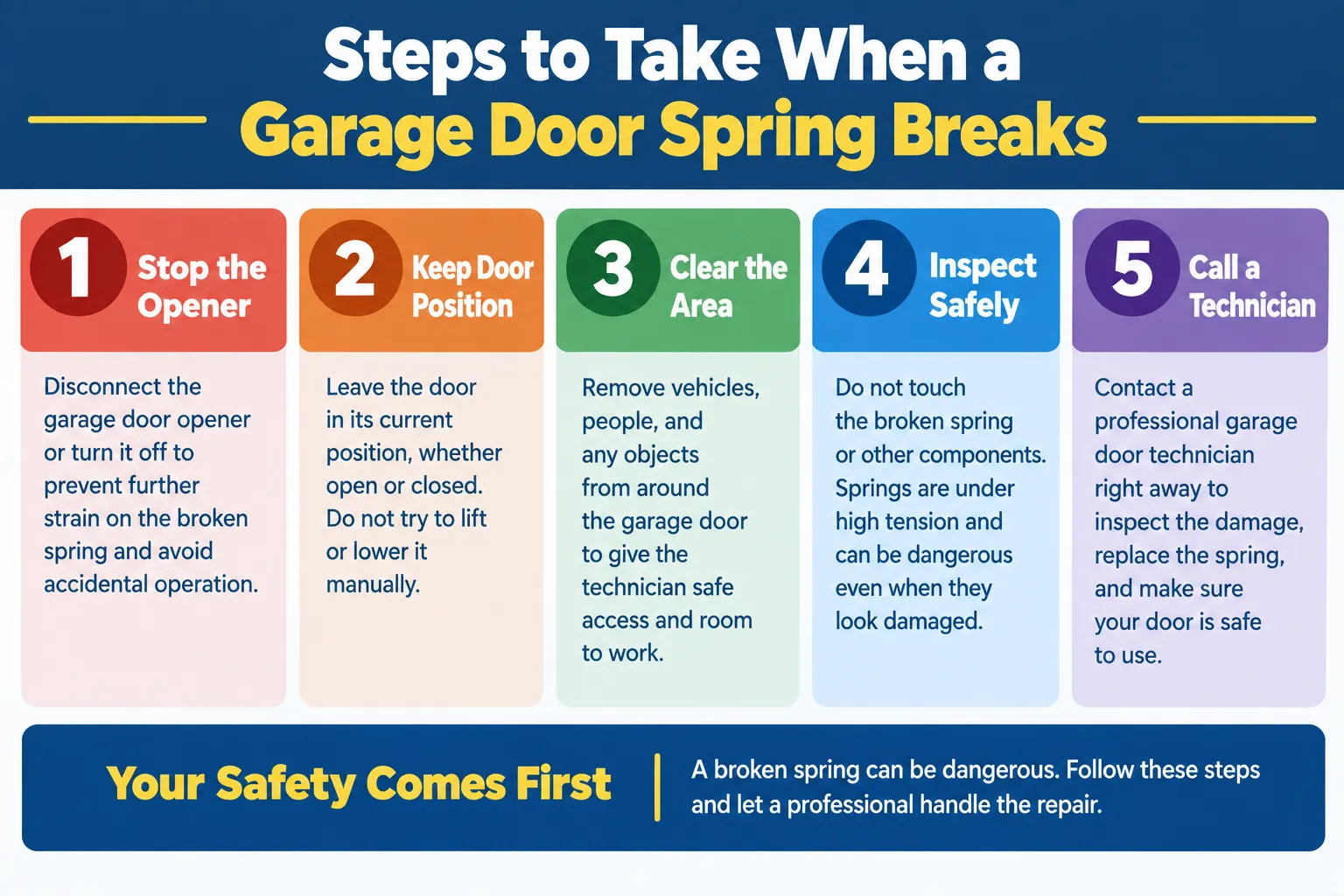
Follow these specific steps the moment a spring breaks or fails suddenly:
- Stop using the garage door opener immediately if you suspect a spring failure.
- Keep the door in its current position instead of forcing it open or closed.
- Move vehicles and people clear of the door opening as a precaution.
- Inspect visually from a safe distance without touching the broken spring.
- Schedule emergency repair with a trained technician instead of attempting a fix alone.
To walk through the full safety process for handling a sudden spring failure, read our guide on Steps to Take When a Garage Door Spring Breaks, which covers exactly what to avoid until help arrives.
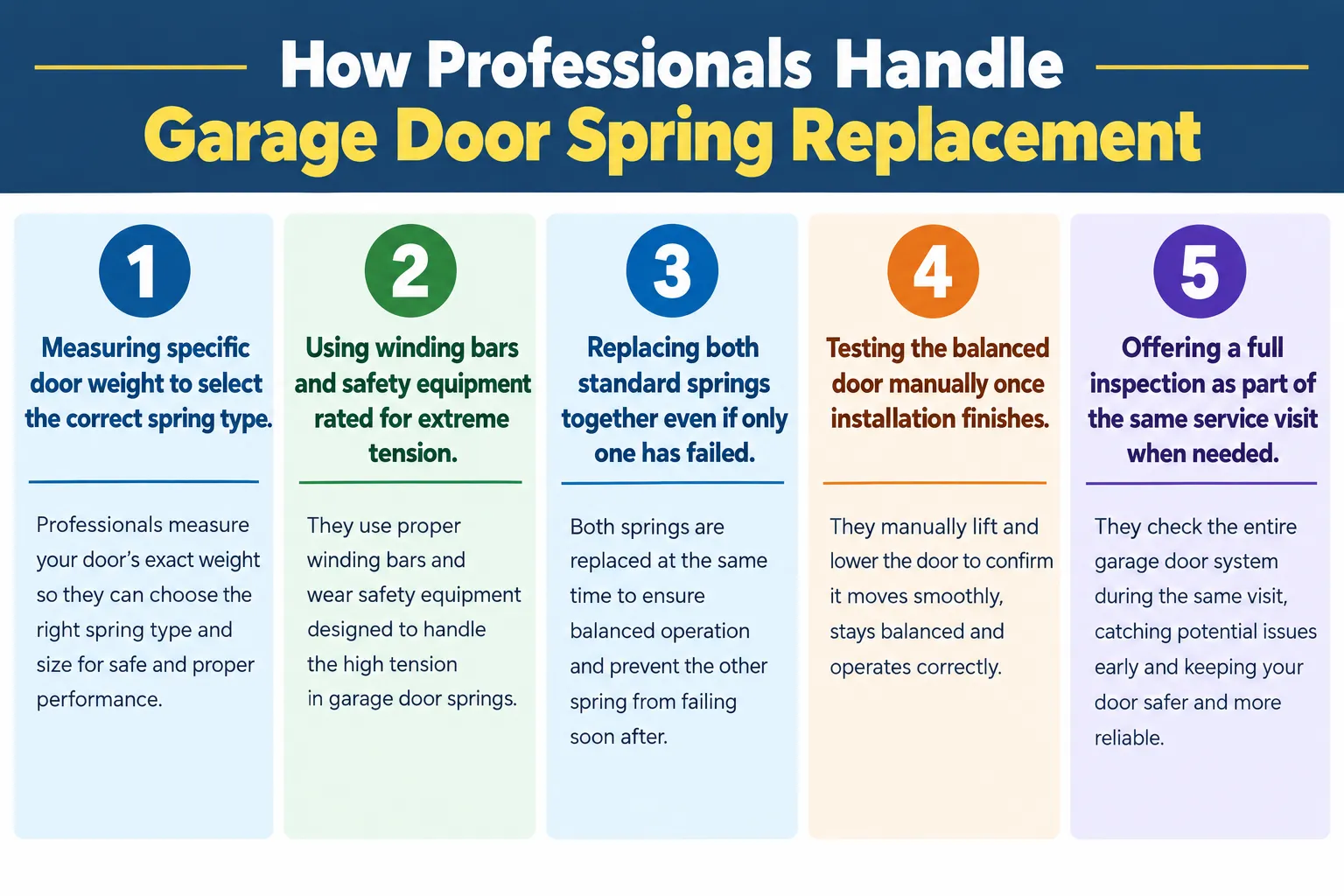
Specialized tools built for high tension give a trained technician a real safety advantage over any do-it-yourself replacement attempt.
Here is what a professional visit for spring replacement typically involves:
- Measuring specific door weight to select the correct spring type.
- Using winding bars and safety equipment rated for extreme tension.
- Replacing both standard springs together even if only one has failed.
- Testing the balanced door manually once installation finishes.
- Offering a full inspection as part of the same service visit when needed.
Professional installation lowers the risk of serious injury when handling high-tension springs without proper training or the right equipment.
The Right Answer Depends on Cycle Count, Not the Calendar
Spring replacement timing comes down to cycle count and the visible signs of wear that appear as a spring nears the end of its life, far more than any fixed calendar date could predict. A household that tracks daily usage and watches for early symptoms rarely gets caught off guard by sudden failure.
Florida Garage Door Pros brings hands-on experience replacing worn and broken springs for households across Hernando County, FL, using equipment built for high-tension work. Contact us or give us a call today, and let our trained technicians confirm whether a spring replacement or a full inspection fits your situation.
Frequently Asked Questions
What is the difference between torsion springs and extension springs?
Torsion springs mount above the door on a metal shaft and twist to store tension, while extension springs run along the horizontal tracks and stretch instead. Torsion springs generally last longer and offer a safer operating profile overall.
Can a homeowner replace a garage door spring alone?
Replacing a garage door spring alone isn't recommended because the coil stores extreme tension that can cause serious injury if released improperly. A trained technician carries the tools and experience needed to complete the job safely.
What does cycle rating actually mean for a spring?
Cycle rating refers to how many times a spring can open and close the door before reaching the end of its expected life. One cycle equals one full open-and-close motion of the garage door.
Why does a garage door suddenly feel heavier to lift?
A garage door feeling heavier to lift by hand often signals a weakening spring that no longer fully supports the door's weight. This change usually happens gradually before a complete spring failure.
Does climate affect how long a garage door spring lasts?
Climate plays a real role, since high humidity promotes rust while high temperatures and cold temperatures both accelerate metal fatigue in the coil. Homeowners in humid or temperature-extreme regions should plan for replacement on the shorter end of the typical lifespan.
Should both springs get replaced even if only one breaks?
Professionals commonly replace both standard springs together, since the second spring has typically undergone the same wear and often fails soon after. This approach also keeps the door balanced evenly on both sides.
What happens if you ignore a broken spring?
Ignoring a broken spring leaves the garage door opener straining against the full weight of the door, which can burn out the motor and create an ongoing safety hazard. The door may also become stuck in a partially open position that blocks vehicle access.
How can a homeowner tell if a spring is close to failing?
A visible gap in the coil, unusual noises during operation, or a door that suddenly feels harder to lift all signal a spring nearing the end of its service life. Scheduling an inspection at the first sign of these changes helps avoid sudden failure.
Does regular maintenance actually extend spring life?
Regular maintenance, including periodic lubrication and balance checks, extends spring life by reducing friction and catching wear before it worsens. This small investment in upkeep often delays the need for full replacement by a meaningful margin.