A garage door spring shows warning signs before it fails completely, including unusual noises, a visible gap in the coil, and a door that suddenly feels heavier to lift. Identifying these signs early gives a household time to schedule a replacement before the spring fails during regular use.
Warning signs, visible damage, and changes in door weight and overall performance all point toward the same underlying problem: a spring nearing the end of its life. This guide walks through five specific signs to watch for, what each one indicates, and what to do once a spring shows these signs.
Key Takeaways
- A visible gap in the coil signals a torsion spring under uneven tension.
- Loud noise or a bang during operation often points to a spring nearing failure.
- Uneven movement or a door tilting to one side suggests unequal spring tension.
- Rust or visible damage on the spring weakens its structure over time.
- A door that feels heavier to lift signals reduced spring support.
Warning Signs a Garage Door Spring Is Failing
Five specific signs tend to appear before a spring breaks, giving a household a window to schedule replacement before sudden failure.
| Sign | What It Indicates | Typical Underlying Cause |
| Visible Gap in the Coil | Uneven tension building in a torsion spring | Metal fatigue from repeated cycles |
| Loud Noise or Bang | Sudden tension release inside the spring | A coil snapping under high tension |
| Uneven Door Movement | Unequal tension between paired springs | One spring wearing faster than its pair |
| Rust or Visible Damage | Weakened metal structure from corrosion | Moisture exposure or missing lubrication |
| Door Feels Heavier | Reduced spring support for door weight | Reduced coil tension from age or wear |
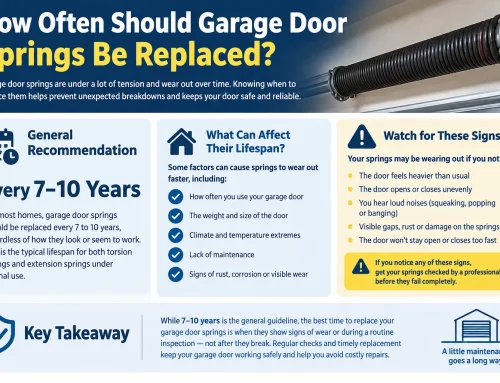
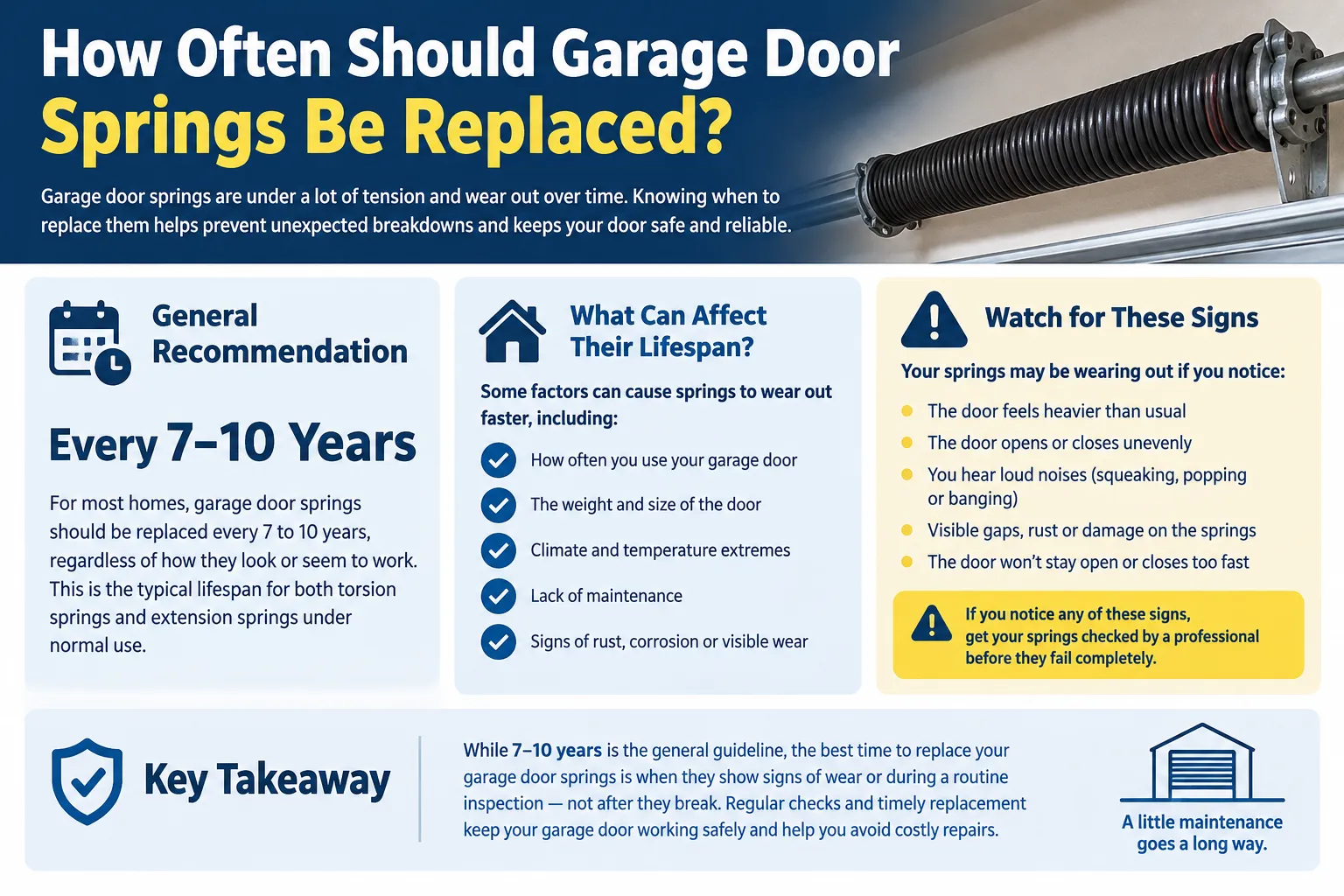
To understand how often a spring reaches this point under normal use, read our guide on How Often Should Garage Door Springs Be Replaced?, which breaks down cycle ratings and expected timelines for every spring type.
Visible Gap in the Coil
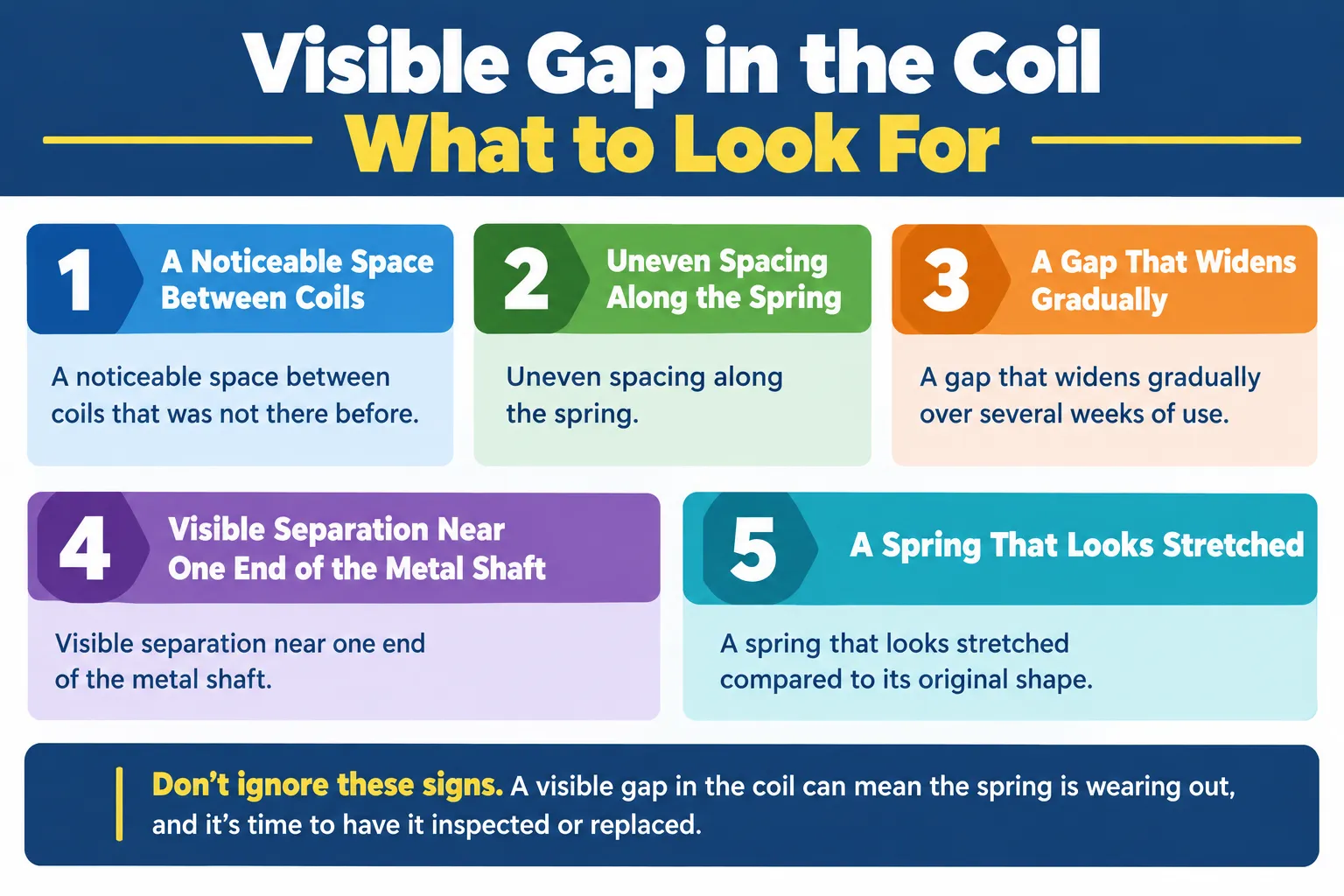
A torsion spring under uneven tension often develops a visible gap between coils, which typically appears well before a full break.
Look for these specific details when checking for a coil gap:
- A noticeable space between coils that was not there before.
- Uneven spacing along the spring.
- A gap that widens gradually over several weeks of use.
- Visible separation near one end of the metal shaft.
- A spring that looks stretched compared to its original shape.
A coil gap generally calls for emergency garage door repair, since the spring can fail without further warning once it reaches this stage.
Loud Noise or Bang When Opening
Sudden tension release inside a spring often produces a distinct loud noise, one of the more startling signs a spring is close to failing.
Watch for these specific sounds during door operation:
- A sharp bang coming from above or beside the door.
- Popping or snapping sounds during the open-and-close cycle.
- Excessive squeaking that did not exist during normal operation.
- Grinding noises tied to metal fatigue in the coil.
- Sounds that grow louder or more frequent over time.
A new or unfamiliar noise during regular door operation usually signals that spring tension has changed and needs attention soon.
Uneven Movement or Door Tilting
Unequal tension between a pair of springs often shows up as a door that moves unevenly instead of rising and falling in a straight line.
Consider these specific movement patterns tied to unequal tension:
- The door tilting visibly to one side during operation.
- One side of the door opening faster than the other.
- The door appearing unbalanced when stopped midway.
- Uneven gaps along the side of the door when closed.
- Jerky or inconsistent movement throughout the full cycle.
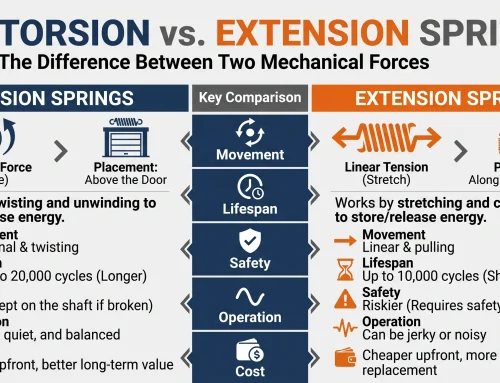
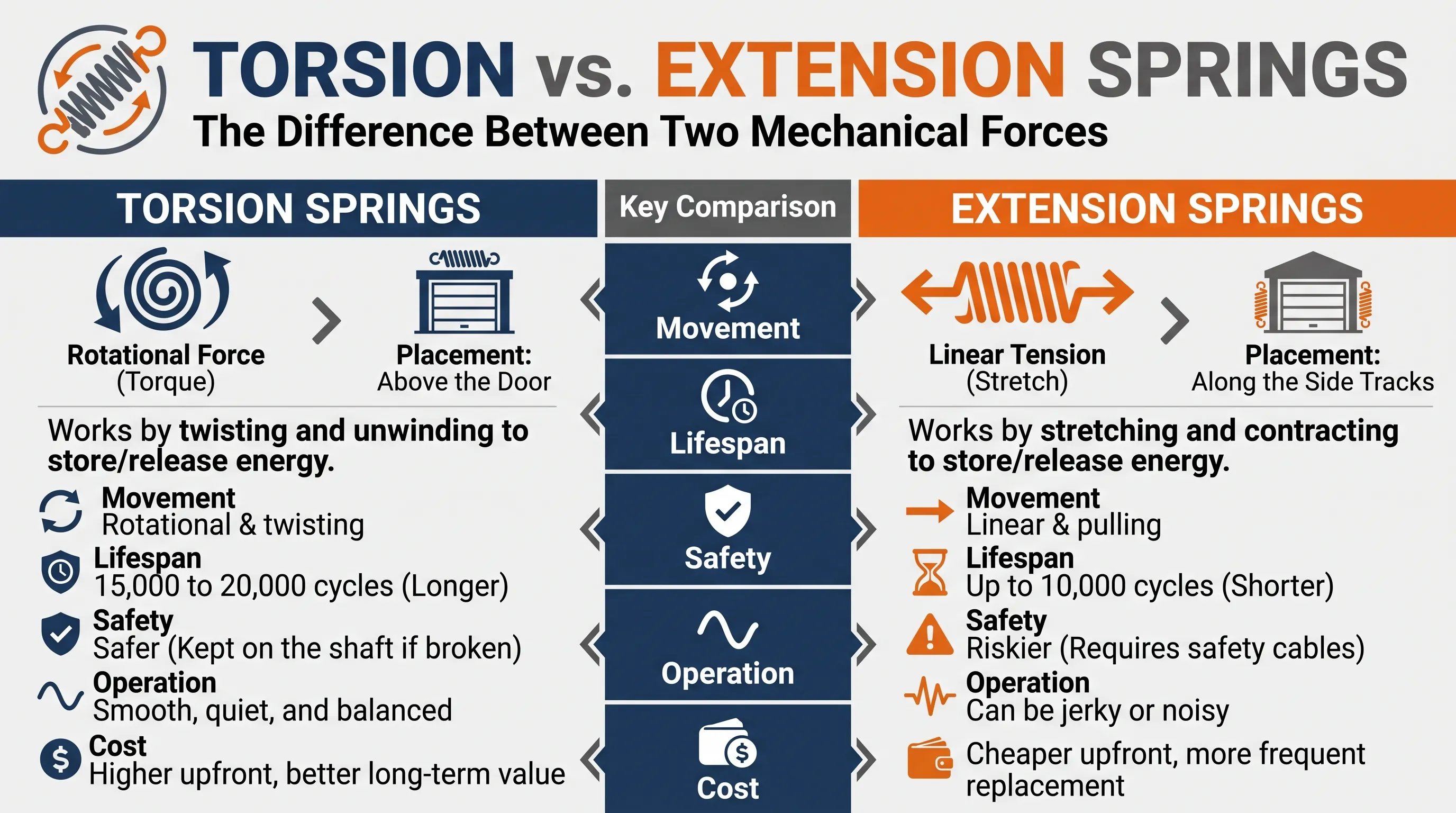
To compare how torsion and extension springs each distribute tension differently when one side wears faster, read our guide on Comparison Between Torsion and Extension Springs, which breaks down how each design handles unequal wear.
Rust or Visible Damage on the Spring
Corrosion and physical damage both weaken a spring’s structure long before it breaks during normal use, especially in humid or coastal climates.
Look for these specific signs of deterioration on the spring itself:
- Rust forming along the coils, especially after harsh weather.
- Discoloration that signals corrosion beneath the surface.
- Visible dents or bends in the metal shaft or coil.
- Flaking or pitting on the spring’s outer surface.
- Thicker wires elsewhere on the door showing similar wear.
Regular lubrication as part of ongoing garage door maintenance helps slow corrosion and extend the working life of a spring already showing early wear.
Door Feels Heavier Than Usual
A garage door relies on spring tension to offset its full weight, so a spring losing strength often shows up first as extra effort when lifting by hand.
Notice these specific changes in how the door feels to operate:
- Heavy lifting required to raise the door by hand.
- The opener straining audibly during normal operation.
- A door that closes faster than it used to.
- Resistance that increases gradually over several weeks.
- The door failing to stay open partway without support.
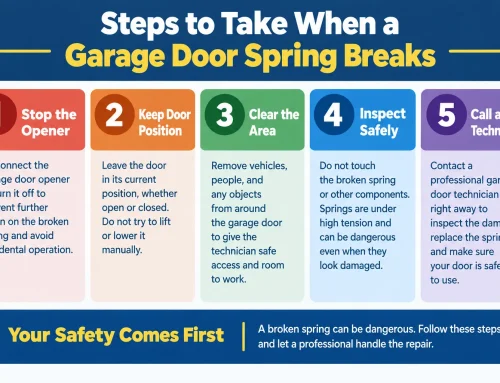
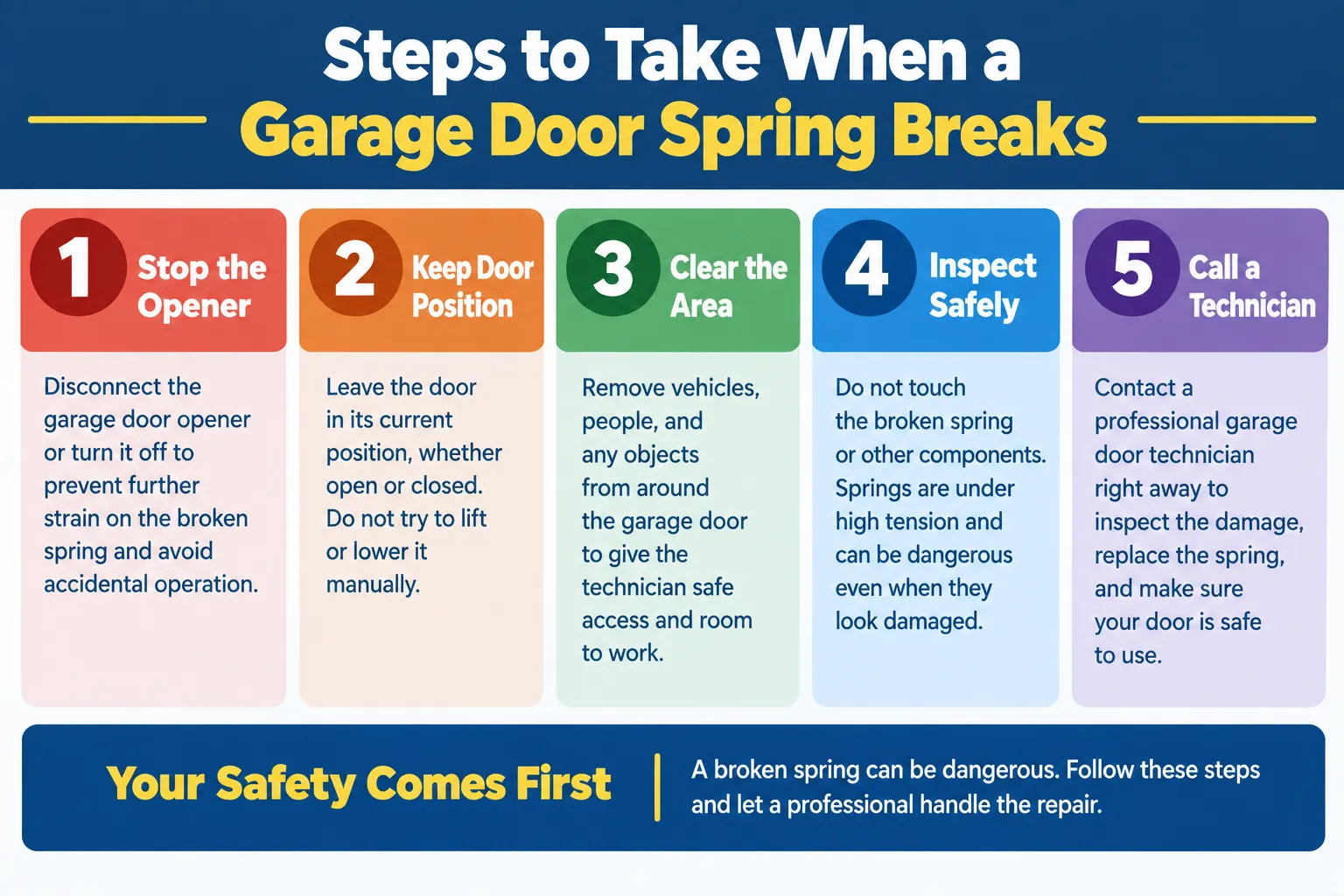
To walk through the exact steps to take once a spring shows signs of reduced support or breaks outright, read our guide on Steps to Take When a Garage Door Spring Breaks, which covers the safety steps that apply in either situation.
What Should Be Done Once a Spring Shows These Signs?
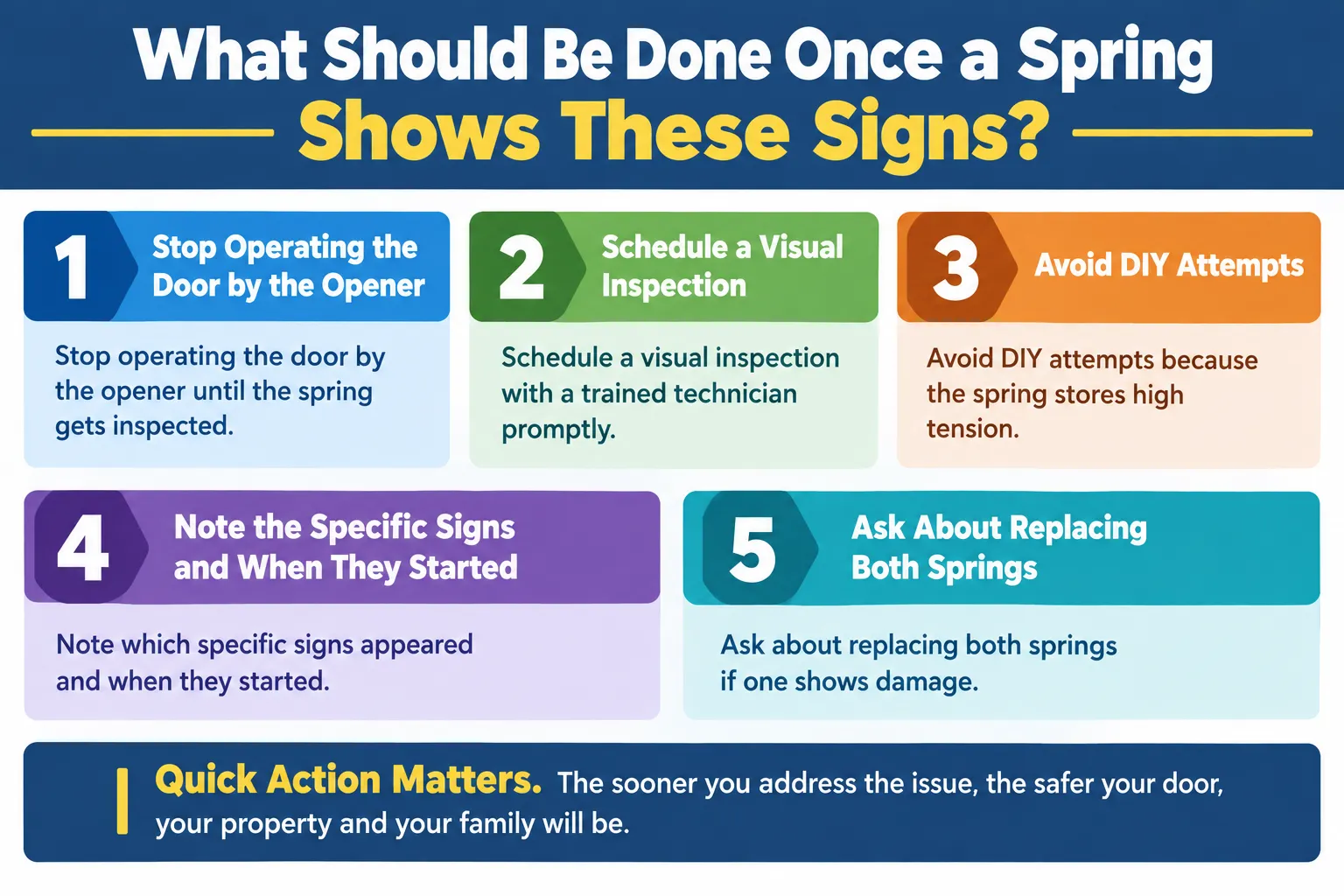
A spring showing any of these signs needs prompt attention, since waiting increases the risk of sudden failure during regular use.
Follow these specific steps once warning signs appear:
- Stop operating the door by the opener until the spring gets inspected.
- Schedule a visual inspection with a trained technician promptly.
- Avoid DIY attempts because the spring stores high tension.
- Note which specific signs appeared and when they started.
- Ask about replacing both springs if one shows damage.
Scheduling garage door repair at the first sign of trouble typically costs less than an emergency call after a full spring failure.
Early Signs Give Households a Window Before Failure
A garage door spring rarely fails without warning, and five specific signs, from a visible coil gap to a door that feels heavier to lift, all point toward the same underlying problem. Households that treat these signs as scheduling triggers avoid the disruption and higher cost of an emergency repair.
Florida Garage Door Pros helps households across Weeki Wachee, FL identify spring wear early and schedule replacement well before a full failure occurs. Contact us or give us a call today, and let our trained technicians inspect your spring, confirm what it needs, and walk you through the next steps.
Frequently Asked Questions
Why does a garage door suddenly make loud noises?
Loud noise during operation often signals sudden tension changes inside a spring nearing the end of its spring life. A sharp bang in particular can indicate the spring has already broken or is about to, which calls for prompt spring repairs.
Can a garage door still open with a damaged spring?
A garage door opener may still open the door with a damaged spring, though it strains significantly harder to lift the door’s full weight. Continuing to use the door this way risks serious injury and, over time, further damage to the opener motor.
How can rust affect a garage door spring's lifespan?
Rust weakens a spring's metal structure over time, reducing the lifespan of your garage door springs well below the original cycle rating. Regular lubrication with a proper garage door lubricant and visual inspection both help slow this process in humid or coastal climates.
Is an unbalanced door always caused by a spring problem?
An unbalanced door is very often caused by unequal tension between paired springs, though issues along the horizontal tracks can occasionally contribute as well. A trained technician can confirm the exact cause during a visual inspection to help keep the property safe.
Should both springs get replaced if only one shows signs of wear?
Replacing both springs together as part of routine spring replacements is standard practice once one shows signs of wear, since the second spring has typically undergone similar stress. This approach also helps maintain smoother operation and even tension across the door's sides.
How quickly should a homeowner act after noticing warning signs?
Acting within days of noticing warning signs significantly reduces the risk of sudden spring failure during regular use. Waiting longer increases safety risks and strains the entire garage door system, from the opener to the tracks.
Can cold weather make these warning signs worse?
Cold weather can accelerate metal fatigue in a spring already showing signs of wear, making standard springs progress toward failure faster than they would in milder conditions. Busy households in colder regions should watch closely during winter months to protect the door's safety.
Does a squeaking garage door always mean the spring needs replacing?
Excessive squeaking doesn't always mean a spring needs replacing, since it can also result from poor maintenance of the moving parts. A visual inspection helps confirm whether the noise points to spring tension or simply dry hardware, and proper care of the opener often prevents problems overall.
What happens if you ignore these warning signs?
Ignoring these warning signs increases the risk of sudden spring failure, which can leave the door stuck and create a real safety hazard. Scheduling garage door spring repair at the first sign of trouble, whether with higher-cycle torsion springs or a standard replacement, helps avoid an emergency repair situation altogether.