If a garage door company scams you, stop all contact and payment immediately, check the door for safety issues, document everything, and report the incident to the proper agencies. A scam involving garage door repair often leaves homeowners with a broken garage door and wasted money.
The steps below protect the household budget and the safety of anyone using the garage door until a licensed professional can assess the actual damage. Following the right sequence also puts a homeowner in a far stronger position to recover money and hold the company accountable.
Key Takeaways
- Stop payment and contact the company the moment a scam is suspected
- Document every text, invoice, and photo tied to the garage door repair
- Report the incident to consumer agencies and the state licensing board
- Refunds are possible through banks, card issuers, or small claims court
- A verified, licensed company prevents the same garage door scam from repeating
What Is a Garage Door Scam?
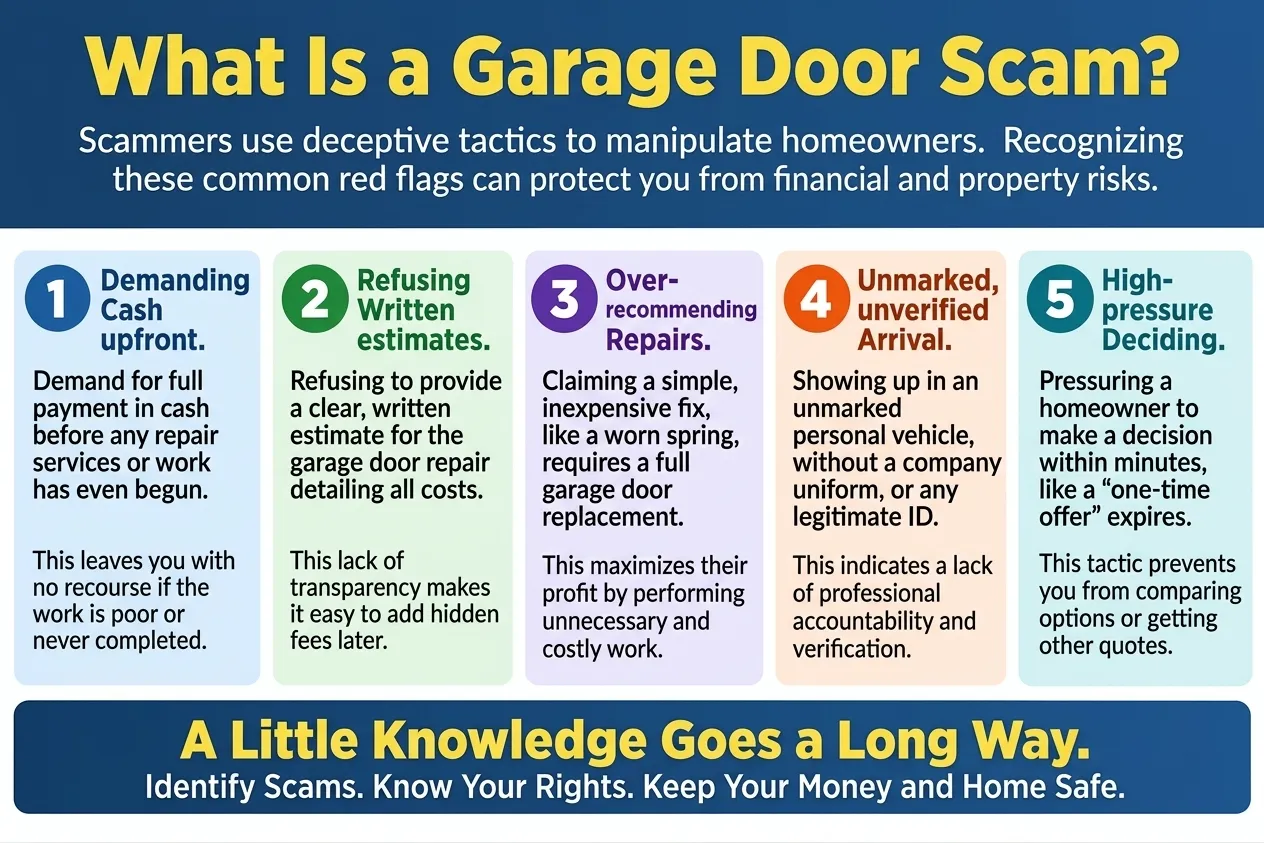
A garage door scam means paying for garage door repair services that were unnecessary, incomplete, or never done at all.
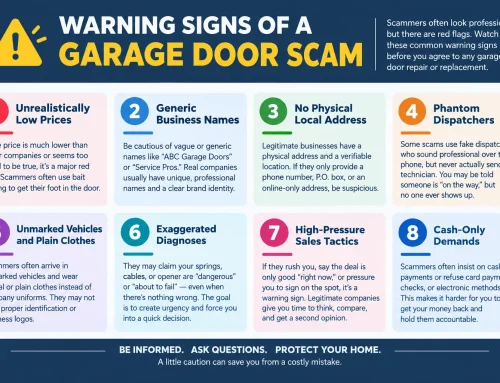
Common traits that signal a garage door scam include:
- Demanding full payment in cash before any repair services begin
- Refusing to provide a written estimate for the garage door repair
- Claiming a simple fix requires a full garage door replacement instead
- Showing up without a marked vehicle, uniform, or company identification
- Pressuring a homeowner to decide within minutes instead of comparing options
Recognizing these traits early, which match known scam awareness patterns tracked by industry groups, keeps a stressful situation from turning into a costly loss.
Common Types of Garage Door Scams
Garage door industry scammers repeat a handful of common tactics across different homeowners and neighborhoods every year.
| Scam Type | How It Works | Target |
| Bait-and-switch pricing | Quote balloons once the technician arrives on site | Homeowners with an urgent repair |
| Fake urgency | Claims extension springs will cause serious injury overnight | Anyone unfamiliar with real spring risks |
| Unlicensed workers | Pose as certified garage door repair service technicians | Homeowners who skip license checks |
| Unnecessary spring replacement | Sold as urgent when the original spring was fine | Homeowners with a working but older spring |
| Vanishing after deposit | No comprehensive garage door work ever gets done | Homeowners who pay a deposit upfront |
Identifying these patterns in advance protects a homeowner from a costly setup designed to drain their wallet over time.
What to Do If You Get Scammed by a Garage Door Company
Step 1: Stop Further Contact and Payment With the Company
Cutting off financial exposure to the company involved right away is the first, most important move after suspecting a scam.
Steps to take immediately include:
- Cancel any scheduled follow-up visits tied to the original repair services
- Contact the bank or card issuer to flag the transaction as disputed
- Revoke access if a garage door opener code was shared during the visit
- Change any gate or entry codes the technician may have viewed or used
- Save the phone number and any names given for later reference
Ending contact at this stage keeps the situation from growing into further damage or a repeat visit from the same company later on.
Step 2: Check the Door for Safety Issues Before Using It Again
Testing the garage door carefully before returning to regular use again catches hidden problems that could otherwise lead to a serious injury.
A basic safety check should cover:
- Watching for a damaged garage door that reverses unevenly while closing
- Listening for grinding or popping sounds tied to bent tracks or worn rollers
- Checking whether the torsion springs look properly seated in their brackets
- Testing the auto-reverse sensors with a small object placed in the path
- Confirming the opener has no lingering opener issues after the visit
Premature wear left unchecked at this stage can keep a garage door from ever reaching its proper function safely again.
Step 3: Document Everything Before Filing Any Report
Building a clear, organized paper trail turns a vague complaint into a case an agency or bank can actually act on quickly.
Useful documentation to gather includes:
- Photos of the garage door before, during, and after the visit
- Copies of any invoice, receipt, or text message tied to the payment
- The technician’s name, vehicle description, and any company markings seen
- A written timeline noting dates, times, and what was said during the visit
- Bank or card statements showing the exact charge and its posting date
Thorough documentation gathered at this early stage makes every step that follows faster and considerably more effective overall.
Step 4: Try to Resolve the Issue With the Company Directly
Giving the company a fair chance to make things right before escalating to outside agencies often leads to a faster, smoother resolution.
A direct resolution attempt should include:
- Sending a written request describing the exact problem and desired outcome
- Setting a clear deadline for a response, typically five to seven business days
- Requesting a second visit at no charge to correct the original repair services
- Asking for a partial or full refund if the work cannot be corrected
- Keeping a copy of every message sent during this attempt at resolution
A documented, direct attempt at resolution also strengthens any formal report filed later on with an outside agency involved.
Report the Scam to the Right Agencies
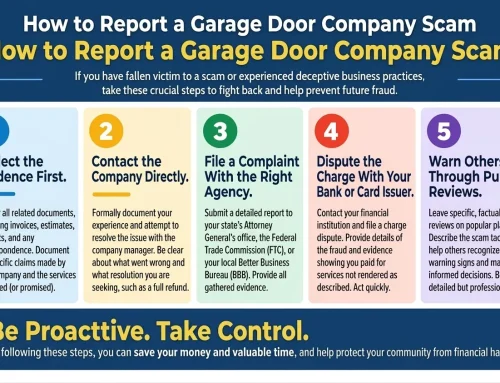
Filing a formal report moves the situation into channels built to hold bad actors accountable once direct resolution fails or the company stops responding.
Reports typically should be filed with:
- The Better Business Bureau, using the documentation gathered earlier
- The state licensing board that oversees garage door repair services
- Local police, especially if cash was demanded or identity was misrepresented
- The Federal Trade Commission through its official consumer complaint system
- Online review platforms, describing the incident factually without exaggeration
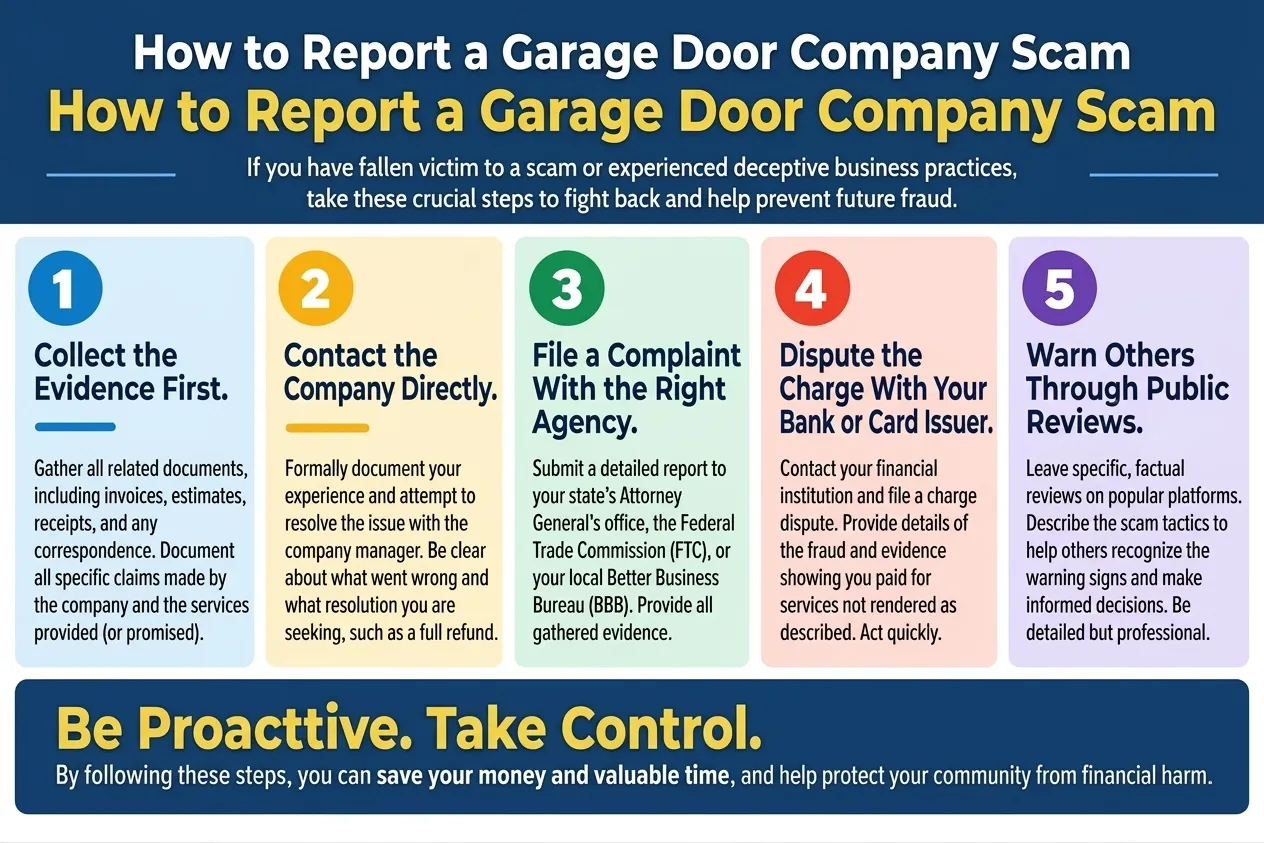
To find the exact agencies and reporting steps that apply to a specific state and situation, read our guide on How to Report a Garage Door Company Scam, which breaks down each channel in complete detail.
Learn the Warning Signs to Avoid a Repeat Scam
Comparing a legitimate company against common scam behavior side by side makes the difference easier to spot before any money changes hands again.
| Behavior | Legitimate Garage Door Company | Scam Warning Sign |
| Payment terms | Accepts card or check, offers a written invoice | Demands cash only, before any work begins |
| Pricing | Provides a written estimate before starting | Gives a vague verbal quote that changes on site |
| Licensing | Displays license number on trucks and paperwork | Cannot provide a license number when asked |
| Identification | Technician wears a uniform with company branding | Arrives in an unmarked vehicle with no identification |
| Urgency tactics | Explains the timeline honestly, even if it is soon | Pressures a decision within minutes of arrival |
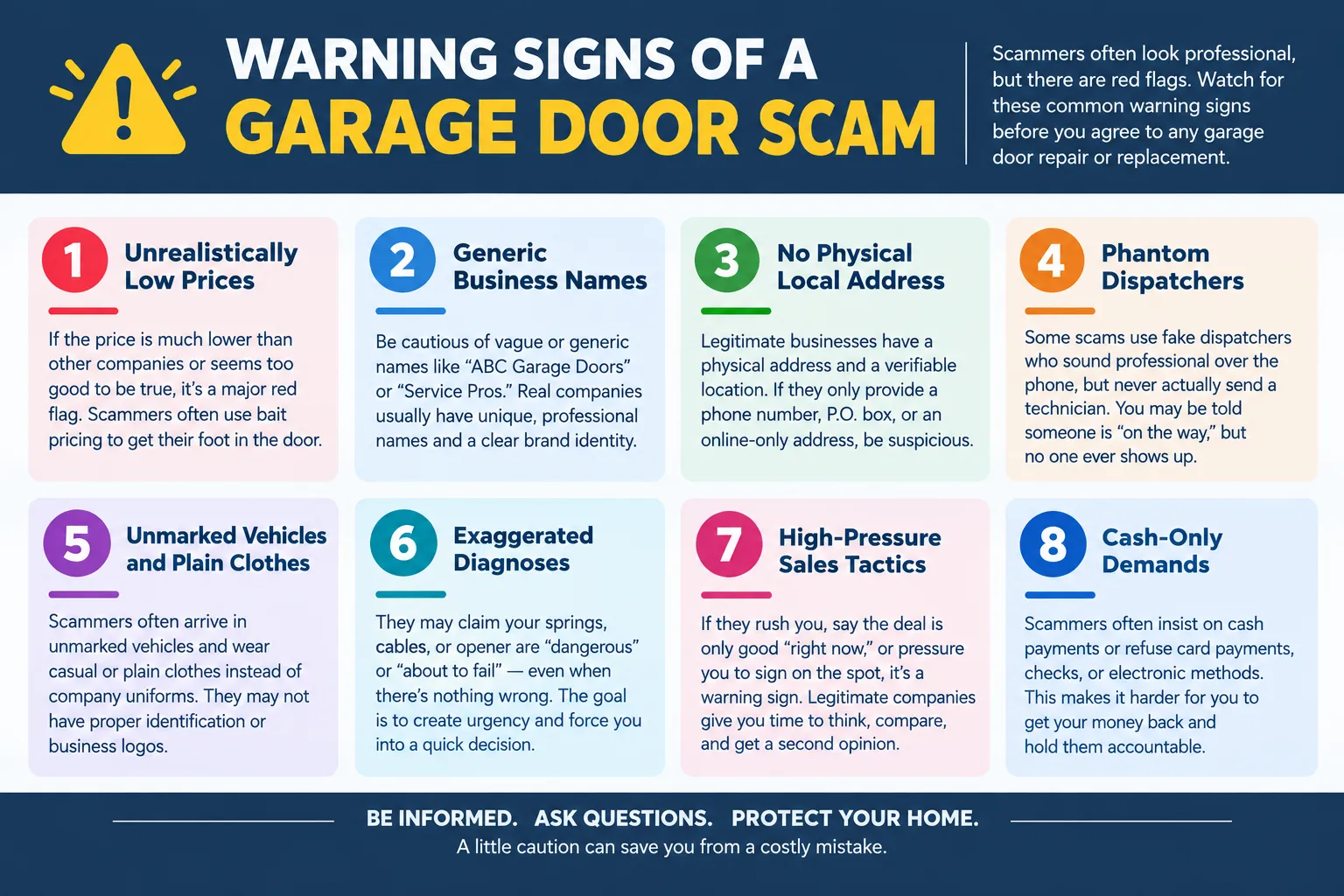
To recognize these patterns before the very next repair is ever scheduled or needed, read our guide on Warning Signs of a Garage Door Scam, which covers each red flag in far greater detail and depth.
Can You Get a Refund After a Garage Door Scam?
Recovering money after a garage door scam is possible, though the best option depends on how the original payment was made.
Worthwhile paths to pursue include:
- Disputing a credit card charge directly through the card issuer
- Requesting a reversal through the bank if payment was made by debit
- Filing a claim in small claims court for amounts within the local limit
- Requesting mediation through the Better Business Bureau’s dispute process
- Consulting a consumer protection attorney for garage door installation losses tied to fraud
A successful outcome for any of these paths often comes down to how quickly the dispute gets filed after the original charge posts to the account.
How to Choose a Legitimate Garage Door Company Next Time
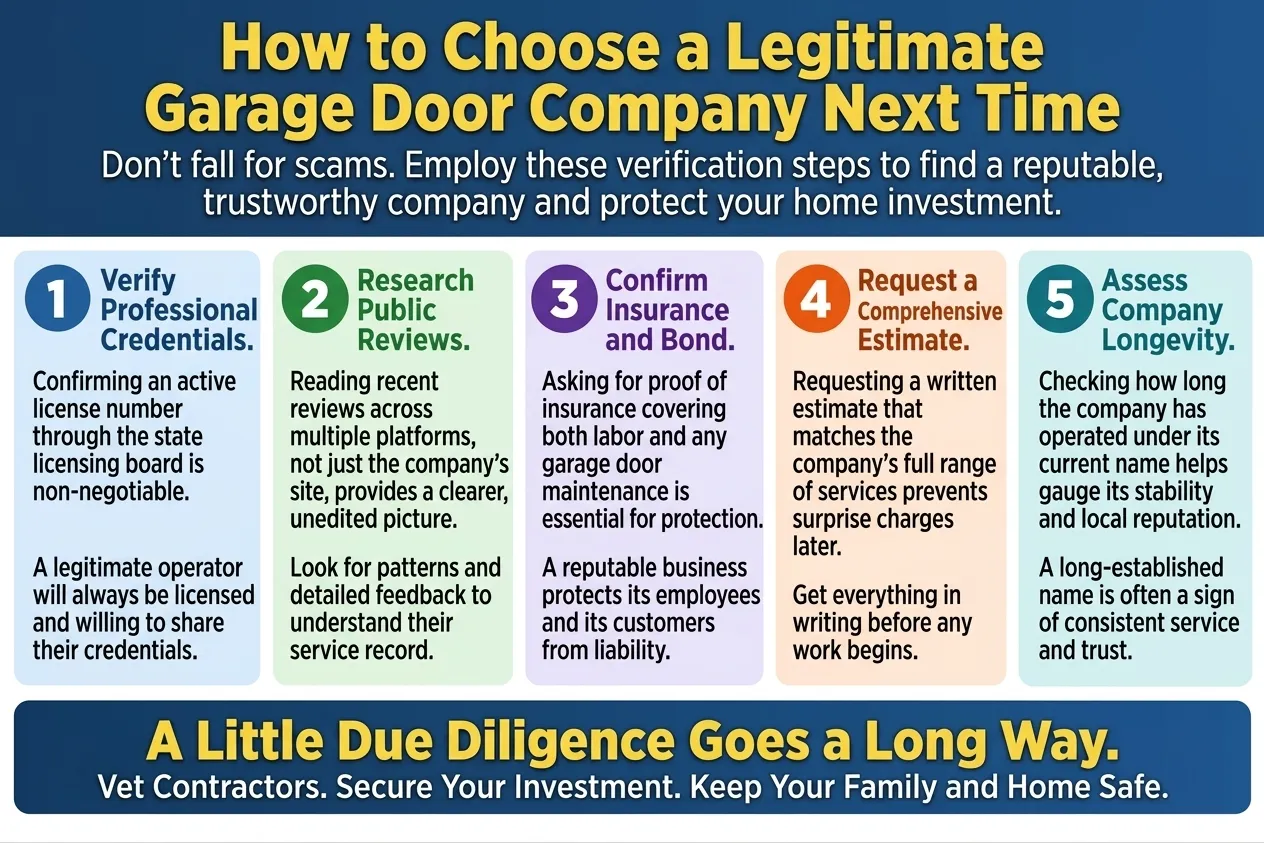
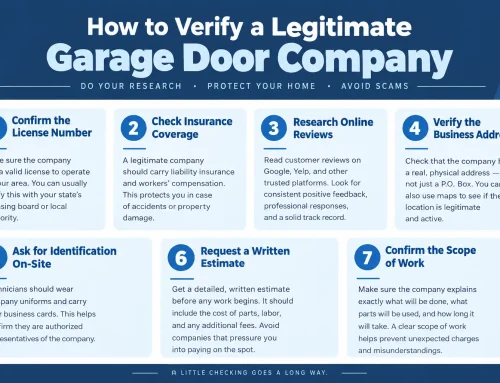
Finding a trustworthy company before the next repair is needed removes the bulk of the risk that leads to a repeat scam.
A reliable vetting process should include:
- Confirming an active license number through the state licensing board
- Reading recent reviews across multiple platforms, not just the company’s site
- Asking for proof of insurance covering both labor and garage door maintenance
- Requesting a written estimate that matches the company’s full range of services
- Checking how long the company has operated under its current name
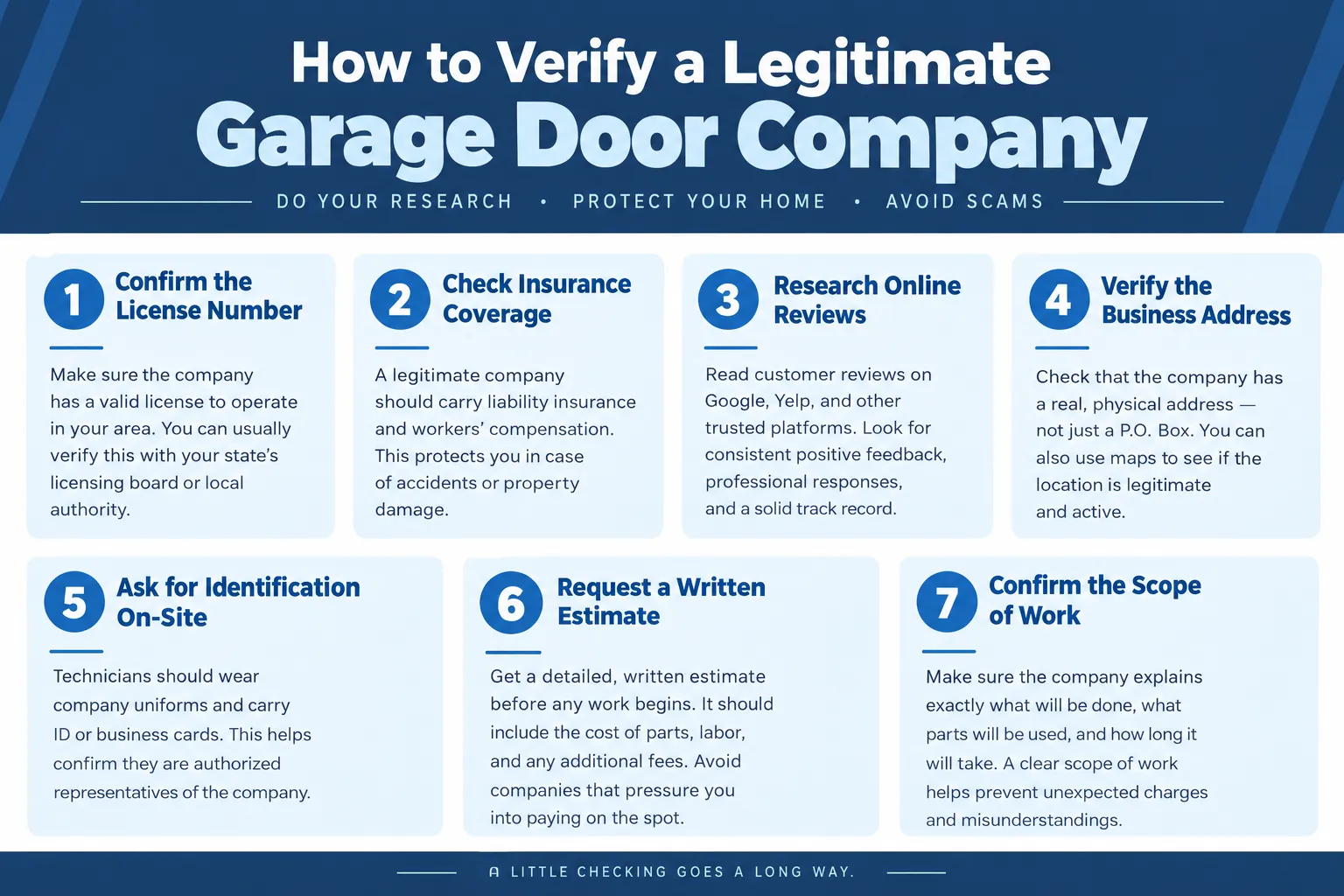
To walk through a complete verification process before hiring anyone for the next repair, read our guide on How to Verify a Legitimate Garage Door Company, which covers every check in full and practical detail.
The Right Response Turns a Garage Door Scam Into a Fixable Setback
A garage door scam can cause real financial and emotional strain, but the damage rarely has to be permanent once the right steps are taken in the right order. Following those steps at the right time also protects the household budget and the garage door itself from repeated, unnecessary losses.
Florida Garage Door Pros has worked with homeowners across Pasco County, Florida, helping them recover from poor repairs and restore their garage door to proper functioning in the long run. Contact us or give us a call today, and let our licensed team assess the damage and get the repair done right the first time around.
Frequently Asked Questions
How do I know if my garage door was actually damaged during a scam repair?
A licensed technician can inspect the torsion springs, tracks, and opener to confirm whether the damaged garage door needs real repair work. Grinding sounds, uneven closing, or moving parts that stick often point to genuine damage from the visit.
Will my homeowners insurance cover damage caused by a garage door scam?
Homeowners policies rarely cover damage tied to a scam repair unless the policy specifically includes fraud-related loss. Checking directly with the insurance provider confirms whether the specific policy offers any coverage for this exact situation.
What should I say if the scammer calls again after I report them?
Ending the call immediately and avoiding any further payment discussion protects against additional pressure tactics from the caller. Documenting the date and content of the call adds useful detail to an existing report already on file.
Is it safe to use my garage door while I wait for a licensed inspection?
Avoiding regular use until a licensed technician confirms the door's proper function reduces the risk of a serious injury from a hidden defect. A temporary manual release, used carefully, allows limited access without relying on a compromised opener.
How long does it usually take to get a refund after reporting a scam?
Credit card disputes often resolve within thirty to sixty days, while bank reversals and small claims cases can take considerably longer to close. Complete documentation submitted upfront tends to speed up the review process across most refund paths.
Can a licensed garage door company help even if another company already worked on the door?
A licensed garage door service can inspect and correct work left behind by a previous visit, regardless of who performed the original repair services. A full assessment usually uncovers whether the prior work created any further damage that needs addressing right away.
What licensing information should I ask for before hiring a new company?
Requesting the company’s state license number, proof of insurance, and physical business address helps confirm legitimacy before any repair services begin. A licensed team made up of professional garage door experts will provide this information without hesitation.
Do garage door scams happen more often during certain times of the year?
Scam activity tends to rise after severe weather events, when demand for garage door repair services spikes and desperation makes homeowners easier targets. A broken spring or storm-related damage often creates the urgency scammers rely on most.
What is the best way to warn neighbors about a garage door scam?
Posting a factual, detailed account on community groups or review platforms helps neighbors recognize common issues before falling for the same tactics. Including the company name, vehicle description, and payment demands gives neighbors enough detail to spot the same scam at their door.