A garage door scam usually shows warning signs before any work begins, including unrealistically low prices and pressure to pay in cash. Recognizing these red flags early protects a homeowner from a bad garage door repair and a wasted call to a company that never intended to do the job right.
Red flags can appear before a technician ever arrives or once they are already inside the garage actively working on the door, sometimes within the very first few minutes. Recognizing the right signal at each stage gives a homeowner a real opening to walk away before any commitment or payment is ever made.
Key Takeaways
- Unrealistically low advertised prices often signal a bait-and-switch scam
- A generic business name or no local address points to a fake operation
- Phantom dispatchers routing calls out of state avoid real accountability
- Exaggerated diagnoses on-site often turn a small fix into a big bill
- Cash-only demands with no receipt leave a homeowner with no recourse
Red Flags by Stage of the Repair Visit
Red flags tend to cluster around two distinct moments, before the technician ever shows up and once they are already inside the garage.
| Red Flag | When It Happens | What It Signals |
| Unrealistically low prices | In ads or over the phone | Bait pricing meant to get a foot in the door |
| Generic business name | Before booking | A shell operation with no real local presence |
| No physical local address | Before booking | A company with nothing to be held accountable to |
| Phantom dispatchers | During the initial call | Calls routed to an out-of-state center, not a local shop |
| Exaggerated diagnoses | Once on-site | A scare tactic to sell unnecessary repairs |
| Cash-only demands | Once on-site | A payment method designed to avoid a paper trail |
Identifying which stage each red flag belongs to keeps a homeowner alert throughout the entire repair process, not only at one point.
Red Flags Before the Technician Arrives
Unrealistically Low Prices
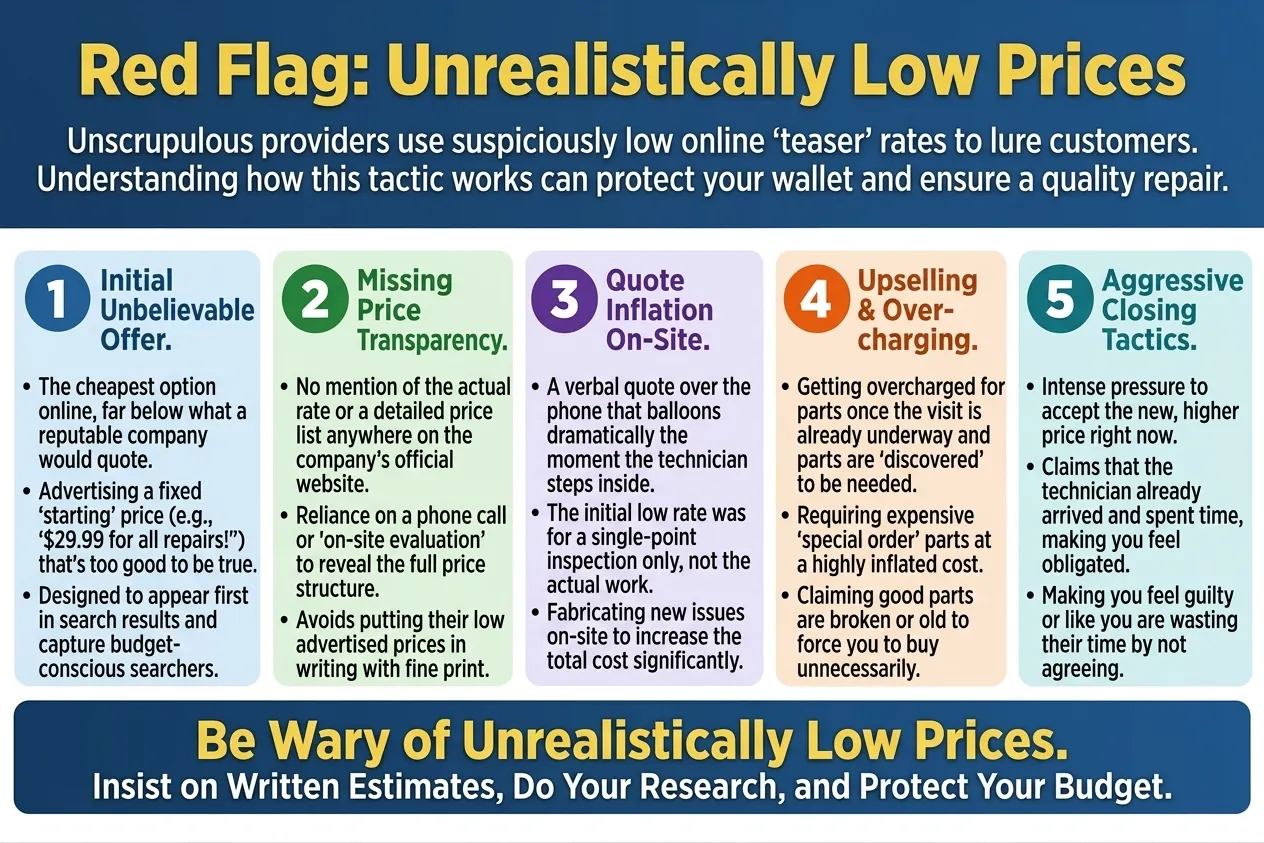
A garage door repair company advertising a flat $29 or $49 service fee often uses that price as bait to get inside the door.
The pricing pattern usually includes:
- The cheapest option online, far below what a reputable company would quote
- No mention of the rate anywhere on the company’s actual website
- A quote that balloons the moment the technician steps inside
- Getting overcharged for unnecessary parts once the visit is already underway
- Pressure to accept the new price since the technician already arrived
Comparing the advertised rate against what other companies typically charge helps a homeowner recognize the pattern before booking the visit.
Generic Business Names
A garage door company operating under a vague name like Garage Door Service, or one that changes its business name often, rarely has a real local reputation to protect.
Signs of a generic or shifting business identity include:
- A name with no city, region, or founder tied to it at all
- Multiple business names used across different ads or platforms
- A website that changed its company name within the past year
- No mention of the company anywhere on local business directories
- Reviews under a different business name than the one quoted
A company that stands behind consistent garage door replacement and repair work gives a homeowner something to verify before any job begins.
No Physical Local Address
An address that turns out to be an empty lot, a UPS store, or someone’s private home on a map search is one of the clearest signs of a scam operation.
Checking an address for legitimacy usually reveals:
- A pin that lands on a residential home with no visible business signage
- An address matching a shipping or mailbox rental store instead of an office
- A location that shows as permanently closed on a map search
- No listed suite or unit number despite claiming a commercial address
- Street view images showing an empty lot instead of a real building
A garage door installation or repair company with a real, verifiable address gives a homeowner somewhere to turn if the job goes wrong.
Phantom Dispatchers
A phone number that always routes to an out-of-state call center, far from the actual job site, often means the company has no real local presence.
Warning signs during that first call include:
- A dispatcher who cannot answer basic questions about the local service area
- Background noise suggesting a large call center rather than a small shop
- A different phone number given for scheduling versus billing questions
- No option to speak directly with a credentialed professional before the visit
- Vague answers about the company’s actual physical location
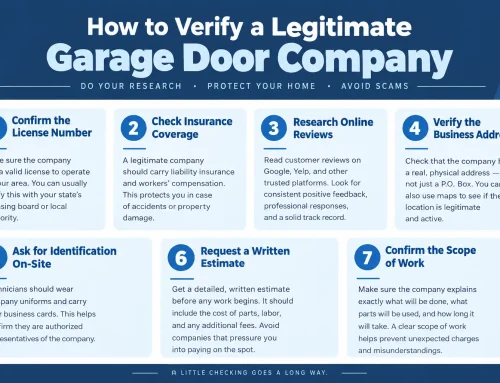
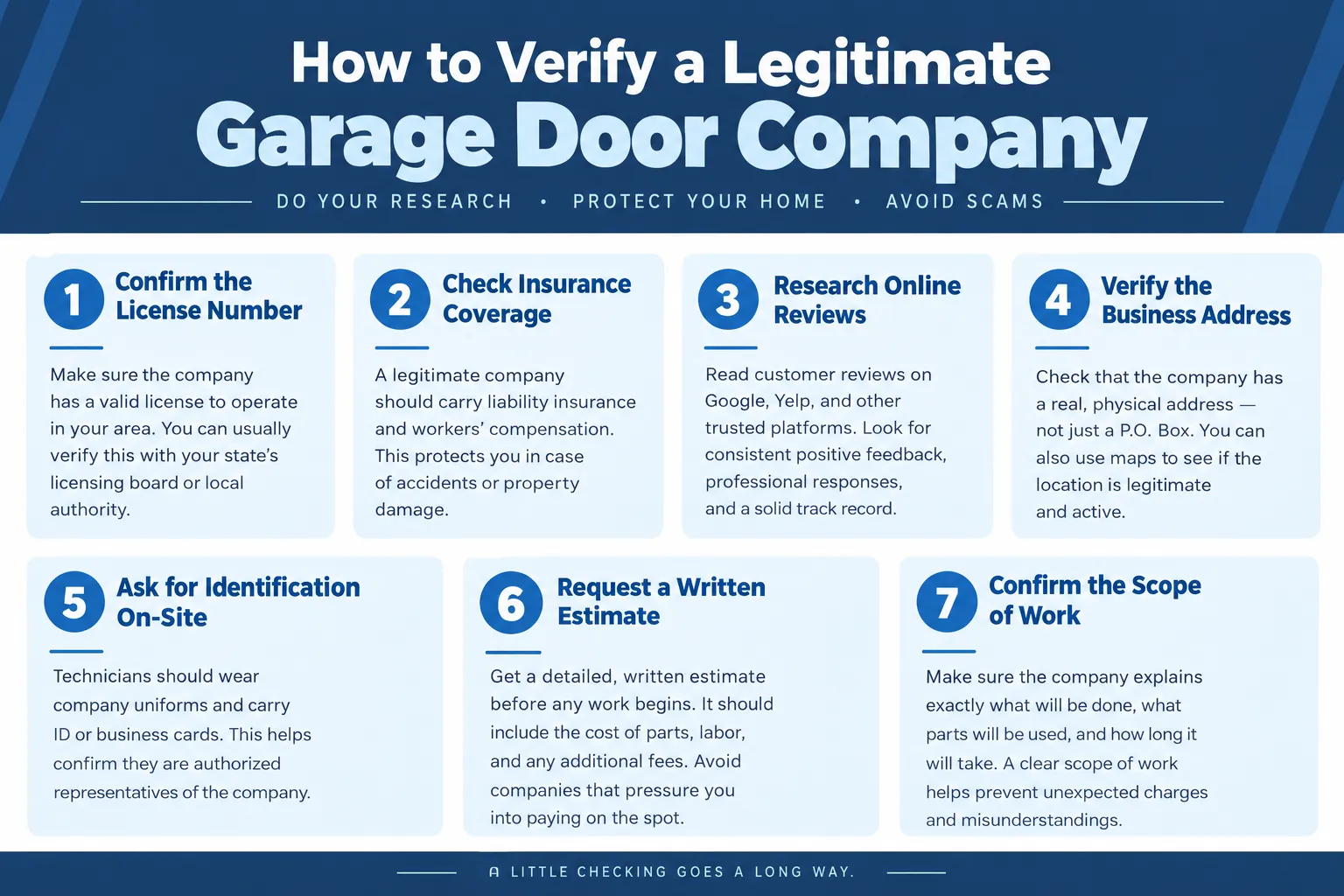
To confirm a company is truly who it claims to be before scheduling any visit at all, read our guide on How to Verify a Legitimate Garage Door Company, which walks through every check in complete detail.
Red Flags On-Site
Unmarked Vehicles and Plain Clothes
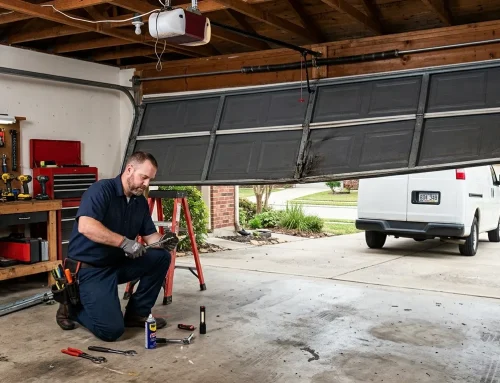
Arriving in an unmarked van with no uniform, badge, or visible identification should immediately raise concern for any homeowner.
Signs worth noting on arrival include:
- A vehicle with no company name, logo, or phone number displayed
- A technician wearing plain clothes instead of a company uniform
- No visible identification badge or company-issued paperwork
- A refusal to show a license number when asked directly
- Reluctance to provide a name that matches the original booking
A properly identified, licensed technician with real credentials gives a homeowner far more confidence than an unmarked van ever could.
Exaggerated Diagnoses
Claiming a simple broken spring means the entire garage door system needs immediate replacement is a common way scams inflate the final bill.
Exaggerated diagnosis tactics often include:
- Insisting a small, visible issue affects the entire garage door system
- Refusing to show the homeowner the actual part causing the problem
- Quoting a full replacement when a single part repair would work
- Creating urgency by claiming the door could fail within hours
- Discouraging a second opinion before any repair work begins
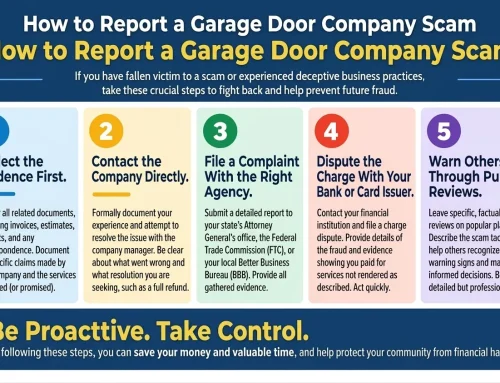
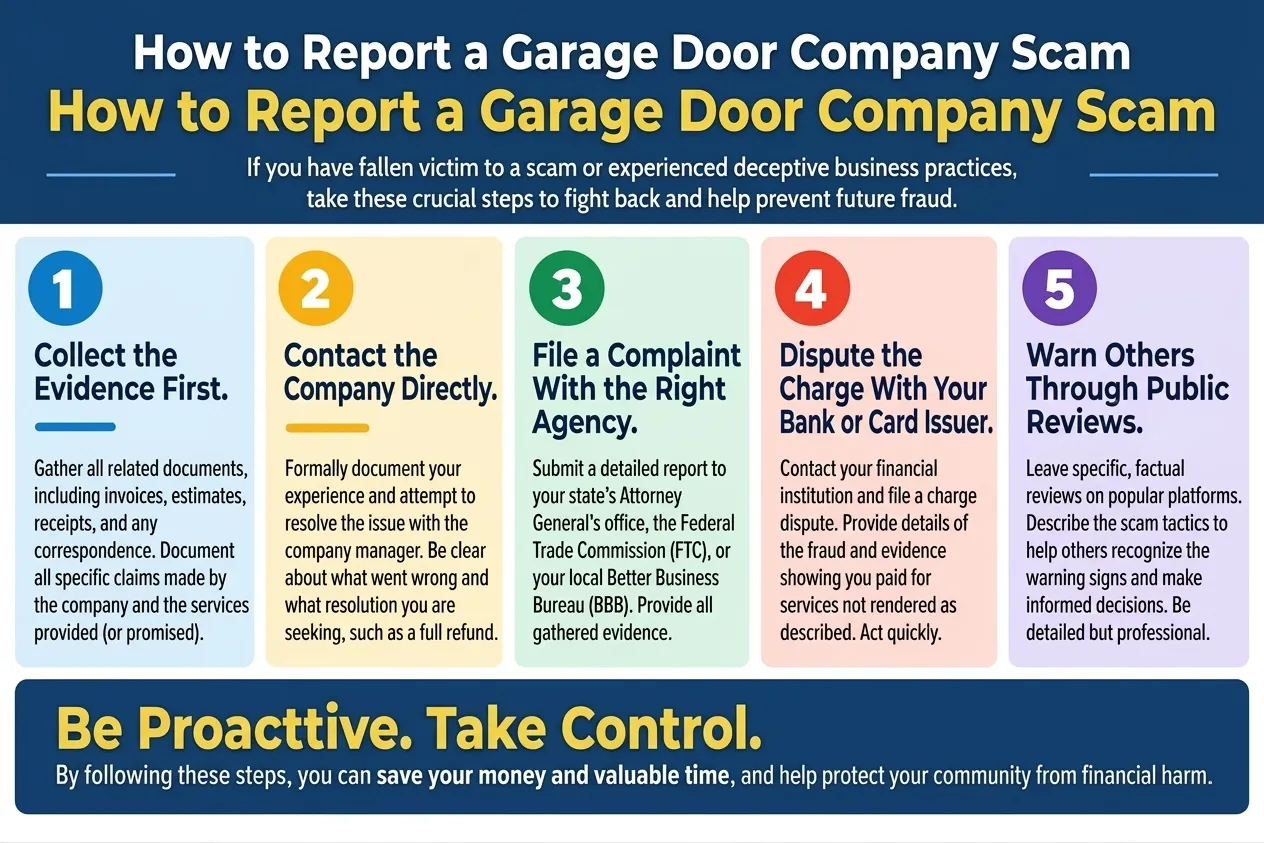
To learn where to file a complaint once a diagnosis feels exaggerated or dishonest, read our guide on How to Report a Garage Door Company Scam, which breaks down each reporting channel in complete detail.
High-Pressure Sales Tactics
Forcing a homeowner to sign a contract on the spot, while refusing to allow time for a second opinion, is a tactic built to prevent any comparison shopping.
Common high-pressure tactics include:
- Demanding a signature before explaining the full scope of work
- Claiming the discounted price only applies during that single visit
- Refusing to leave a written quote for the homeowner to review later
- Discouraging any phone call to a second garage door company
- Using countdown-style urgency to rush a decision on the spot
Recognizing this pressure in the moment gives a homeowner the chance to pause and call a company known for honest customer service instead.
Cash-Only Demands
Requesting full payment upfront in cash, with no receipt offered, leaves a homeowner with no paper trail and very little recourse afterward.
Warning signs tied to payment include:
- A refusal to accept card, check, or any traceable payment method
- No printed or emailed receipt offered after the payment is made
- Pressure to pay the full amount before any work is inspected
- A quote that only applies if payment happens in cash on the spot
- Reluctance to provide a business license number tied to the payment
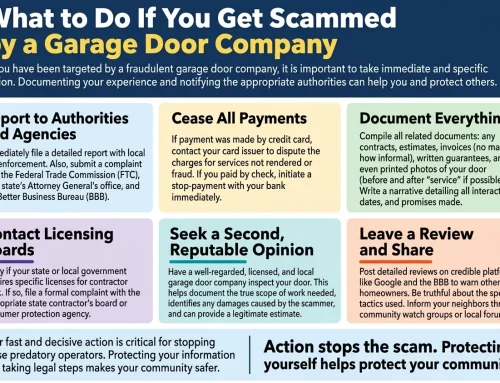
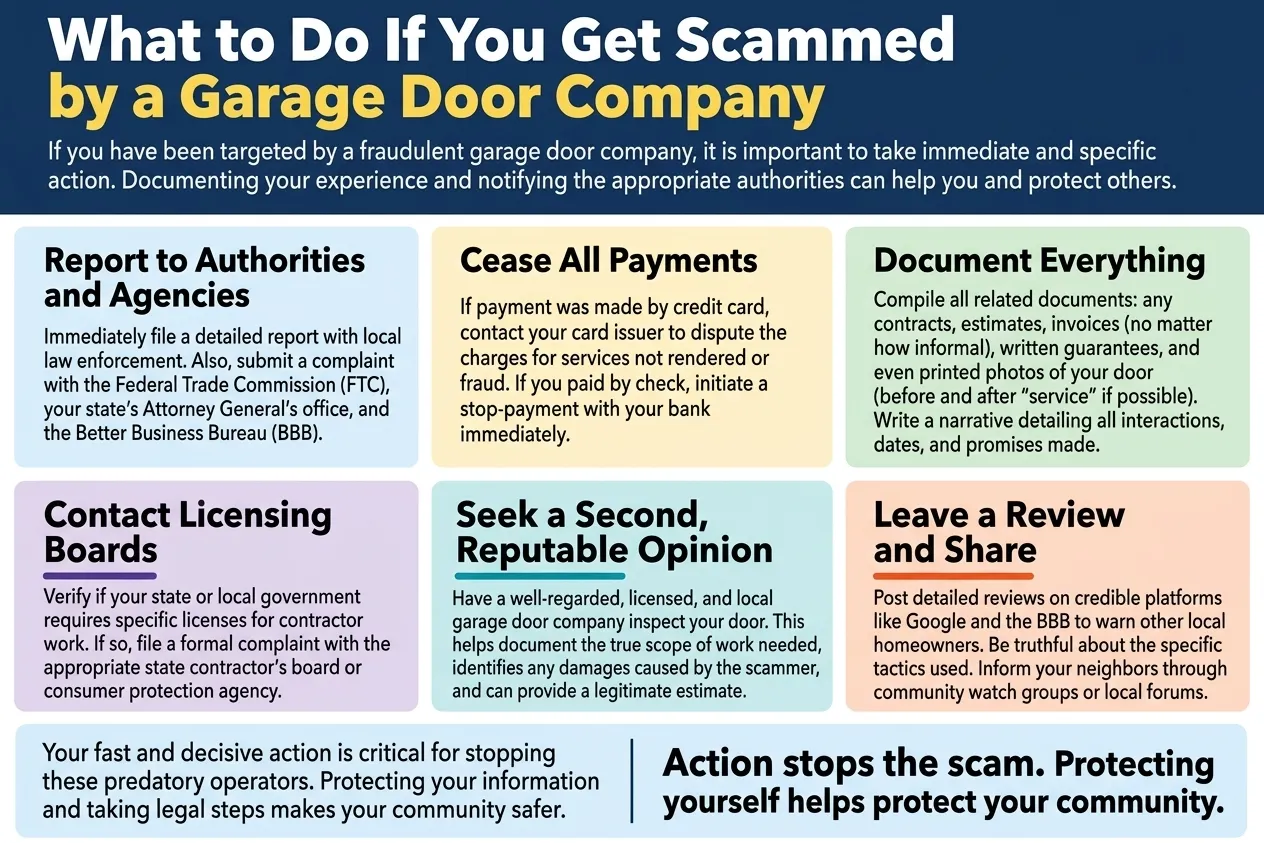
To walk through the exact steps to take after paying a scammer in cash, read our guide on What to Do If You Get Scammed by a Garage Door Company?, which covers the full recovery process in complete detail.
What to Do If You Notice These Warning Signs
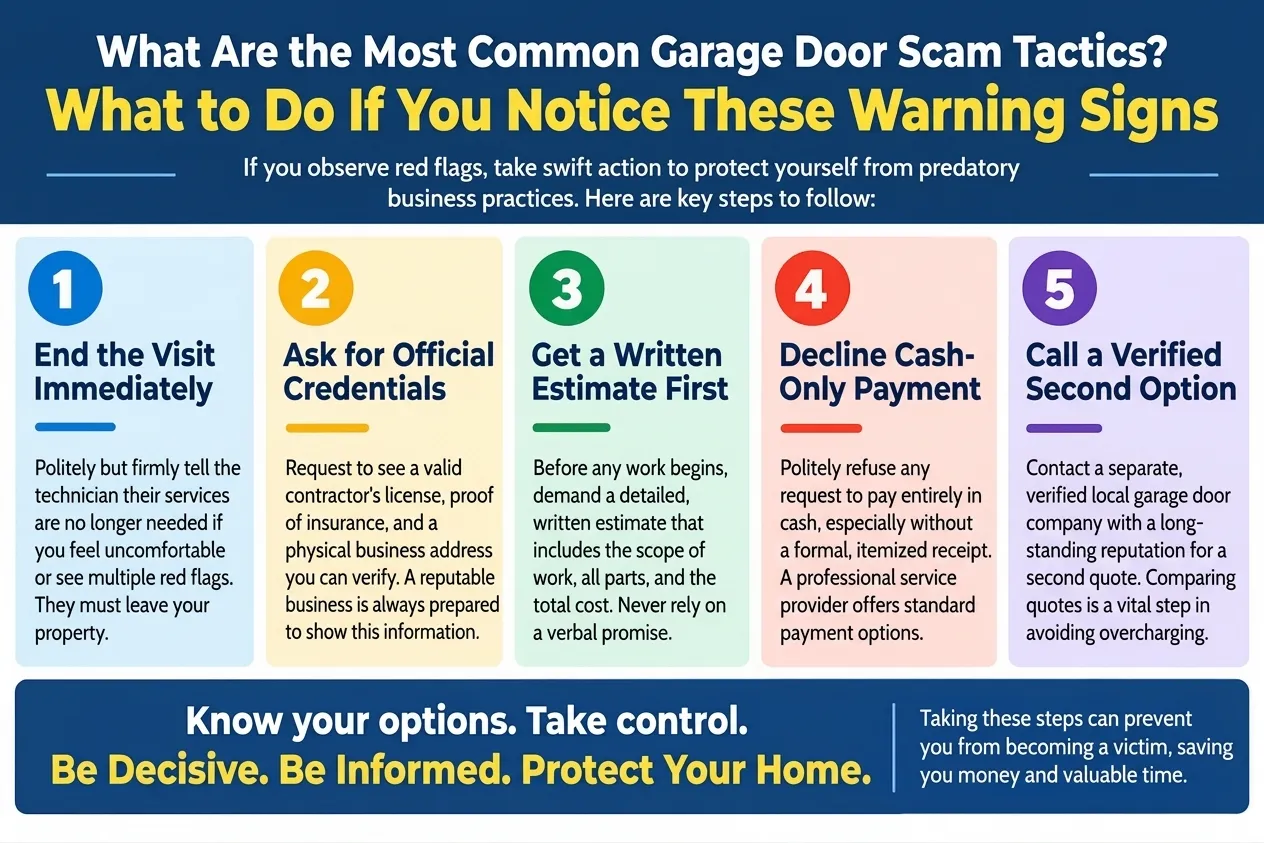
Noticing even one of these red flags during a call or visit is reason enough to pause before any money changes hands.
The right response in the moment should include:
- Ending the visit immediately if multiple red flags appear at once
- Asking directly for a license number and physical business address
- Requesting a written estimate before agreeing to any repair work
- Declining any cash-only payment demand without a receipt offered
- Calling a second, verified company for a comparison quote, even for an emergency garage door repair
Trusting these instincts in the moment protects a significant investment and the safety of the garage door itself in the long run.
Knowing the Warning Signs Puts a Homeowner Back in Control
A garage door scam depends on catching a homeowner off guard, but every one of these red flags becomes far easier to identify once the pattern is known in advance. Recognizing these signs before booking and during the visit itself closes the door on most scam attempts before they start.
Florida Garage Door Pros trains its team across San Antonio, FL to recognize the same red flags this guide covers, long before a scam ever reaches a customer’s door. Contact us or give us a call today, and let our licensed garage door technicians handle the repair with the transparency every homeowner deserves.
Frequently Asked Questions
Is it normal for a garage door technician to arrive without a uniform?
Most legitimate technicians wear a uniform or badge that matches the company name given at booking, so an unmarked arrival is worth questioning. Asking to see identification before allowing the technician inside the garage is a reasonable and common request.
What should I do if a technician says my whole garage door system needs replacing?
Requesting to see the actual damaged part before agreeing to a full system replacement helps confirm the accuracy of the diagnosis. A second opinion from another reputable garage door company can also confirm whether the repair truly requires that scope of work.
Can a garage door company legally require cash-only payment?
A company can legally request cash, but refusing every other payment method while offering no receipt is a common scam pattern. Choosing a trustworthy garage door company that accepts traceable payment and provides documentation helps protect against future disputes.
How do I check if a garage door company has a real local address?
Searching the listed address on a map service quickly shows whether it points to a real office or something else entirely, like a residential home. Checking the Better Business Bureau for BBB accreditation adds another layer of confirmation before booking any service.
What does it mean if a garage door company has several different business names?
A company operating under multiple names often does so to avoid negative reviews or complaints tied to an earlier name. Searching each name separately for reviews and complaints reveals a more complete picture of the company's actual quality of service.
Are same-day or emergency garage door repairs more likely to involve a scam?
Emergency services and same-day requests do attract more scam activity, since urgency makes homeowners less likely to compare prices or ask questions. Verifying proper licensing and address still applies even during an urgent repair.
Should I trust a garage door company with strong online reviews?
Strong Google reviews are a helpful sign, but checking whether those reviews match the exact business name and address quoted matters just as much. A local garage door company with skilled technicians and a consistent, verifiable history tends to carry more weight than a handful of generic five-star ratings.
What is the safest way to pay for a garage door repair?
Paying by card or check gives a homeowner a documented trail that a cash payment simply does not provide. Requesting an itemized invoice before payment also confirms exactly what quality workmanship the charge actually covers.
How many red flags does it usually take before I should stop the visit?
Even one significant red flag, such as a cash-only demand or a refusal to provide identification, is reason enough to pause the visit. A broken garage door repaired under pressure from unverified garage door repair services often ends up costing more than starting over with a trusted company.