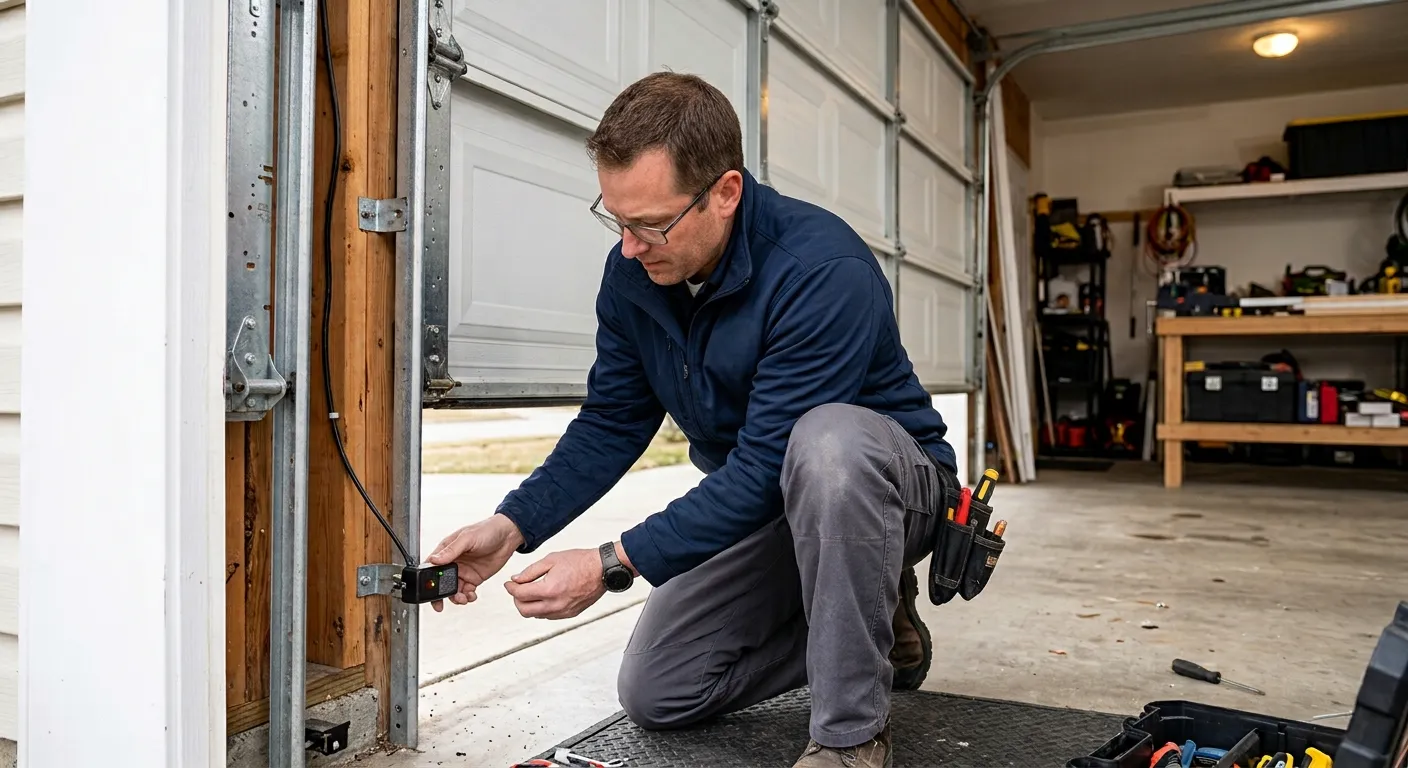
A garage door most often won’t close because of a misaligned sensor, a worn spring, a blocked track, or an incorrect limit setting on the opener, and each cause tends to leave a distinct pattern behind. Recognizing that pattern early often means the difference between a homeowner fixing it directly and needing a garage door repair visit.
The warning signs behind a closing failure vary depending on the exact cause, and knowing what to look for saves both time and unnecessary expense. This guide walks through the most common reasons a garage door won’t close and explains what to check before deciding on the proper course of action.
What Happens When a Garage Door Won’t Close All the Way
A garage door that stops short of the floor or reverses without warning is responding to a specific signal from its sensors, tracks, or opener settings, rather than failing for no clear reason.
Here is what typically happens when a garage door won’t close all the way:
- Reversal right after touching the ground points to sensor or opener resistance.
- Stopping at the same spot every time often signals a limit-setting issue.
- A partial closing followed by a reopening can occur without any input at all.
- Slower movement near the bottom usually signals a track or roller issue.
- Audible motor strain suggests added tension from a spring or cable problem.
To understand what these patterns mean and what to check first before the issue worsens, read our guide on Quick Checks for a Garage Door That Won’t Close, which walks through the exact steps to take before calling for repair.
Why Won’t My Garage Door Close
Safety Sensor Issues
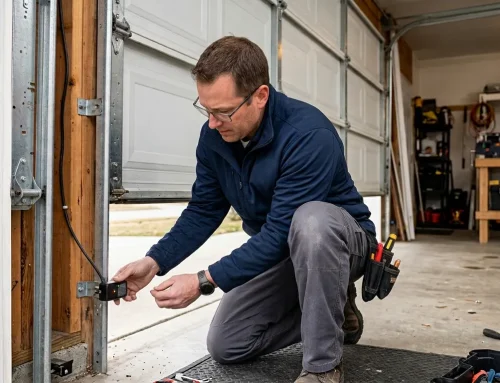
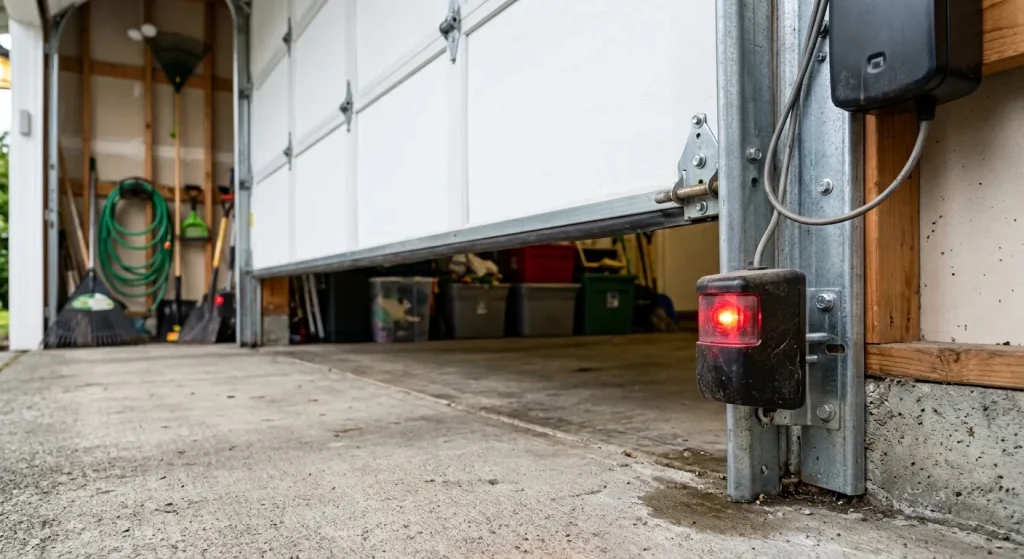
Safety sensors sit near the bottom of each track and rely on precise alignment to send a beam that confirms the path is clear before the opener allows the door to close.
Common causes behind this include:
- Blinking lights instead of a steady glow signal a break in the sensor connection.
- Dust or webs on the lenses can block enough of the beam to trigger a false reading, and a soft cloth usually clears it up.
- Sensitive sensors mounted at different heights prevent the beam from lining up.
- Closing fails while opening still works under normal operation, pointing directly to the sensors.
- An object briefly crossing the beam stops the door even after it clears.
A quick lens wipe and a sensor height check often restore the connection as a first step, but a persistent beam break usually calls for garage door sensor repair.
Physical Obstructions in the Door’s Path
Small items on the ground or buildup inside the tracks can stop the door before it reaches the floor, even when nothing appears obviously in the way.
Obstructions like this typically involve:
- Toys, tools, or bins beneath the closing path, forcing the door to stop or reverse.
- Dirt or hardened grease inside the tracks slows the rollers enough to cause them to jam.
- Bent metal pinching the rollers, causing the door to stick at one spot along the side of the door.
- Storm debris or outdoor elements adding resistance, throwing off the door’s travel.
- A worn section of the track catches the rollers, interrupting the closing motion.
Clearing both the tracks and the floor space beneath the door resolves this cause in most cases without needing any tools or adjustments.
Incorrect Travel Limits
Openers rely on limit settings to determine the exact distance the door must travel to reach a fully closed position on the floor.
Faulty settings often stem from:
- The limit distance set too short, causing the door to stop before it reaches the floor.
- A force setting too sensitive, triggering a reversal even in the absence of obstruction.
- Untouched or rusty garage door parts around the adjustment screws, meaning settings were never properly configured.
- An overcorrection from a recent adjustment caused the door to slam.
- A worn limit switch failing to register the door’s true position.
Small adjustments to the limit screws often fix the drift, but repeated attempts without improvement indicate the need for garage door opener repair.
Broken Springs or Cables
Springs and cables carry the full weight of the door, and damage to either part can stop the door’s movement entirely, regardless of how the opener is functioning.
A failure like this usually comes down to:
- Metal fatigue in the extension springs building up after years of daily use.
- A frayed or worn garage door cable finally snapping near the bottom bracket.
- Corrosion weakening the springs from prolonged moisture exposure.
- Excess tension shifting onto the remaining spring when a cable fails.
- Age-related wear reaching the point where the springs can’t support the door’s weight.
Springs and cables under this much tension call for a trained technician, since a broken garage door spring repair can injure anyone attempting it at home.
Other Minor Mechanical Issues
A door can stop closing due to a handful of small issues that don’t indicate any major mechanical failure in the system.
Small mechanical faults often trace back to:
- The manual lock option engaged, blocking the opener from pulling the door shut as a safety precaution.
- Dead transmitter batteries draining the remote’s signal before it reaches the opener.
- A garage door button on the wall stuck in place, preventing the closing cycle from completing.
- A power outage clearing the opener’s settings, requiring a manual reset.
- A mismatch between the remote transmitter’s programming and the opener’s receiver.
Testing the remote and the wall button separately usually isolates the source of the problem within just a few minutes.
Early Signs of a Garage Door Struggling to Close
A garage door rarely fails all at once, and small warning signs usually show up well before it stops closing completely.
Warning signs to watch for include:
- Hesitating briefly before continuing downward.
- Grinding or squeaking coming from the motor unit during each cycle.
- Closing unevenly, with one side reaching the floor before the other.
- Responding inconsistently to the remote while the wall button still works.
- Flashing an error code on the opener light after a failed attempt.
Recognizing one of these signs early gives homeowners a real chance to address the issue before it grows into further damage that costs far more time and money.
Risks of a Garage Door That Won’t Close Completely
A garage door left open by even a few inches poses potential hazards that extend well beyond a simple inconvenience for the household.
Risks worth taking seriously include:
- Pests and small animals entering through the gap at the bottom.
- Rain and humidity damaging stored items or the garage floor.
- An easier entry point forming for unwanted visitors.
- Repeated failed attempts adding strain to the opener motor.
- Family members assuming the door is closed when it isn’t fully secured.
Addressing the gap as soon as it appears protects the home, the belongings in the garage, and the malfunctioning garage door itself from strain that only worsens over time.
What to Do When a Garage Door Won’t Close
Before assuming the worst, a short list of checks can often reveal the most likely cause without any special tools or experience.
Steps worth trying first include:
- Watching a full attempt from open to close to spot where the door hesitates or reverses.
- Checking both sensors for blinking lights or any obstructions in the beam.
- Testing the wall button separately from the remote to isolate the issue.
- Listening for grinding or straining sounds coming from the motor unit.
- Noting any patterns to share with a technician if the issue continues.
Working through these simple solutions first often solves the problem outright, and if it doesn’t, those same notes give a technician a clear starting point for further inspection.
Why a Professional Is a Must for Closing Repairs
Springs, cables, and certain opener repairs carry enough tension or electrical risk to make professional help the smarter choice over a DIY attempt.
Reasons to bring in a professional include:
- Extension springs store enough force to cause injury if handled incorrectly.
- Cables under tension that can snap without warning during adjustment.
- Motor units involving electrical components that require specific training.
- Incorrect adjustments risk damage that voids a manufacturer’s warranty on a new garage door.
- Faulty components are easier to diagnose with the help of a service that handles this daily.
Bringing in a garage door professional early often saves time and reduces the risk of a simple issue becoming a bigger one, giving homeowners real peace of mind.
How Technicians Approach a Closing Repair
Trained technicians follow a structured process to identify the root cause of a closing issue rather than guessing at a fix.
The process usually includes:
- A full visual inspection of the tracks, sensors, and hardware.
- Testing the limit switch and force settings against manufacturer specifications.
- Realigning sensor brackets to restore a stable connection and optimal function.
- Inspecting torsion springs and cables for wear that isn’t visible at a glance.
- Verifying the opener’s memory and reprogramming it if needed.
To walk through what this diagnostic process looks like from start to finish, read our guide on How Pros Fix a Garage Door That Won’t Close, which breaks down each step a technician takes on a service call.
How to Prevent Future Closing Issues
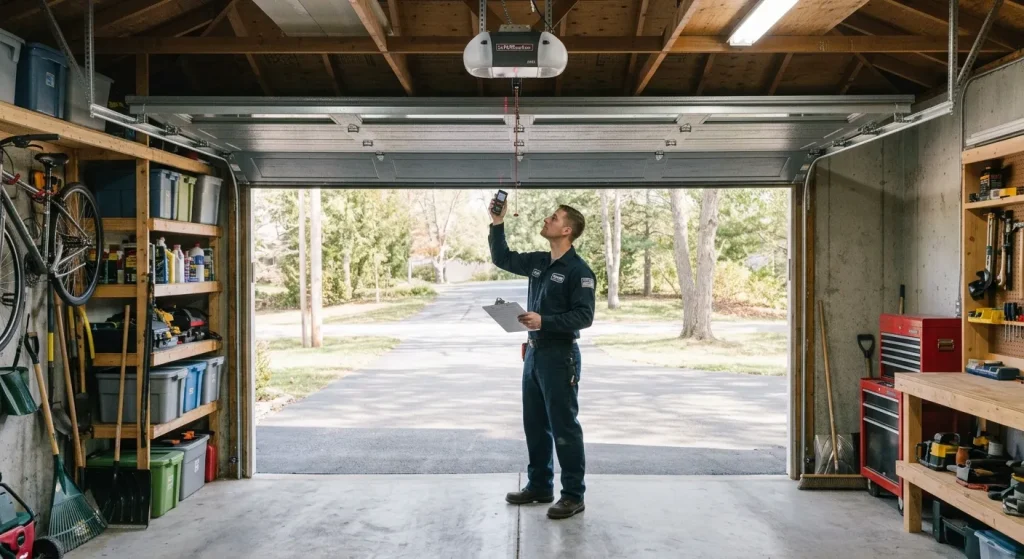
Routine maintenance goes a long way toward keeping a garage door system closing properly and avoiding repeat visits from a technician.
Habits worth building into a regular routine include:
- Wiping sensor lenses with a damp cloth every few months.
- Testing the door’s balance by disconnecting the opener and moving it by hand.
- Lubricating rollers and hinges twice a year to reduce strain on the motor.
- Visually inspecting cables and springs for early signs of wear on both sides of your garage door.
- Scheduling an annual check-in with a trusted service to catch small issues early.
To get the full seasonal routine that keeps modern garage doors running smoothly year-round, read our guide on Maintenance Tips to Avoid Garage Door Closing Issues, which covers each habit in more detail.
Solving the Common Causes Behind a Garage Door That Won’t Close
Every closing issue traces back to a specific cause, whether it’s a misaligned sensor, a worn spring, or a limit setting that needs adjustment, and identifying that cause early makes all the difference. Working through each possibility in order turns a frustrating problem into a process homeowners can manage with confidence.
Florida Garage Door Pros stands as the best garage door company for homeowners across Pasco County, Florida, bringing hands-on experience diagnosing sensor faults, worn springs, and opener issues. Contact us or give us a call today, and let our skilled team restore your garage door to full working order so it closes reliably every time.
Frequently Asked Questions
What are common causes for a garage door not closing completely?
The most frequent causes include sensor misalignment, track obstructions, and incorrect limit settings somewhere along the door’s path. A garage door won't close completely when any of these prevent the opener from confirming the path ahead is clear.
How can I troubleshoot a garage door that leaves a gap at the bottom when closed?
Start by checking the sensors and the area beneath the door for anything interrupting the door’s movement. If the garage door reverses when closing after this check, the issue usually points to a limit setting that needs adjustment.
What should I check first if my garage door won't close all the way?
The sensors near the bottom of each track should always be checked first, since they're the most common cause on either side of your garage door. Confirming proper garage door sensor alignment often solves the problem without needing any tools.
Could misaligned sensors cause my garage door to not close fully?
Yes, misaligned garage door safety sensors are among the leading causes of this exact problem with most modern openers. Realigning them so the beam connects properly usually restores normal operation right away.
Are there easy DIY fixes for a damaged garage door that won't close all the way?
Yes, several fixes require no special tools or prior experience to complete safely at home. Cleaning the sensors and checking remote batteries are tasks most homeowners can handle before calling a garage door service.
What troubleshooting steps can help if nothing seems to be blocking my garage door, but it still won't close?
Anyone asking why won't my garage door close with no visible obstruction should check the limit settings in small increments next. A tripped breaker at the electrical panel can also cut power to the opener entirely, so confirming the circuit is live is worth checking first.
How do I align garage door sensors to fix closing issues?
Loosen the wing nuts securing the sensor brackets, then gently adjust each sensor until the indicator lights turn solid. Both sensors need to face each other at the same height to maintain a stable connection.
Can a faulty remote or wall button prevent my garage door from closing?
Yes, a remote with dead batteries or a faulty wall button can prevent the door from responding to any command. Testing both separately helps identify which one is causing the technical issue.
What professional repairs might be needed if my garage door doesn't stay closed?
Spring replacement, cable repair, and opener recalibration are among the most common professional repairs for this issue, and different types of springs carry different amounts of tension. These jobs involve enough force to become dangerous, so a trained technician should always handle them.