Grinding, squeaking, and popping sounds from a garage door are direct signals that specific mechanical components inside the system are worn, dry, or damaged. Each noise points to a different cause, and each one worsens the longer it goes without proper garage door repair.
Understanding what triggers these popping garage doors sounds is the difference between catching a small problem early and dealing with a full system breakdown. Knowing which part is responsible for each noise tells you exactly what the garage door system needs and how urgent the situation is.
What Noises Does a Garage Door Normally Make?
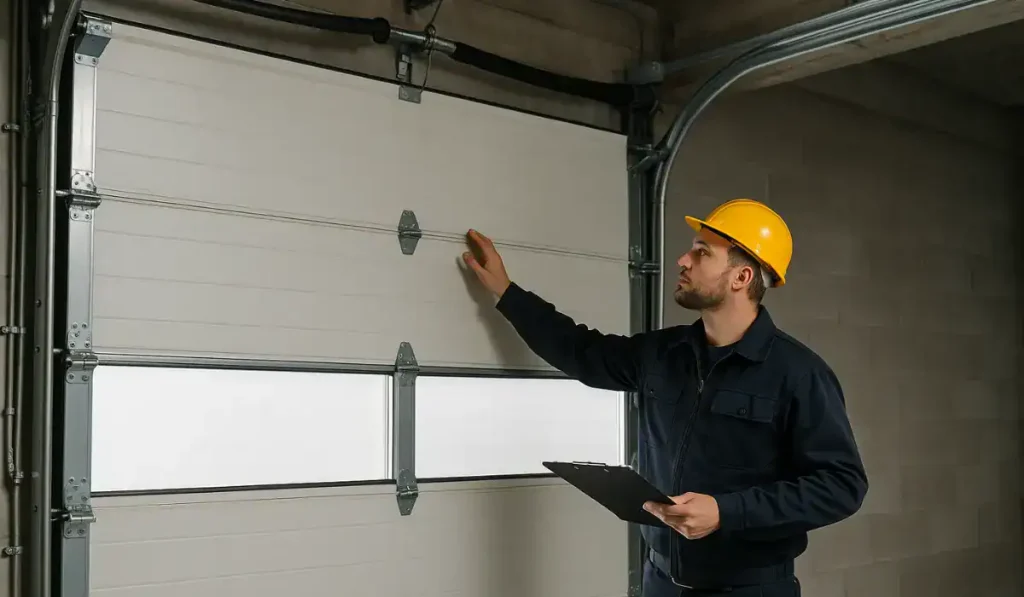
A garage door in good working condition produces sounds that follow a steady, predictable pattern with every cycle, and anything outside of that pattern is a sign that one or more components are no longer functioning the way they should.
Here are the common noises that fall outside of normal operation:
- Grinding metal scraping against the tracks during opening or closing
- High-pitched squeaking coming from dry hinges or springs
- Sharp popping or banging sounds as the door moves through its cycle
- Rattling hardware that shakes and clanks with every operation
- A strained humming from an opener that is working harder than normal
To understand what each of these sounds is telling you about your garage door, read our guide on How Garage Door Noise Can Signal Bigger Problems, which connects these noises to the mechanical issues developing inside your system.
What Causes a Noisy Garage Door to Grind, Squeak, and Pop?
Garage Door Grinding
Worn or misaligned components turn every cycle into a source of metal-on-metal friction that grows louder with each use.
Common causes of grinding include:
- Metal rollers with flat spots, cracks, or rust scraping through the track
- Dry metal parts rubbing against each other without lubrication
- Misaligned tracks are forcing rollers to drag instead of glide
- Worn internal gears inside the opener grind with every operation
Recurring grinding often means garage door roller repair is needed before smooth, quiet operation can be restored.
Garage Door Squeaking
Dry or debris-filled components create friction that builds with every cycle the door completes.
Common causes of squeaking include:
- Dry hinges squeaking rhythmically as each panel moves through the track
- Spring coils that bind against each other without lubrication create a squeaking sound under every load
- A drive track that has lost its factory grease and squeals during operation
- Dirty tracks forcing rollers to push through grit and debris on every cycle
Applying the right garage door lubricant to hinges, springs, and rollers at least twice a year addresses the friction that drives every squeak.
Garage Door Popping
Loose or overstressed components produce sharp popping sounds that signal the system is working against itself on every cycle.
Common causes of popping include:
- Worn torsion springs that cause the door to bounce or jolt under load
- A snapped spring sends a loud bang through the whole house
- Loose nuts, bolts, or a mounting bracket clanking over each track joint
- Vibration from repeated cycles working hardware loose across the system
Popping springs carry a serious injury risk, and broken garage door spring repair should always be handled by a trained professional.
Warning Signs Your Garage Door Noise Has a Bigger Cause
Garage door noise, paired with physical warning signs, indicates the underlying cause is already affecting how the system moves and holds together.
Watch for these warning signs:
- A door that jerks, shakes, or moves unevenly during a full open or close cycle
- Visible rust, cracks, or worn surfaces on rollers, hinges, or springs
- Noise that gets louder or more frequent with every passing week
- A door that hesitates, reverses, or fails to complete a full cycle
- Hardware that rattles loose shortly after being tightened
Identifying these signs early gives a technician the clearest picture of which components are failing and what is driving the noise.
What Happens When Garage Door Noise Goes Unaddressed
Garage door noise that goes without attention allows the underlying cause to spread stress across every connected component in the system.
Here is what happens when the noise is left unaddressed:
- Small mechanical issues put extra strain on the opener, springs, and hardware with every cycle
- Worn parts force the opener to work harder than it was designed to handle
- Loose or failing components create safety hazards that put people and property at risk
- Minor noise issues escalate into full mechanical failures that take the door completely out of service
- Repair costs grow significantly the longer the root cause goes without professional attention
To learn how these unaddressed causes translate into real safety hazards, read our guide on Are Noisy Garage Doors Dangerous? Key Safety Risks, which breaks down the risk factors that develop when garage door noise is ignored.
What to Check When Your Garage Door Starts Making Noise
Knowing where to look when a noisy garage door problem arises helps narrow down the cause before calling a professional for repair.
Here is what to check:
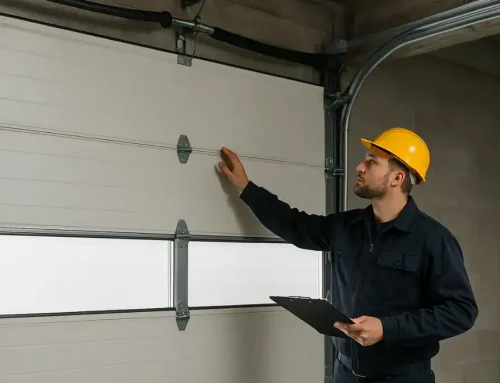
- Rollers for flat spots, cracks, or rust along the surface
- Tracks for visible bends, gaps, or debris buildup inside the channel
- Springs and hinges for dryness, rust, or visible wear
- Hardware, including bolts, nuts, and brackets, for looseness
- Door movement during a full cycle for jerking, hesitation, or uneven travel
A professional inspection confirms exactly which component is responsible and what level of attention the system needs.
Does the Cause Determine Repair or Replacement?
Identifying the exact cause of a noisy garage door is what determines whether a targeted repair or a full replacement is the more practical solution.
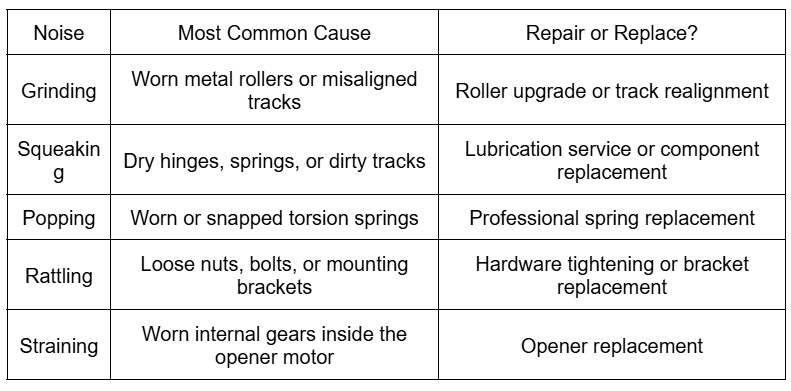
Getting a professional diagnosis before deciding between noisy garage door repair and replacement ensures the right solution is applied to the actual cause of the noise.
How Poor Maintenance Leads to Garage Door Grinding, Squeaking, and Popping
Poor garage door maintenance pushes every neglected component closer to failure, and the grinding, squeaking, and popping that follow are direct results.
Here is how poor maintenance leads to noise:
- Skipping lubrication causes metal parts to grind and squeak against each other
- Ignoring loose hardware allows vibration to worsen, rattling and popping over time
- Dirty tracks force rollers to fight through debris buildup on every cycle
- Unchecked springs develop rust and wear that leads to popping under load
- Infrequent inspections allow minor wear to progress undetected across the system
To keep these causes from returning, read our guide on How to Prevent Garage Door Noise with Regular Care, which covers every maintenance step that addresses grinding, squeaking, and popping at the source.
Know the Cause Behind Every Garage Door Grind, Squeak, and Popping Garage Doors
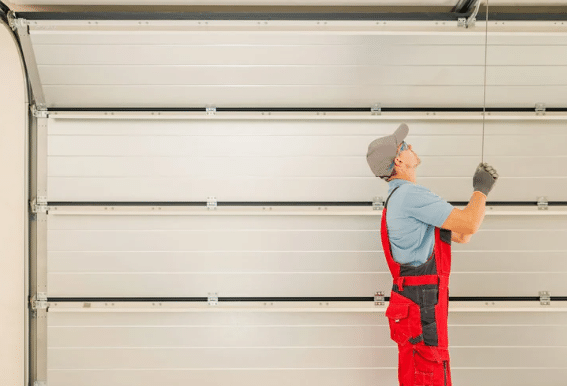
Every grinding, squeaking, and popping sound a garage door makes is caused by a specific worn, dry, or out-of-alignment component. Knowing what causes each noise puts you in a better position to protect your home’s safety, function, and curb appeal before the problem advances.
Florida Garage Door Pros serves Spring Hill homeowners with accurate diagnostics, honest assessments, and professional garage door repair services that get to the root of every noise problem. Contact us or give us a call, and let our team identify exactly what is causing the noise and restore your door to smooth, quiet operation.
Frequently Asked Questions
Can a noisy garage door affect the rest of the house?
Yes, and it is more common than most people realize. Vibration from a noisy garage door travels through the walls and ceiling, creating rattling sounds inside the rooms connected to the garage.
Do nylon rollers actually make a garage door quieter than metal rollers?
Yes, and the difference is significant. Nylon rollers produce far less friction against the track, require less maintenance, and eliminate the metal-on-metal scraping that causes most grinding noise.
How do I know if the noise is coming from the springs or the opener?
Springs typically produce popping or squeaking sounds near the top of the door, while the opener noise comes from the motor unit mounted on the ceiling. Running the door through a full cycle while standing in the garage helps isolate the source of the sound.
Can garage door noise be a sign that the door is off-balance?
Yes, and an off-balance door is one of the more overlooked causes of persistent noise. When the door is not properly balanced, the opener and springs compensate for the uneven load, which creates strain that produces grinding and popping sounds.
What is the difference between a grinding noise and a rattling noise on a garage door?
Grinding points to surface-level friction between moving parts, such as rollers and tracks, while rattling usually comes from loose hardware that shakes during operation. Both need attention, but point to different components inside the system.
Why does a garage door make more noise when it is older?
Older garage doors have components that have completed thousands of cycles, and the gradual wear reduces how smoothly each part moves. Rollers, springs, and hinges all lose their original performance over time, which is why noise becomes more frequent as a door ages.
Can a garage door make noise because of the type of opener it uses?
Yes, and the drive type plays a direct role in how much noise the system produces. Chain drive openers are the loudest because of the metal-on-metal contact in the drive mechanism, while belt drive openers run significantly quieter.
Is a squeaking garage door a sign that the springs are about to fail?
Not always, but squeaking springs should never be ignored. Dry or lightly worn springs squeak before they show more serious signs of wear, and getting them inspected early prevents a more abrupt failure down the line.
Does the size or weight of a garage door affect how much noise it makes?
Yes, heavier and larger doors place more load on the springs, rollers, and opener, accelerating wear on those components. More wear means more noise, and heavier doors require more frequent maintenance to keep that noise under control.